Address
86 Amesbury Road
Manchester M9 6JF United Kingdom
Smart garden storage ideas for small spaces, from vertical shelves to bench boxes, to keep patios, balconies and compact gardens tidy.
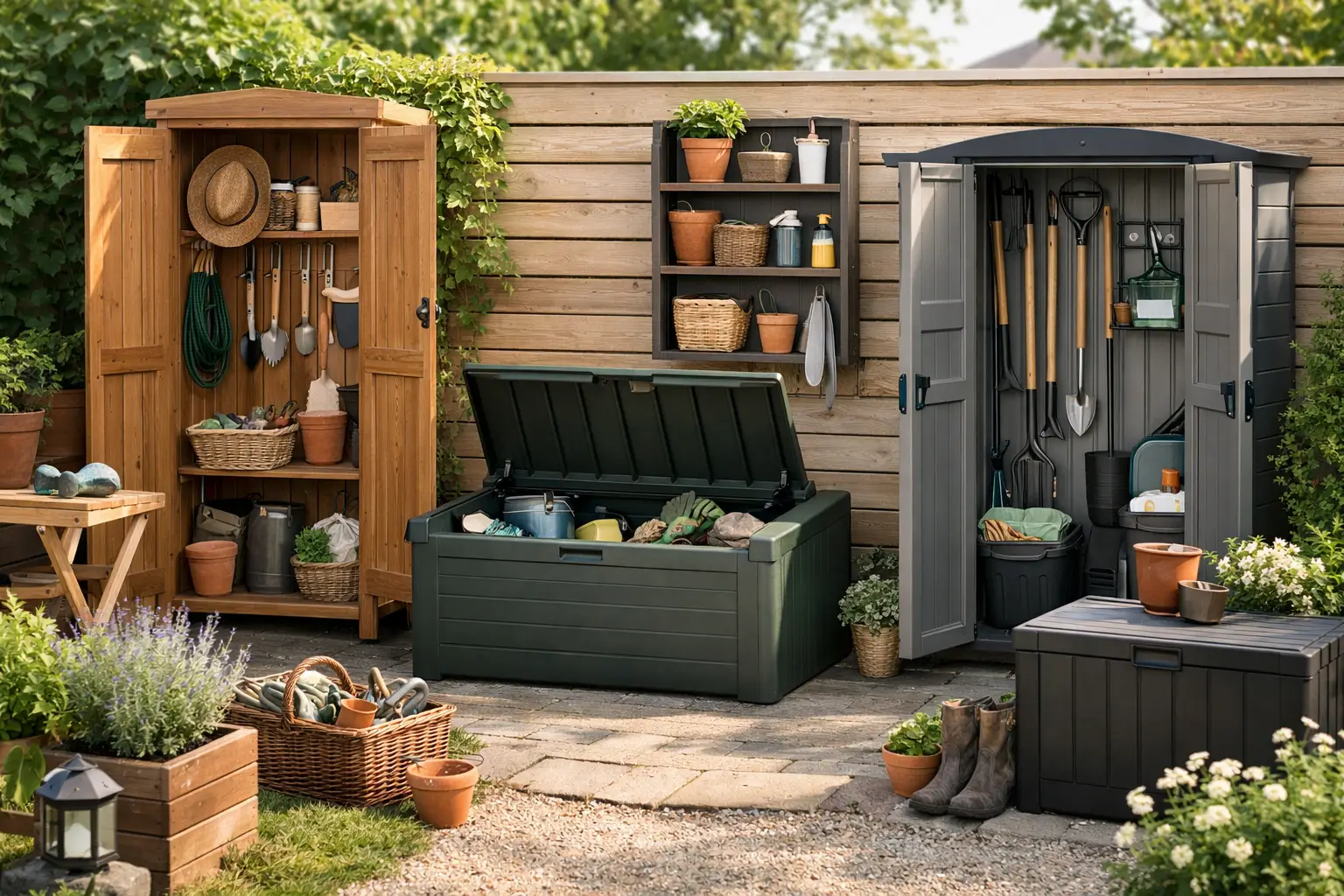
When the patio is doing three jobs at once – plant corner, kids’ play spot and somewhere to sit with a cuppa – clutter builds up fast. The best garden storage ideas for small spaces are the ones that keep everything easy to reach without making the area feel boxed in.
A small garden does not need less storage. It usually needs better storage. Pots, hand tools, watering cans, cushions, pet bits, barbecue kit and outdoor toys all need a home, and if they do not have one, they end up spread across every visible surface. The trick is to use the space you already have in smarter ways, so the garden stays practical as well as pleasant.
In a compact space, bulky storage can create a new problem while trying to solve the first one. A huge shed might hold everything, but if it eats half the garden, it is rarely the right answer. Better options tend to be narrow, stacked, foldaway or dual-purpose.
Before buying anything, it helps to think in zones. Ask yourself what actually lives outdoors all year, what only comes out in good weather, and what should really be stored indoors or in a garage. That quick sort makes it much easier to choose storage that fits your routine rather than just filling a gap.
Weather matters too, especially in the UK. Fabric cushions, bird food, seed packets and anything cardboard-based need dry storage. Muddy tools and hose attachments need something easy to wipe down. There is no point picking a lovely-looking basket if one rainy week turns it soggy.
If your patio or courtyard already needs somewhere to sit, a storage bench is one of the easiest wins. It gives you a place for cushions, children’s outdoor bits, small gardening tools or even picnicware, while still functioning as everyday seating.
This works particularly well in narrow gardens where separate chairs and a storage box would make the space feel crowded. The only trade-off is capacity. A bench usually holds less than a dedicated box, so it is better for lighter, regularly used items rather than every bit of garden equipment you own.
When floor space is tight, the walls need to do more. Slim shelving units, mounted racks and peg-style organisers can hold pots, gloves, twine, hand forks and cleaning brushes without taking over the patio.
Vertical storage suits balconies and small paved gardens especially well because it leaves the ground clear. It also makes tools easier to see, which sounds minor until you stop wasting ten minutes looking for secateurs. Just be realistic about weight. Heavy compost bags or large ceramic pots are better kept low down.
Side returns, spaces beside a back door, and the awkward strip behind a chair are often just wide enough for a slim cupboard or tall outdoor unit. These narrow spots are easy to ignore, but they can hold a surprising amount if you store upwards instead of outwards.
This is a good option for households that want tidy storage without changing how the garden is used. A tall unit can keep sprays, seed trays, plant feed and small accessories neatly in one place. If the area is very exposed, check that doors fasten securely so they do not flap about in windy weather.
For many homes, a simple deck box is the quickest fix. It is useful for storing awkward mixed items that do not fit elsewhere – hose fittings, outdoor games, spare pots, covers and light tools. It also works well if your storage needs change through the year.
The key is choosing the right size. Too small, and it becomes one more overstuffed container. Too large, and it dominates a tiny patio. In small spaces, medium-sized boxes often work better than one oversized chest because they are easier to position against a wall or under a window.
A plant stand with shelves underneath can be more useful than a plain decorative table. You still get room for herbs, flowers or houseplants spending summer outdoors, but the lower levels can hold watering cans, spare pots or trays.
This is a handy way to keep practical items close to where they are used without making the garden feel too utility-heavy. If you like a neat, relaxed look, storage that blends in with planting often feels softer than a row of plastic tubs.
Some garden bits are awkward by nature. Hoses, folding chairs, hand brushes and dustpans rarely stack well, so they end up leaning in corners. A few sturdy hooks can fix that quickly.
Hooks are ideal behind a gate, on a fence panel or inside a shed door if you have one. They are simple, cheap and especially useful for renters because they can create order without demanding much space. The only caution is exposure. Metal fittings should be suitable for outdoor use, or they will soon start looking tired.
On a patio, every item is visible, so storage needs to look reasonably tidy as well as work hard. Bench boxes, compact cabinets and stacked planters tend to suit these spaces best because they keep things contained without spoiling the layout.
If your patio doubles as an eating area, keep the most-used items close to the door and the less-used bits further out. That way, you are not constantly moving chairs to reach the watering can or barbecue tools.
Balconies need a lighter touch. Anything too bulky can make the space feel cramped very quickly, so wall-mounted storage, corner shelves and small weatherproof boxes usually make more sense than floor-hogging units.
It is also worth checking weight limits and drainage. Heavy storage packed with wet compost and pots may not be the smartest choice in an upper-floor setting. A few compact pieces used well are often better than trying to store everything outdoors.
If you have a little lawn or courtyard rather than a paved terrace, keep storage close to the edges. That preserves open central space and stops the garden feeling chopped up.
Tall, narrow units and low bench storage work well here. You still want room to mow, sweep or sit outside comfortably, so anything that leaves the middle clear tends to feel easier to live with.
One of the biggest mistakes is storing too much outside simply because there is finally a box for it. Small gardens work best when they stay edited. If you have not used something since last summer, it may not deserve prime garden space now.
Another common issue is mixing clean and dirty items together. Cushions and table linen should not be shoved in beside muddy hand tools and half-used fertiliser. Even in one compact storage unit, simple separation makes a difference. A couple of smaller containers inside a larger box can stop everything becoming a jumble.
It also helps to think about access. Storage that is technically spacious but awkward to open soon becomes dead space. If you have to lift three things to reach the one item you use daily, the system will not last. Easy living usually comes from easy access.
The best garden storage ideas for small spaces are not always the prettiest or the biggest. They are the ones that match how you actually use the garden on a normal Tuesday. If you garden a lot, tool access matters more than hidden seating. If you mainly want a tidy family patio, a waterproof bench box may do most of the heavy lifting.
For busy households, low-fuss materials are usually the safest bet. Surfaces that wipe clean, lids that open easily and units that can handle a bit of British weather without constant upkeep are worth prioritising. That practical, get-on-with-it approach is often what saves time in the long run.
If you are updating the space bit by bit, start with the messiest category first. Sort the tools, or the cushions, or the children’s outdoor toys – not all of it at once. Once one area is under control, the rest becomes much easier to plan. That is often the easiest way to make a small garden feel bigger without changing the garden at all.
A tidy outdoor space does not need fancy design or a complete overhaul. It just needs storage that works hard, fits the space and makes everyday jobs feel a little less faffy – which is exactly the kind of easier-life fix most gardens need.
