Address
86 Amesbury Road
Manchester M9 6JF United Kingdom
Learn how to organise cleaning supplies with simple, practical ideas for cupboards, caddies and under-sink storage to save time every day.
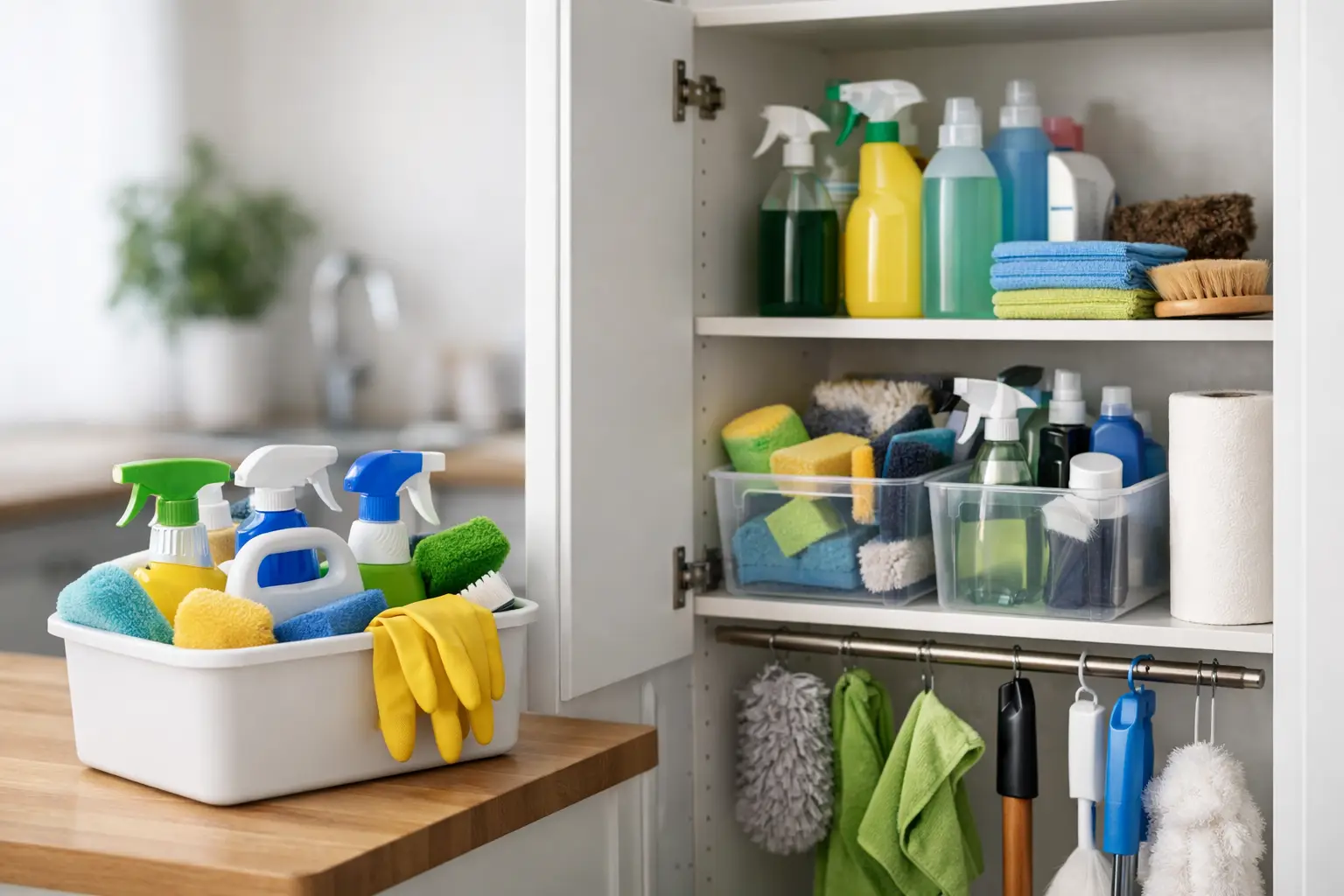
You know the moment – you need the bathroom spray quickly, but the cloths are in the kitchen, the bin bags have vanished, and the sponges are somehow behind the pet food. If you have ever wondered how to organise cleaning supplies without turning it into a full weekend project, the good news is that it is usually less about buying more storage and more about making your routine easier.
The best setup is the one that helps you clean faster, find what you need first time, and avoid buying duplicates because you forgot what was already in the cupboard. That matters whether you live in a family house, a small flat, or juggle cleaning jobs across the home, car, garden room or caravan.
Cleaning products rarely stay in one place unless you give them a proper home. They are used in different rooms, often get put back in a rush, and tend to come in awkward bottle sizes that do not stack neatly. Add rubber gloves, cloths, sponges, refills and bin liners, and one cupboard can turn chaotic quite quickly.
There is also a practical trade-off. Keeping everything together sounds tidy, but if your home has more than one bathroom or a utility area far from the kitchen, one central stash may slow you down. In smaller homes, though, spreading products across several rooms can create clutter just as fast. The right answer depends on your space and how you actually clean.
Start by pulling everything out into one place. That includes under-sink products, utility cupboard items, sprays tucked in the bathroom, spare cloths, dishwasher tablets, washing-up liquid and those half-used packs of wipes living in random drawers. Seeing everything at once makes the next step much easier.
Check dates where relevant, wipe down dirty bottles and get rid of empty containers or products you never use. If you have three half-finished glass cleaners and no bathroom cleaner, your storage problem is partly a buying problem. Organisation works best when what you keep is actually useful.
Now group items by job rather than by where they happened to be stored before. Kitchen cleaners go together, bathroom products go together, floor care goes together, laundry products go together, and tools such as brushes, gloves and cloths form their own category. This simple shift makes restocking and everyday cleaning much quicker.
The products you use every week should be at the front or on the most accessible shelf. That usually means washing-up supplies, antibac spray, multi-surface cleaner, cloths, sponges and bin bags. Less frequent items like oven cleaner, specialist stain removers or seasonal outdoor cleaning products can go higher up or further back.
This is where many people overcomplicate things. You do not need a picture-perfect pantry-style setup. A basic caddy, a few baskets or a couple of stackable tubs can do the job brilliantly if they match your routine.
If you clean room by room, create cleaning zones. A bathroom caddy with toilet cleaner, bathroom spray, cloths and gloves can live in the bathroom cupboard. A kitchen basket can hold sprays, sponges and dishwasher bits near the sink. A general household caddy can carry your all-purpose products from room to room.
This works especially well for busy households because it cuts down the back-and-forth. The downside is that you may end up with duplicate products, so it is worth deciding whether convenience or minimalism matters more to you.
Under-sink storage is often the first choice, but it is not always the best one. Pipes steal space, bottles tip over, and leaks can make everything grimy. If you use this area, keep it simple. Use small bins or trays so products stay upright and can be lifted out easily for a quick wipe-down.
A utility cupboard is often the easiest option if you have one. Shelves let you separate products by category, and taller items like mops or brooms can stand neatly at the side. If your cupboard gets messy, it is usually because soft items like cloths and scourers get mixed in with bottles. Keeping tools in their own container makes a noticeable difference.
For smaller homes, a portable caddy is often the most practical answer. It keeps your core products together and can be stored in one cupboard or tucked onto a shelf. If you only want one cleaning kit for the whole home, this is often the simplest way to maintain it.
If you have children or pets, storage needs a safety check as well as an organisation check. Products should be kept high up or in secured cupboards where needed. Easy access for you should never mean easy access for little hands or curious paws.
Labels can help, but only if they are solving a real problem. If several baskets look the same, labelling one for bathroom, one for kitchen and one for laundry stops mix-ups. If you live alone and know exactly what is where, labels may be unnecessary.
Clear containers are handy for sponges, cloths, dishwasher tablets and laundry pods because you can see when you are running low. For sprays and bottles, open-top baskets are usually more practical than lidded boxes. You do not want to remove lids every time you wipe down a surface.
It also helps to separate consumables from tools. Refills, bin liners, cloth packs and spare gloves can sit together as back-up stock. Your everyday tools should stay closer to hand. Mixing the two tends to create overstuffed cupboards and makes it harder to spot what needs replacing.
A lot of clutter comes from the bits around the bottles rather than the products themselves. Microfibre cloths, dusters, scrub brushes, rubber gloves and sponges need just as much structure. If they are tossed loose into a cupboard, the whole area looks untidy, even when the sprays are lined up nicely.
Try keeping clean cloths folded in one basket and used ones headed for the wash in another spot entirely. That sounds obvious, but it is one of the easiest ways to stop a cleaning cupboard feeling grubby. Brushes and gloves can be stood upright in a small tub or hooked inside a cupboard if you have the space.
If you use different cloths for different jobs, keep that system simple. Kitchen, bathroom and dusting cloths can be separated by colour if it helps. That saves guesswork and keeps everyday jobs moving.
The best-organised cupboard can unravel in a week if there is no reset point. A quick five-minute tidy once a week is usually enough. Put products back in their zones, throw away empty bottles, and check whether anything is running low.
It also helps to avoid overbuying. Special offers can be useful, but only if you have space to store extras neatly. Stocking up on twenty bottles of spray cleaner may save money on paper, but if they end up crammed into three different cupboards, they make life harder, not easier.
A simple shopping rule works well here: keep one in use and one spare for your most-used products. That gives you backup without turning storage into overflow.
A cleaning storage system should fit your season of life. If you have moved house, had children, taken on a bigger garden, bought a caravan or simply changed your routine, your old setup may no longer make sense. What worked in a one-bedroom flat may be frustrating in a family home with multiple bathrooms.
That is why the smartest answer to how to organise cleaning supplies is rarely about perfection. It is about reducing friction. If the products are easy to reach, easy to put away and easy to check before you shop, your system is doing its job.
For many homes, a mix of solutions works best: a main storage area for back-up items, a portable caddy for regular jobs, and a few room-specific essentials where they are used most. Practical beats fancy every time.
A tidy cleaning cupboard will not make chores exciting, but it does make them quicker, calmer and far less annoying – and that is usually the kind of win worth having.
