Address
86 Amesbury Road
Manchester M9 6JF United Kingdom
Smart arts and crafts storage ideas to save space, cut clutter and keep supplies easy to find for family homes, hobby corners and busy rooms.
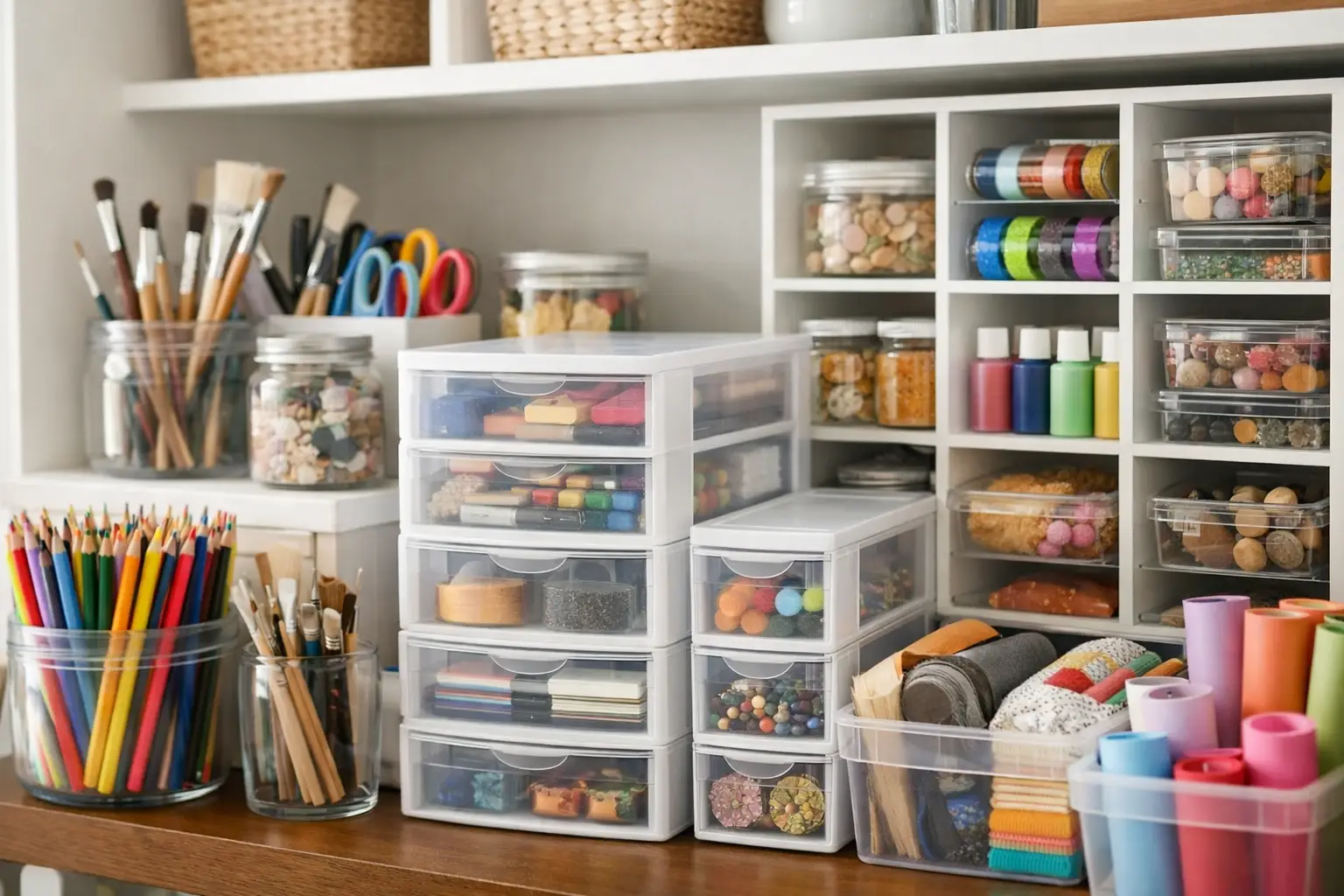
One minute you have a tidy little craft stash. A few projects later, it turns into a jumble of paper pads, half-used glue sticks, tangled ribbon and pens that never seem to stay where you left them. Good arts and crafts storage fixes that fast – not by making everything look showroom-perfect, but by making your supplies easy to find, easy to put away and ready when inspiration strikes.
For most homes, the best setup is not the fanciest one. It is the one that fits your space, your routine and the sort of crafting you actually do. A family kitchen table needs a different system from a spare-room hobby station, and a child’s art corner needs something much simpler than a serious sewing or model-making setup.
The biggest mistake is storing by appearance instead of use. Matching tubs can look neat for a week, but if scissors end up in three different boxes and the felt tips are mixed with stickers, the whole thing falls apart. When a system makes you hunt for things, you stop using it.
The second problem is overstuffing. Craft supplies are small, varied and easy to keep buying. A few bargain packs here, a few seasonal bits there, and suddenly drawers do not shut properly. Storage works better when there is a little breathing room. If every box is crammed full, tidying up becomes a chore rather than a quick reset.
There is also the reality of where crafting happens. Plenty of people do not have a dedicated room. Supplies live in the dining room, under the stairs, in a child’s bedroom or in a corner of the lounge. That means your storage has to work hard without taking over the house.
Before choosing new containers, sort what you already own. This is the bit people skip, and it is usually why they end up with the wrong storage. Put like with like. Pens with pens, paper with paper, paints with paints, sewing bits with sewing bits. Once everything is grouped, it becomes much easier to see what kind of storage you really need.
You will probably spot duplicates, dried-out supplies and odds and ends you forgot about. Clear those first. There is no point organising items you do not use or cannot use. A smaller, better-edited stash is easier to store and a lot easier to enjoy.
It also helps to separate everyday supplies from occasional ones. If the children use colouring pens and glue every week, those should be the easiest items to reach. Christmas craft bits, speciality tools or materials for one-off projects can go higher up or further back.
The most useful systems tend to be the least complicated. Clear boxes are popular for a reason. You can see what is inside without rummaging, and they stack neatly in cupboards, on shelves or under tables. They are especially handy for smaller supplies like beads, buttons, pom poms and embellishments.
Drawer units work well if you craft regularly and want things close to hand. Shallow drawers are better than deep ones for many materials because items do not disappear into a pile at the bottom. If you are storing pens, tools, stamps or sewing accessories, seeing everything at a glance saves time and hassle.
Lidded tubs are useful for bulkier items and family craft supplies. They keep things contained, which matters if your craft zone shares space with daily life. A box for paper, another for paints, and another for mixed children’s supplies is often enough to make a messy area feel manageable.
For small spaces, vertical storage makes a big difference. Shelving, stacking boxes and slim drawer towers help you use height instead of floor space. If your supplies live in a cupboard, shelf risers and baskets can stop that awkward wasted gap above your things.
Portable storage is worth considering too. If you craft at the kitchen table and clear everything away after, a carry case, handled caddy or compact trolley can save a lot of back-and-forth. It is not about having more storage. It is about having storage that moves with your routine.
Not all craft supplies behave the same way, so one storage style will not suit everything. Paper and card are best kept flat if possible, especially if you want to avoid curled corners and creases. Boxes, trays or drawers that fit standard sheet sizes make life much easier.
Paints, glues and inks need a bit more care. You want them upright, sealed and ideally grouped in a way that makes spills less likely. A wipe-clean container is a sensible choice here, particularly in homes with children.
Sewing and knitting supplies need a slightly different approach. Threads, needles, pins and buttons can become a proper tangle if they are all thrown together. Smaller divided compartments help, while larger baskets or tubs suit fabric, wool and patterns.
If your hobby involves lots of tiny components – jewellery making, model building or detailed card craft, for example – compartment boxes are often the best investment. They keep little pieces separated, visible and far less likely to vanish into the carpet.
If children are part of the crafting routine, the storage system needs to be obvious. Not clever. Not colour-coded in a way only adults understand. Just simple. Open-top tubs, picture labels and easy-access shelves help children find what they want and, just as importantly, put it back afterwards.
This is one of those areas where perfection does not matter. A family-friendly setup should be quick to reset, not styled within an inch of its life. If crayons, paper and stickers can be swept back into their right containers in two minutes, that is a win.
It is also worth keeping messier supplies slightly separate. Paint, glitter and anything with a high spill factor may be better stored higher up or in a supervised-use box. That way, children can still reach the everyday bits without every craft session turning into a full-house clean-up.
Even if you are convinced you know where everything goes, labels make a difference. They remove guesswork, help the whole household follow the same system and stop boxes turning into mystery tubs after a month. You do not need anything fancy. Clear wording does the job.
Labels are especially useful when one box holds a category that is not obvious from the outside, such as adhesives, cutting tools or seasonal craft supplies. If you use stacked storage, front-facing labels save you from pulling everything down to find one item.
That said, there is no need to label every single pencil if your space is small and your craft stash is casual. Like most storage choices, it depends on how much you own and how often you use it.
A good system should suit the way you live now, not the way you hope to live once everything is perfectly tidy forever. If you know you are not going to decant every button into a matching mini jar, do not build a system that depends on it.
Think in terms of effort. The easier it is to put things away, the more likely you are to keep the area tidy. That often means fewer lids, broader categories and containers that can handle a little bit of mix and match without becoming chaos.
This is where practical household storage really earns its keep. Useful boxes, baskets, drawer inserts and stackable organisers can turn a shelf, sideboard or unused corner into a tidy craft station without any major spend or complicated refit. That straightforward, make-life-easier approach is exactly why shops like EasyPeasyMate appeal to busy households.
Even the best arts and crafts storage will fail if supplies never get reset. The good news is that this does not need to mean a big weekly overhaul. Five minutes after each session is usually enough. Put tools back in one place, stack paper neatly, close lids properly and return the portable bits to their usual spot.
It also helps to do a seasonal check. If you craft regularly, supplies build up quietly. A quick sort every few months keeps things usable and stops your storage from filling with scraps, broken tools and materials you no longer need.
You do not need a showroom craft room to stay organised. You just need a setup that suits your home, your habits and the sort of projects you actually enjoy. When your supplies are tidy, visible and easy to grab, crafting feels less like effort and more like the relaxing, useful part of home life it should be.
If your current system makes every project start with a search, that is your sign to simplify it.
