Address
86 Amesbury Road
Manchester M9 6JF United Kingdom
Learn how to organise household essentials with simple, practical ideas that save space, cut clutter and make daily jobs quicker at home.
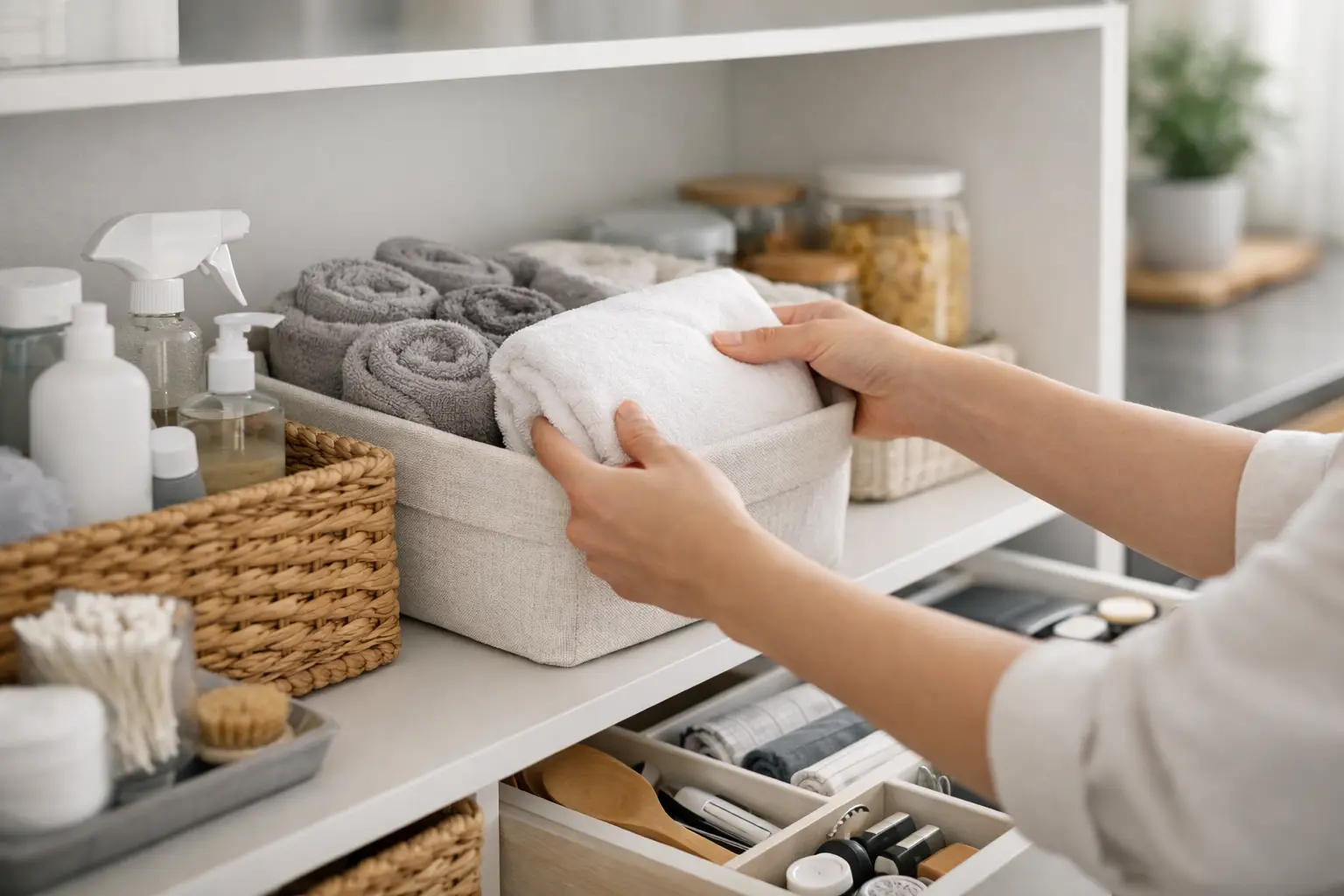
You only notice how messy household basics have become when you run out of bin bags, buy washing-up liquid you already had, or find batteries in three different drawers. That is usually the point when how to organise household essentials stops being a nice idea and becomes the job that would make the whole house feel easier to run.
The good news is you do not need a full weekend, colour-coded labels in every room, or a total pantry makeover. Most homes work better with a few sensible systems that make everyday items easy to find, easy to restock and easy to put away. If it helps you clean up faster, get out of the door quicker or avoid buying duplicates, it is worth doing.
One of the most common mistakes is storing things where there is space rather than where they are used. It sounds obvious, but it is why spare sponges end up in a utility cupboard upstairs and light bulbs disappear into a random kitchen drawer.
A better way to organise household essentials is to group items by task. Keep cleaning cloths, sprays and bin liners near the areas you clean most often. Store laundry products where laundry actually happens. Put batteries, tape, scissors and spare bulbs together as a quick-fix kit rather than scattering them across the house.
This approach saves time because you are not mentally searching as much. It also makes it far easier for everyone else in the house to find things without asking where the dishwasher tablets have gone.
Before buying tubs, baskets or drawer inserts, do a quick reset with what you already own. Empty the problem areas first. That might be the under-sink cupboard, the bathroom cabinet, the hallway catch-all drawer or the utility shelf where half-used products go to be forgotten.
As you sort, separate items into three simple groups: use now, back-up stock and do not need. The aim is not to create a picture-perfect setup. The aim is to stop storing five versions of the same thing in four different places.
Once you know what you are actually keeping, storage becomes much easier to choose. Deep baskets work well for bulky refills. Clear boxes help with small items such as pegs, fuses, batteries or first aid bits. Stackable containers are handy in cupboards, but only if you can still reach what is inside without moving half the shelf.
There is a trade-off here. Too few containers and everything drifts into clutter again. Too many, and the system becomes fiddly. For most busy households, simple beats clever.
You do not need a dedicated utility room to stay organised. Even in a smaller flat or a busy family home, a few core zones can make daily life run more smoothly.
This is where you keep your day-to-day cleaning basics, not every product you have ever bought. Think multipurpose spray, cloths, gloves, sponges, bin bags and any essentials you use weekly. If you have more than one bathroom or a large house, it often helps to keep a small cleaning caddy upstairs and another downstairs.
Keep detergent, stain remover, conditioner, pegs and spare cloths in one place. If your washing machine is in the kitchen, this might mean using a shelf, narrow trolley or lidded box so everything stays together. If children can reach the area, safe and secure storage matters more than convenience.
This is for household basics you use regularly but do not need all at once, such as washing-up liquid, dishwasher tablets, kitchen roll, foil, cling film and bin liners. A single cupboard shelf or basket is usually enough. If your back-up stock spills into multiple areas, it becomes hard to keep track.
Every home needs one reliable place for tape, glue, scissors, a measuring tape, hooks, batteries, bulbs and basic tools. It saves a surprising amount of stress when something needs sorting quickly.
Toiletries, cotton pads, spare toothbrushes, soap and other bathroom basics are easier to manage when grouped together. If space is tight, use vertical storage or slim containers inside cabinets so smaller items do not vanish behind larger bottles.
The items you use every day should be the easiest to grab. That means front of cupboard, eye level, top drawer or first basket. Refills and extras can go higher up, lower down or in a secondary storage spot.
This matters more than people think. If everyday items are awkward to reach, they quickly end up left on the worktop, beside the sink or on the stairs waiting to be put away. Good organisation is not about hiding everything. It is about making the tidy option the easy option.
In family homes, this also helps other people put things back in the right place. If the system is obvious, it is more likely to stick.
Labels can be brilliant, but they are not essential for every home. If you live alone or you naturally remember where things go, you may not need them at all. If you share with a partner, children, housemates or visiting family, labels can stop the usual cupboard shuffle.
Keep them plain and practical. “Cleaning”, “Laundry”, “Back-up toiletries” and “Car bits” work better than overcomplicated categories. You want labels that guide, not labels that need managing themselves.
If you store seasonal or less-used essentials elsewhere, label those too. It is much easier to find picnic items, pest control, de-icer or caravan supplies when they are clearly separated from everyday stock.
A few spares make life easier. Twenty extras of everything do not. One of the biggest reasons household storage feels chaotic is that useful back-up stock slowly turns into bulk buying without a plan.
Try setting a realistic limit for each category. That might be one spare washing-up liquid, one unopened pack of loo roll in the cupboard, or two extra tubes of toothpaste. The right number depends on your space, your household size and how often you shop.
If you have the room and like buying offers when they appear, keep a dedicated overflow area and nothing beyond it. Once stock spreads into random cupboards, you lose the convenience you were trying to create.
If you are working with limited storage, organisation has to be stricter. Every item needs a proper home, and multi-use products become more useful than niche ones. Under-sink space, over-door storage, shelf risers and stackable tubs can all help, but only if they make access simpler rather than more cramped.
In smaller homes, it also helps to be honest about what counts as essential. If you rarely use something and it takes up prime storage space, it may need moving elsewhere. The everyday basics should always get the best spots.
This is where a practical retailer like EasyPeasyMate.Shop fits naturally for many households. The right storage basics and everyday-use products can save a lot of faff when they are chosen for function rather than looks alone.
The best organisation systems are not the fanciest ones. They are the ones you can maintain without thinking too hard. A five-minute weekly reset is usually enough to stop the slow drift back into clutter.
Use that time to put loose items back, check what is running low and clear out anything empty, duplicated or no longer useful. You do not need a full reorganisation every month. You just need enough upkeep to keep the system working.
This is especially useful in busy homes where shopping, school runs, cleaning and seasonal jobs all overlap. A light reset now saves the bigger headache later.
If you keep ignoring the system, it probably does not suit how your home really works. That is not failure. It just means something needs adjusting.
Maybe the cleaning products are too far from where you use them. Maybe the laundry shelf is too high. Maybe the basket system works in the bathroom but not in the kitchen. Good organisation is practical, not rigid.
The test is simple. Can you find what you need quickly, see when you are running low and put things away without effort? If yes, you are on the right track. If not, simplify.
A well-organised home does not need to look perfect. It just needs to make daily jobs feel lighter, shopping feel less wasteful and those little household tasks far less annoying. Start with one cupboard, one drawer or one shelf, and make that space work properly. Once you feel the difference, the next area gets much easier.
