Address
86 Amesbury Road
Manchester M9 6JF United Kingdom
Learn how to prepare caravan storage properly with simple steps to clean, protect and secure your caravan before it sits unused for weeks.
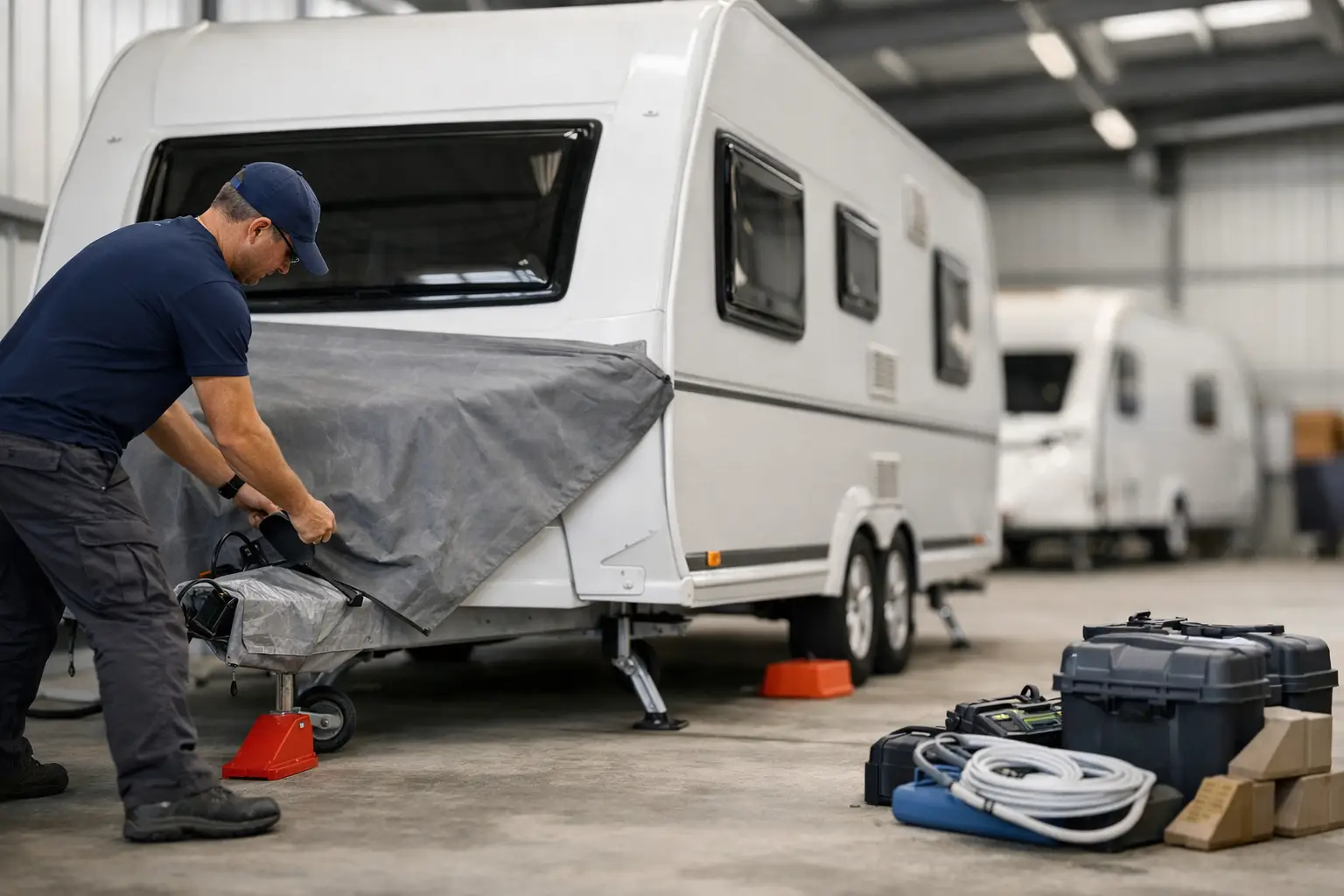
A caravan that’s put away badly in October has a habit of greeting you with damp cushions, flat batteries and stubborn smells in spring. If you’re wondering how to prepare caravan storage without turning it into a big, drawn-out job, the good news is that a few sensible checks now can save you money, time and hassle later.
The trick is to think in layers. Clean it, dry it, protect it, secure it, then leave it in a condition that’s easy to wake up again when the next trip comes round. Some owners store their caravan for a few weeks, others for a whole winter, and that changes a few details. Still, the basics stay the same.
Start indoors before you touch the outside. Interior problems often show up first after storage, especially if moisture or stale air has been trapped inside.
Take out food, toiletries and anything that can freeze, leak or attract pests. A forgotten bag of snacks or a half-used bottle in a cupboard can create more mess than you’d expect. Bedding, towels and clothing are best removed too, particularly if your storage period will be long.
Give every surface a proper clean. Wipe down worktops, cupboard interiors, tabletops and the fridge seal. Vacuum the seats, corners and floor, then mop if needed. If your caravan has had a lot of use over the season, pay extra attention to crumbs, pet hair and damp-prone areas around windows and the washroom.
Drying matters just as much as cleaning. If anything still feels damp, deal with that before storage. Leave cupboard doors, the fridge door and internal doors slightly open so air can move around. Many owners also use moisture absorbers, which can help, though they are not a substitute for fixing leaks or putting a wet caravan away.
This is the bit many people rush. Press around window seals, rooflights, corners and low-level panels. Look for staining, soft spots, peeling wall coverings or a musty smell. If you spot signs of water getting in, it’s better to deal with it before storage rather than hope it will sort itself out. It won’t.
Short-term storage may let you get away with a quick check. Winter storage needs a more careful look, because trapped moisture has months to spread.
If you want to know how to prepare caravan storage properly, this section does a lot of the heavy lifting. Systems left half-drained or half-switched-off are where many avoidable problems start.
Drain the fresh water system fully, including the water heater if your model requires it. Open taps and let the system empty as completely as possible. Don’t forget the toilet flush tank if your caravan has one. Water left in the system during colder weather can freeze and cause cracking, which is expensive and irritating in equal measure.
Waste water should be emptied and cleaned too. Rinse waste containers and let them dry before putting them away. The toilet cassette needs emptying, cleaning and storing in line with the manufacturer’s guidance.
Gas bottles should be turned off securely. Some owners remove them during storage, especially for longer periods, but that depends on where the caravan is stored and the site rules. If you do remove them, store them safely and upright in a suitable place.
Unplug leisure batteries if the caravan will be unused for a long spell. A battery left to discharge completely can deteriorate quickly. Some people remove the battery and maintain it elsewhere, while others use a maintenance charger if conditions allow. It depends on your setup, but ignoring battery care usually means buying a replacement sooner than planned.
Check that heating, cooker controls and electrical items are properly switched off rather than just left idle. Empty and clean the fridge, then leave it ajar so it doesn’t develop mould or stale odours.
The outside of your caravan takes the weather, road grime and all the green build-up that seems to appear from nowhere. Before storage, give it a proper wash using products suitable for caravan surfaces. Harsh household cleaners can do more harm than good, especially on seals, windows and trims.
Clean the roof if you can do so safely. Leaves, dirt and standing debris can hold moisture in all the wrong places. Window rubbers, awning rails and locker seals deserve attention too, because grime around those edges can hide wear.
Once it’s clean, inspect for cracks, failed sealant, loose trim or signs of impact damage. Again, this is easier to sort before long storage than after months of rain and frost.
A breathable caravan cover can help in some situations, especially if your caravan is stored outdoors for extended periods. But it’s not always a must. A poor-quality or badly fitted cover can rub paintwork or trap moisture, so this is one of those it-depends choices. If you use one, make sure it is designed for caravans and fitted correctly.
Tyres quietly suffer in storage, particularly if the caravan stays in one position for months. Check tyre pressure before storage and inflate to the recommended level. Inspect for cracks, bulges or uneven wear.
For longer periods, some owners move the caravan slightly from time to time to reduce flat spotting. Others use wheel supports, depending on the storage arrangement. What you should not do is rely on corner steadies to support the caravan’s weight. They are for stabilising, not lifting.
The handbrake question depends on storage length and conditions. Leaving it on for a short period may be fine, but for longer storage some owners prefer to use wheel chocks and leave the brake off to reduce the risk of it sticking. Check your manufacturer guidance and storage site advice before deciding.
A well-prepared caravan should also be a hard target. If it’s stored at home, keep it in the most secure position you can, ideally behind gates or in a well-lit area. If it’s on a storage site, make use of all the security measures available rather than assuming the site alone is enough.
Use visible deterrents such as wheel clamps and hitch locks. Mark valuables and remove portable items where possible. Curtains left open or shut is largely personal preference, but avoid leaving anything expensive in plain sight if windows allow visibility.
It’s also worth checking your insurance policy before storage starts. Some policies have conditions around approved locks, storage locations or periods of inactivity. That small bit of admin can matter if you ever need to claim.
Mice and condensation can do plenty of damage without making much noise about it. That’s why good storage prep is less about one big dramatic task and more about stopping little problems from growing.
Ventilation helps reduce stale air and moisture, but you still want the caravan secure. Roof vents are often left as recommended by the manufacturer, while internal spaces are kept open by leaving lockers and cupboards ajar. Soft furnishings should be clean and dry, and seat bases may benefit from being stood up slightly to improve airflow if your layout allows.
For pests, seal obvious entry points if you find any, clear out anything edible and avoid leaving cardboard, crumbs or nesting-friendly clutter behind. Pest deterrents can help, but cleanliness is usually the first line of defence.
Before you walk away, do one slow lap inside and out. Are all windows and rooflights shut properly? Are taps left in the correct position after draining down? Is the battery dealt with? Have you removed food, emptied the toilet cassette and secured the hitch?
This is also a good time to make a simple note of what you’ve done and what needs attention later. If there’s a cracked seal, ageing tyre or service due next season, write it down now. Future you will be glad you did.
For many UK owners, learning how to prepare caravan storage is really about keeping next season easy. A clean, dry, secure caravan is far less likely to hit you with nasty surprises when the weather improves and you fancy getting away. A bit of effort now keeps the whole thing simple later – and that’s usually the best kind of maintenance.
