Address
86 Amesbury Road
Manchester M9 6JF United Kingdom
Learn how to babyproof kitchen cupboards with simple, practical steps to keep cleaning products, sharp tools and breakables out of reach.
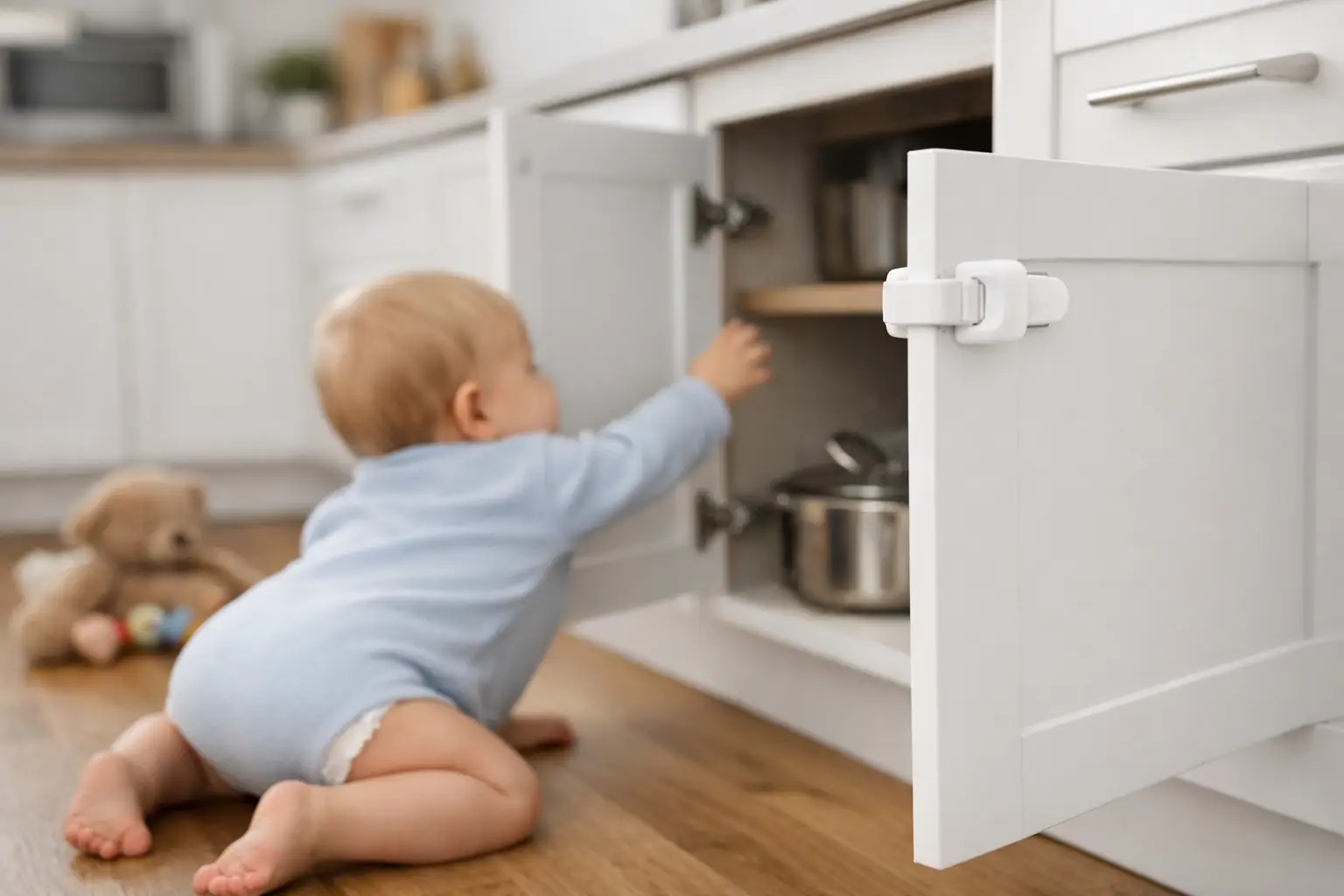
That moment when your baby goes from sitting happily on the floor to opening a cupboard in seconds tends to happen with very little warning. If you are wondering how to babyproof kitchen cupboards, the good news is that you do not need a full kitchen refit or a complicated setup. You just need to make the risky cupboards hard to access, move dangerous items higher up, and choose cupboard locks that suit how your kitchen is used every day.
The kitchen is one of those rooms where convenience for adults and safety for children can clash a bit. You need quick access to pans, plates and cleaning bits, but a crawling baby or curious toddler sees the same cupboards as something to explore. That is why the best approach is practical rather than perfect. Babyproof the high-risk areas first, then improve the rest in a way that still works for your routine.
Kitchen cupboards are different from most storage around the home because they often hold a mix of items that can harm a child in different ways. Under-sink cupboards may contain bleach, sprays or dishwasher tablets. Lower drawers might have sharp utensils, peelers or foil. Even a cupboard full of plastic containers can become a problem if little fingers get trapped in hinges or heavy stacks topple forward.
There is also the speed factor. Babies and toddlers are fast, especially once they realise cupboards open. A kitchen can go from calm to chaotic in less than a minute, so relying on supervision alone is rarely enough when you are unloading shopping, making tea or serving dinner.
The simplest way to start is to divide your cupboards into three groups. First, there are cupboards that must be locked at all times. These usually include anything with cleaning products, medicines, alcohol, sharp tools, glass or small items that could be a choking risk. Second, there are cupboards that are safer but still worth securing, such as pan cupboards or drawers with heavier kitchenware. Third, there are cupboards you can leave as low-risk spaces, especially if you want your child to have one safe place to explore with wooden spoons or plastic bowls.
This matters because not every cupboard needs the same level of protection. If you try to lock absolutely everything, daily life gets irritating very quickly. On the other hand, if you only lock the obvious cupboard under the sink, you may miss other hazards sitting lower down.
Before fitting any locks, empty out the cupboards that worry you most and have a proper look. Cleaning products should ideally be stored in a high cupboard as well as behind a childproof lock. Babyproofing works best in layers. A lock slows access down, but moving dangerous items out of reach gives you an extra buffer if a latch is not closed properly.
Sharp objects need the same treatment. If you keep knives in a drawer, that drawer should be secured. Scissors, graters, skewers and peelers are easy to overlook because they are everyday tools for adults, but to a toddler they are simply reachable hazards.
Glassware, ceramic dishes and anything particularly heavy are also worth relocating if they are stored low down. Even if a child cannot use them, they can still pull them out and drop them.
When people look up how to babyproof kitchen cupboards, they often expect one universal answer. In reality, the best lock depends on the cupboard style, how often you open it, and whether you want a temporary or more fitted option.
These are popular because they are easy to fit and usually do not need screws. They work well on double-door cupboards, some appliances and awkward surfaces. For renters, they are often the least stressful option because they tend to leave less damage behind.
The trade-off is that not all adhesive locks cope equally well with heat, steam and frequent use in a busy kitchen. If the cupboard gets opened twenty times a day, cheaper versions can lose grip over time.
Magnetic locks sit inside the cupboard, so they are less visible from the outside. That makes them a tidy-looking option if you do not want your kitchen covered in external catches. You unlock them using a magnetic key.
They are especially handy if you want strong protection without changing the look of the cupboard doors. The downside is practicality. If the magnetic key goes missing during a rushed breakfast, it can be a pain.
These fit inside the cupboard and release when an adult presses the catch. They are a solid choice for many standard kitchen units and are generally more discreet than external latches.
They can, however, take a bit more patience to install properly. If they are badly aligned, they become annoying for adults and unreliable for safety.
If your cupboards have side-by-side handles or knobs, sliding locks can be a quick fix. They loop around both handles and stop the doors from opening.
They are convenient and simple, but only work with the right handle setup. They are not much use on handleless kitchens or single-door cupboards.
Once you have chosen your lock type, fit the most important cupboards first rather than trying to do the whole kitchen in one go. Test each one properly. Give the door a firm tug, open and close it several times, and make sure the latch works when you are in a hurry, not just when you are standing there reading the instructions.
It is also worth checking whether grandparents, older children or other regular carers can use the locks easily. A babyproof setup only helps if everyone actually uses it. If a lock is too fiddly, people may start leaving cupboards unsecured for convenience.
Kitchen cupboards get most of the attention, but drawers can be just as risky. Cutlery drawers, baking drawers and those random junk drawers full of batteries, matches and clips all deserve a second look. If a drawer contains anything sharp, heavy or small enough to swallow, secure it.
The kitchen bin is another issue, especially for toddlers who love lifting lids and pulling things out. If your bin sits in a low cupboard, that cupboard should be treated as a hazard zone. Freestanding storage trolleys and utility units may also need moving or anchoring if they can be pulled over.
This is one of the easiest ways to make kitchen life simpler. Alongside locked cupboards, create one low cupboard or drawer that your child is allowed to open. Fill it with safe items like plastic bowls, silicone utensils or empty food containers.
It will not stop all curiosity, but it can redirect some of it. More importantly, it gives you a practical yes-space in a room full of no-spaces, which helps when you are trying to cook without a small helper attached to your leg.
If you rent, look for non-drill options first. Adhesive locks and handle locks are usually the most straightforward. Before sticking anything down, clean the surface well so the adhesive bonds properly. Grease, dust and cooking residue can shorten the life of the fix.
It is still worth reading your tenancy terms if you are unsure about adhesives or fittings. Some surfaces mark more easily than others, especially certain laminate finishes.
Babyproofing is not a one-time job. What works for a crawler may not be enough for a toddler who can climb, reach and copy what adults do. A lock that felt secure three months ago may become less effective once your child starts watching how it opens.
Do a quick check every few weeks. See if any adhesive is lifting, whether catches are loosening, and whether cupboard contents need moving again. If you have started storing dishwasher tablets or pet food somewhere new, that area may now need protection as well.
A simple, dependable setup is usually the best one. You do not need a showroom-perfect kitchen to make things safer. You just need a few sensible barriers, a better place for the risky items, and a system you can stick with on busy mornings, rushed evenings and everything in between. If it makes daily life easier while keeping little hands out of trouble, you are on the right track.
