Address
86 Amesbury Road
Manchester M9 6JF United Kingdom
Learn how to remove pet hair from sofas, carpets, clothes and cars with simple, practical methods that save time and keep your home looking tidy.
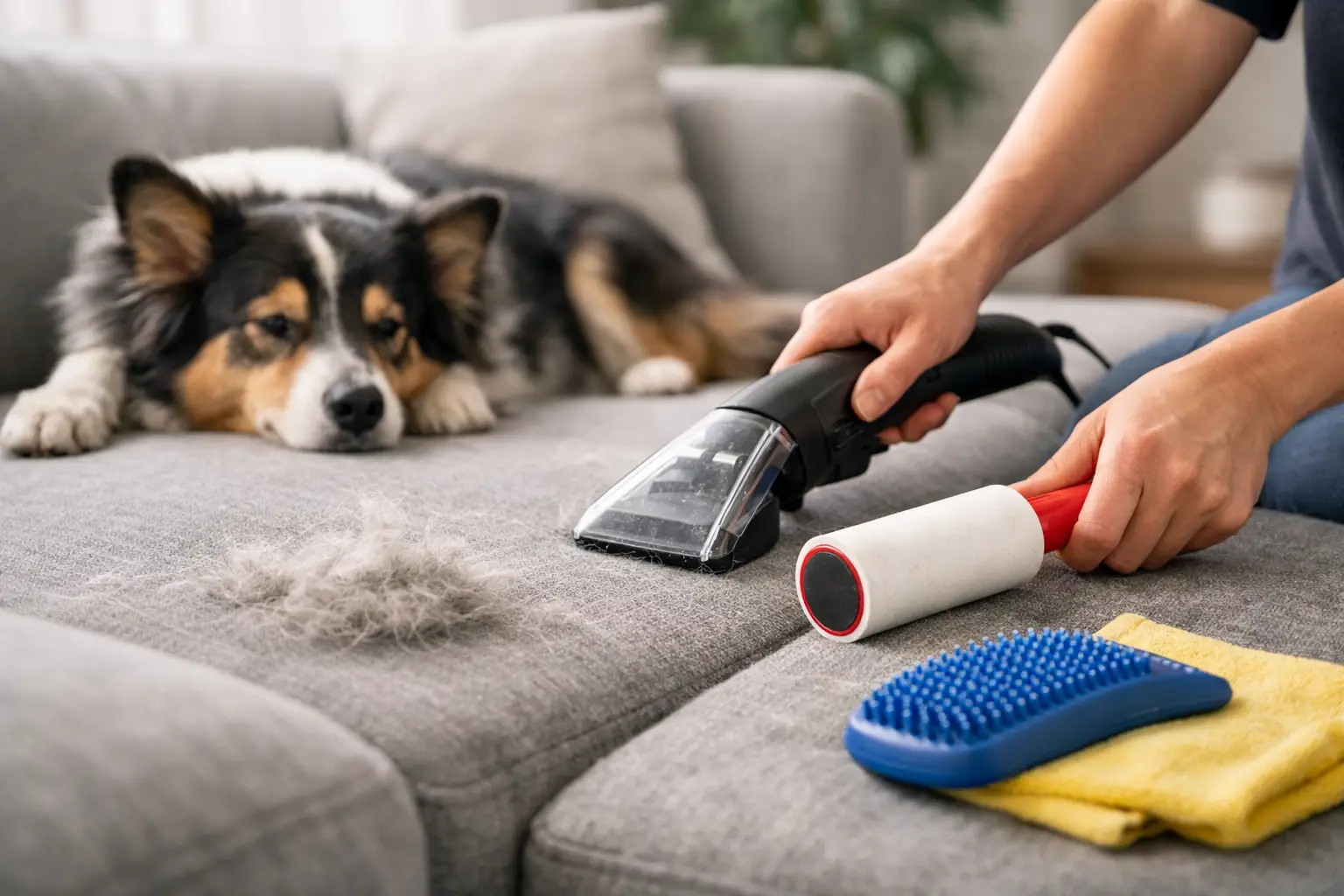
You vacuum the sofa, pull on a clean jumper, and somehow there it is again – a fine layer of fur clinging to everything. If you have a cat or dog at home, knowing how to remove pet hair quickly can make the difference between a tidy house and a constant losing battle.
The good news is that pet hair is usually more about method than effort. A lot of people spend ages going over the same surfaces without really shifting the hair because different materials hold fur in different ways. Upholstery, carpets, bedding and car seats all need a slightly different approach.
Pet hair tends to cling because of static, woven fibres and simple everyday pressure from sitting, walking and washing. That is why the same hoover that works well on hard floors can struggle on stairs or cushions. Before reaching for every cleaning product in the cupboard, it helps to match the tool to the surface.
On sofas and upholstered chairs, a rubber brush or dampened rubber glove often works better than vacuuming alone. Run it across the fabric in one direction and the hair will gather into clumps that are easy to lift away. If the fabric is delicate, use a lighter touch and test a small patch first. Velvet, loose weaves and older upholstery can mark if you scrub too hard.
Carpets usually need a two-step job. First, loosen the embedded hair with a carpet rake, rubber broom or pet hair brush. Then vacuum slowly using the correct floor head. Fast passes do not give the machine much chance to lift trapped fur, especially on dense pile carpets. If you have pets that moult heavily, this one change in routine can save a lot of repeat cleaning.
Beds, throws and pet blankets are easier if you deal with the hair before washing. Give them a shake outdoors, then run a lint roller or soft brush over the surface. If they go straight into the washing machine covered in fur, the hair can spread to other items and cling to the drum and seal.
Clothing is the most obvious annoyance because you usually notice it when you are about to leave the house. For everyday touch-ups, a lint roller is the simplest option. If you do not have one nearby, slightly damp hands can work surprisingly well on thicker fabrics like fleece, cotton joggers and some coats. Fine knits and darker clothing usually need something gentler and more precise.
If you are working out how to remove pet hair without turning it into a full weekend task, a few basic tools go a long way. You do not need a cupboard full of gadgets, but you do need tools that suit the job.
A lint roller is the quick-fix option for clothes, cushions and lampshades. It is handy, fast and easy to store, though it is not always the cheapest long-term choice if you use sheet after sheet every day. A reusable lint brush can be better value for regular use and creates less waste.
Rubber gloves are one of the most useful low-cost tricks for upholstery. Slightly dampen them, then sweep your hands across the surface. The hair balls up quickly, which makes collection much easier. This works well on stairs too, where vacuum attachments can be awkward.
For carpets and rugs, a rubber broom or specialist pet hair brush often beats repeated vacuuming. It lifts hair trapped deep in the fibres and brings it to the surface. If your carpet is looped or delicate, use care – aggressive brushing can be too much for some materials.
Vacuum cleaners still matter, of course, but attachment choice makes a big difference. A motorised brush head, upholstery nozzle or narrow crevice tool can all help depending on where the hair is collecting. Emptying the vacuum regularly also helps maintain suction. A half-full canister packed with fluff and fur will not perform at its best.
Laundry can either help solve the problem or quietly make it worse. If pet hair is all over your clothing, the tumble dryer is often useful before washing rather than after. A short air-only or low-heat cycle can loosen fur so it collects in the lint filter instead of staying stuck to fabric.
Once that is done, wash as normal, but avoid overloading the machine. Clothes need room to move if you want hair to release properly. Adding too much into one load can leave fur trapped between items.
Fabric type matters here. Smooth synthetic sportswear can hold onto hair in a way that cotton does not, while wool can almost invite it in. If you wear dark office clothes or school uniforms, keeping a lint roller near the front door or in the car can save last-minute stress.
It is also worth cleaning your washing machine seal and filter now and then if you live with heavy shedders. Pet hair builds up there over time, and once it does, it has a habit of reappearing where you least want it.
Pet hair in the car is its own special challenge. The fabric is tighter, the space is smaller, and hair gets worked into seats and boot linings every time your pet jumps in. Standard vacuuming helps, but on its own it often leaves plenty behind.
Start by removing mats and shaking them outside. Then use a rubber brush, pet hair stone or glove on the seats and carpeted areas to loosen the fur before vacuuming. Work in short strokes rather than broad sweeps. In a confined space, slow and targeted is usually better.
If your dog travels regularly, seat covers and boot liners are worth considering because prevention is much easier than deep cleaning. They will not stop every stray hair, but they reduce how much gets embedded in the original fabric. That means quicker clean-ups and less wear on the interior over time.
The same thinking applies to caravans. Soft furnishings, bedding and compact flooring can collect pet hair quickly in a small space, so regular light cleaning is often easier than occasional heavy cleaning.
The best answer to how to remove pet hair is often to stop so much of it settling in the first place. Regular grooming helps, especially during seasonal shedding. Brushing your pet little and often can reduce how much loose hair ends up on carpets and soft furnishings.
Washing pet beds, blankets and throws on a routine basis also keeps fur from spreading around the house. If your pet has favourite spots on the sofa or bed, covering those areas with washable throws can save a lot of effort.
Static can make hair cling more stubbornly, particularly in dry indoor conditions. On some surfaces, a very lightly damp cloth works better than a dry one because it lifts rather than flicks the hair around. The key word is lightly – too much moisture can mark fabrics or make the job messier.
And if you are cleaning in a busy household, do not aim for perfection every single day. A quick pass with the right tool in the right place is often more useful than dragging out a full hoover and getting fed up with the whole task.
There are times when pet hair is simply too embedded for a single tool to sort it. Old carpets, textured upholstery and car boots usually need a combination of loosening, lifting and vacuuming. That is normal. If one method is not doing much, it does not always mean you are doing it wrong – it may just mean the surface needs a second step.
That is why practical households tend to keep a small mix of tools on hand instead of relying on one miracle fix. A lint roller for clothes, a rubber brush for upholstery and stairs, and a decent vacuum setup for floors will cover most situations without overcomplicating things. It is the simple, useful approach that makes life easier, which is exactly the sort of thinking EasyPeasyMate.Shop is built around.
Pet hair has a talent for turning up five minutes after you have cleaned, but it does not have to take over your day. With the right method for each surface, you can keep on top of it quickly, get your home looking fresher, and spend less time chasing fur from room to room.
