Address
86 Amesbury Road
Manchester M9 6JF United Kingdom
Steam mop vs vacuum - which is better for your floors? Compare cleaning power, hygiene, floor types, costs and when it makes sense to use both.
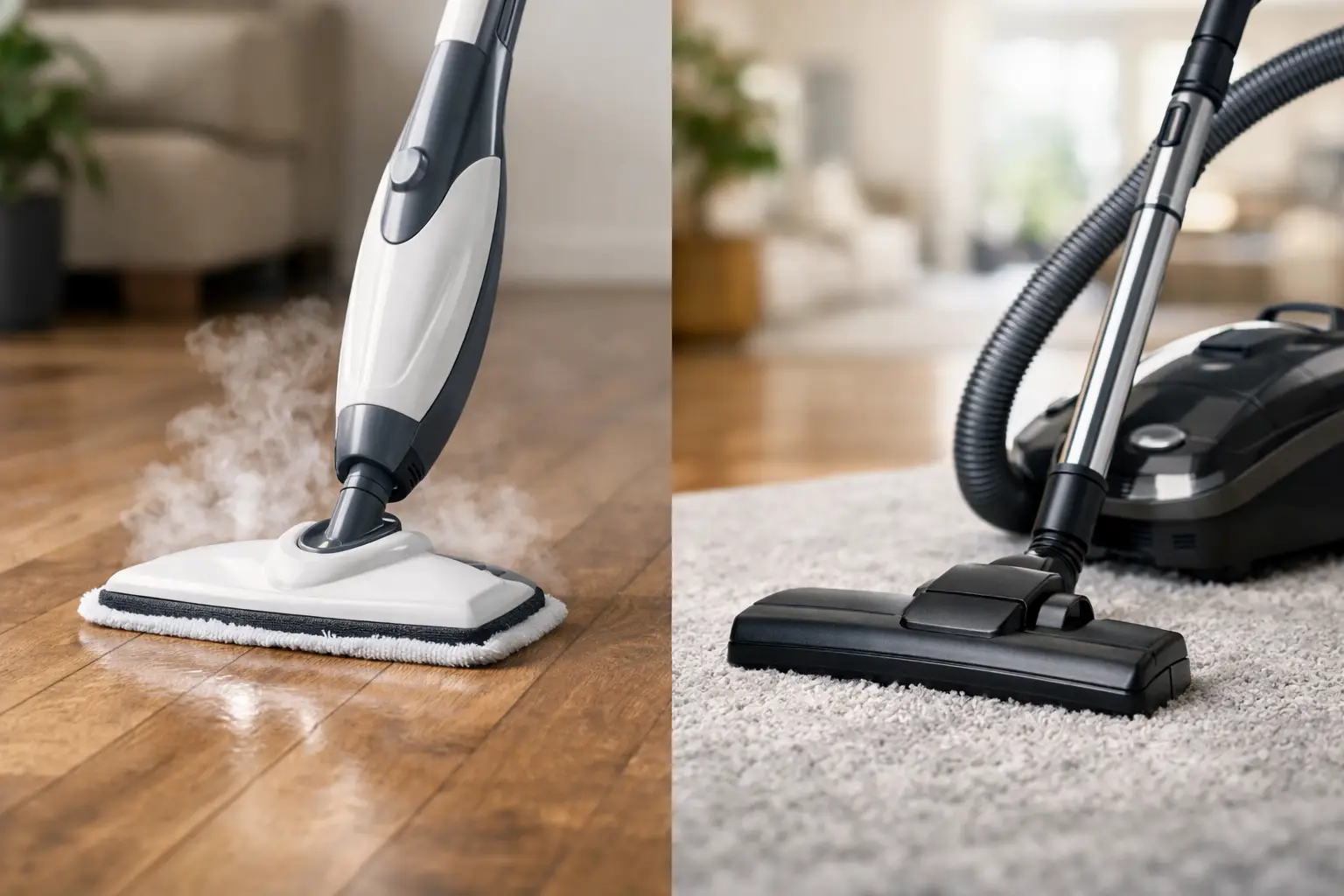
A floor can look clean and still feel gritty underfoot five minutes later. That is usually where the steam mop vs vacuum question starts – not with gadgets, but with the daily reality of crumbs in the kitchen, pet hair in the hallway and mystery marks near the back door.
If you are choosing between the two, the short answer is simple: a vacuum removes dry dirt and loose debris, while a steam mop tackles stuck-on mess and gives hard floors a deeper clean. The better choice depends on your flooring, your household and how much time you want to spend going over the same area twice.
A vacuum is built to lift dust, hair, crumbs and fine debris from floors and, in many cases, rugs and carpets too. It works before the mess has bonded to the surface. That makes it the everyday workhorse for busy homes.
A steam mop does a different job. It uses heated steam to loosen grime on sealed hard floors such as tile, sealed wood, vinyl and laminate, depending on the manufacturer’s guidance for your flooring. Rather than sucking up debris, it softens and wipes away marks, spills and sticky residue.
So this is not really a straight fight. It is more about which tool solves the problem you actually have. If the issue is biscuit crumbs, dried mud or pet fluff, a vacuum usually wins. If the issue is footprints in the kitchen or something sticky near the bin, steam has the edge.
For most households, the vacuum gets used more often. That is because most floor mess is dry, loose and quick to remove. In family homes especially, the mess tends to arrive in layers throughout the day – cereal, lint, tracked-in dirt, hair and garden bits that somehow make their way inside.
A vacuum is usually the more practical choice if you have carpets, rugs or a mix of floor types. It is also better for corners, skirting boards, stairs and awkward spots where a steam mop may not reach properly. If allergies are a concern, a good vacuum can also help reduce dust sitting on floors before it gets walked back into the air.
There is also the convenience factor. Most people can grab a cordless vacuum, do a quick pass through the kitchen and hall, and carry on with the day. Steam mopping tends to feel more like a deliberate cleaning job rather than a quick tidy-up.
The biggest advantage is speed. You can deal with visible mess in minutes, and there is no waiting for pads to heat up or floors to dry. That matters when you are cleaning around work, school runs and everything else.
Vacuums are also more versatile. Many models handle sofas, car interiors, stairs and pet beds as well as floors. If you want one machine that earns its place in the cupboard, a vacuum usually offers more flexibility.
A vacuum will not sanitise hard floors in the way steam can, and it will not do much for sticky marks unless it has a wash function built in. It can also scatter larger debris if the floor head is not suited to hard flooring.
That is why some people vacuum regularly but still feel their kitchen floor never looks properly fresh. Removing dust is not the same as lifting grime.
A steam mop comes into its own on sealed hard flooring that sees a lot of traffic. Kitchens, utility rooms, bathrooms and entrance areas are the obvious ones. If your floor picks up spills, paw prints or dried splashes, steam can make it look cleaner with less scrubbing.
It also appeals to people who want a simple, chemical-light cleaning routine. Heat and moisture can do a lot of the heavy lifting on everyday marks, which is handy if you prefer not to keep lots of floor products on hand.
For homes with mostly hard floors, a steam mop can be a very useful second tool. In some households, especially flats with no carpet, it may feel more relevant than a large vacuum. But even then, it usually works best after dry debris has been removed first.
Steam is good at shifting the sort of mess that a vacuum leaves behind – dried drips, food spots, light grease and general dullness. Floors often look brighter after use, and the finish can feel cleaner underfoot.
It can also be helpful in homes with children or pets, where floors need frequent freshening up. High-traffic zones tend to show marks quickly, and steam gives a more polished result than dry cleaning alone.
Steam mops are not right for every surface. Unsealed wood, delicate flooring and some laminates can react badly to moisture and heat. You always need to check what your floor manufacturer recommends.
They are also not ideal for loose debris. If there are crumbs or pet hair on the floor, steaming first can just turn the job into a soggy mess. In practical terms, that means sweeping or vacuuming often needs to happen first anyway.
If your home is mostly carpet, the answer is easy: go for a vacuum. Steam mops are designed for hard floors, not deep-pile carpet cleaning.
If your home has mostly tile or sealed stone, the answer shifts. A steam mop can be genuinely useful because those surfaces cope well with regular mopping and tend to show marks clearly. You may still want a vacuum for dry pickup, but the steam mop will probably do the finishing work.
For laminate and wood, it depends on the floor finish and the product guidance. Some sealed surfaces can handle careful steam cleaning, while others are better cleaned with minimal moisture. This is where people get caught out, so it is worth checking before you buy.
For mixed homes – which is a lot of UK homes – a vacuum is usually the first purchase because it covers more ground. Once that is sorted, a steam mop becomes a nice upgrade for hard-floor areas.
This is where steam gets a lot of attention, and fairly so. Steam can help loosen grime and refresh hard floors without needing lots of cleaning fluid. That makes it appealing in kitchens and bathrooms where people want a more thorough-feeling clean.
Still, hygiene is not just about heat. If there is dust, crumbs and hair on the floor, those need removing first. Otherwise you are cleaning around debris rather than actually clearing it away.
A vacuum, especially one with proper filtration, plays its own part in hygiene by removing fine dust from the home. So if you are comparing the two on cleanliness alone, they each improve it in different ways.
If you only want space and budget for one machine, a vacuum is usually the safer bet. It handles more surfaces, more types of mess and more daily jobs. That gives it better value for most households.
Steam mops can still be affordable, but they are more specialised. They make sense when hard floors are a big part of your cleaning routine and you know you will actually use the feature. Otherwise, they risk becoming one of those appliances that seemed clever at first and then stayed in the cupboard.
Storage matters too. Smaller homes, flats and busy family cupboards benefit from tools that do more than one job. That is another point in favour of the vacuum.
For many homes, the honest answer is both – but in a clear order. Buy the vacuum first if you need a general all-round cleaner. Add the steam mop if your hard floors need more than a quick once-over and you are tired of sticky patches surviving the regular clean.
If your home is mainly hard flooring and you already keep dry mess under control with a broom or compact vacuum, a steam mop may feel like the bigger upgrade. But for most people, steam is the supporting act, not the lead.
At EasyPeasyMate, that is the sort of choice worth making with your real routine in mind rather than the box promise. The best cleaning tool is the one that fits the floors you have, the mess you actually deal with and the amount of effort you want to spend.
If you are still stuck on steam mop vs vacuum, think less about which one sounds more powerful and more about what is on your floor by 6 pm on a Tuesday. That usually gives you the right answer.
