Address
86 Amesbury Road
Manchester M9 6JF United Kingdom
A practical guide to caravan towing mirrors, covering UK legal rules, mirror types, fitting tips and common mistakes for safer towing.
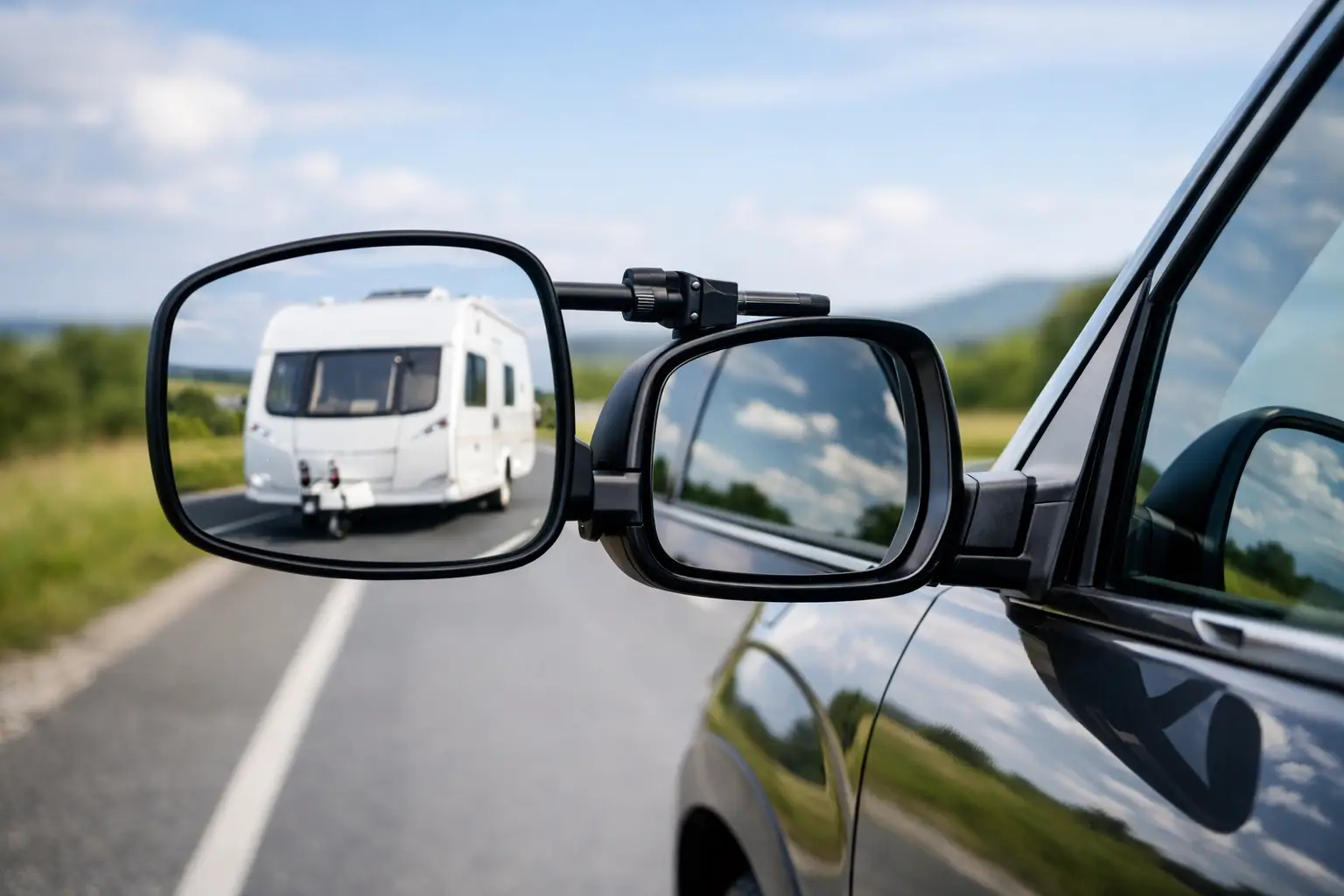
You only notice how much you rely on your mirrors when a caravan fills the lane behind you. If your standard car mirrors cannot see past the width of the van, a proper guide to caravan towing mirrors is not just handy – it is part of towing safely, confidently and legally on UK roads.
For many drivers, towing mirrors feel like one more job before setting off. Fit them badly, though, and the trip becomes a nuisance fast. You get vibration, poor visibility, awkward blind spots and that nagging feeling that changing lanes is more guesswork than judgement. Get them right, and the whole outfit feels easier to manage.
A caravan is usually wider than the towing vehicle, which means your normal wing mirrors may not give you a clear view down both sides. That matters when overtaking, moving back into lane, reversing, or simply keeping track of traffic around you. Good towing mirrors extend your field of vision so you can see further down the side of the caravan and the road behind it.
There is also the legal side. In the UK, you must have an adequate view to the rear. If the caravan blocks that view, extra mirrors are required. If you tow without them when needed, you could be stopped by the police, fined, and told not to continue until the issue is sorted. So while towing mirrors are a practical accessory, they are also one of the basics.
The rule is simple in everyday terms: if your caravan is wider than your car and your normal mirrors do not let you see clearly behind, you need extension mirrors. The legal standard is based on seeing a defined area behind and to the sides of your caravan, but most drivers do not need to memorise measurements. What matters is whether your mirrors give you a proper rearward view on both sides.
Your towing mirrors must also be secure and should not create extra danger. If they shake badly, slip out of position or stick out excessively when not needed, they are not doing the job properly. Some drivers buy the cheapest pair they can find, then spend the journey adjusting them at every stop. That rarely saves money in the long run.
There is no single best mirror for every car and caravan combination. The right choice depends on your vehicle shape, mirror housing, how often you tow and how much convenience matters to you.
These are common because they are affordable and fit a wide range of vehicles. They usually attach with straps and clamps around the existing wing mirror housing. A decent set can work very well, especially for occasional caravanners, but fit is everything. On some vehicles they sit firmly and give a stable view. On others they can be fiddly, prone to vibration or awkward to align.
Clamp-on styles use a gripping mechanism rather than long straps. Many drivers find them quicker to fit and neater in use. The catch is compatibility. Some modern car mirrors have shapes or finishes that do not suit every clamp design, so what fits one vehicle neatly may not suit another at all.
These are designed to suit particular makes or models. If you tow regularly, they can be worth the extra spend because the fit tends to be more secure and the setup less hassle. They are not always the cheapest option, but they often save time and frustration, especially if you do several trips a year.
Some towing mirrors use flat glass for a more natural sense of distance, while convex glass gives a wider field of view but makes vehicles appear further away. Neither is automatically better. Flat glass can feel more familiar for lane changes, while convex can help reduce blind spots. Many drivers like a combination, especially on longer outfits.
A good guide to caravan towing mirrors should not stop at mirror type. The small details make a big difference once you are on the road.
Stability comes first. If a mirror shakes at motorway speed, your view becomes blurred and tiring to use. Look for a design with solid fixings and enough adjustment to sit snugly on your car mirror. Ease of fitting matters too. If attaching them feels like a wrestling match every time, they are less likely to be fitted carefully.
Adjustment range is another big one. You want enough movement to set the mirror correctly for your seating position and caravan width. It also helps if the mirror head is large enough to be genuinely useful. Tiny mirror glass may technically extend your view, but it will not make towing feel easy.
Finally, think about storage. Towing mirrors spend a lot of time in the boot, garage or caravan locker. A set that is compact, not overly fragile and easy to pack away tends to stay in better condition.
Most problems with towing mirrors are fitting problems rather than product problems. Before you start, make sure both your standard car mirrors are clean and correctly adjusted. Then attach the towing mirrors according to the maker’s instructions, checking that straps or clamps are tight but not forced.
Once fitted, sit in the driver’s seat and adjust each towing mirror so you can see along the side of the caravan and the lane behind. You do not want the mirror aimed mostly at the side of your own van. You need a useful picture of what is happening behind and beside you.
After a few miles, stop somewhere safe and check them again. It is normal for a fresh setup to need a small tweak. If a mirror has shifted already, it is a sign it was not fitted securely enough or is not the best match for your vehicle.
One of the biggest mistakes is assuming wider is always better. Mirrors that stick out far beyond what you need can be more likely to catch vibration or feel awkward on narrow roads. You need enough extension for a legal, clear view – not the widest possible setup.
Another common issue is relying on towing mirrors to fix poor towing habits. Mirrors help, but they do not replace slower lane changes, better anticipation and proper awareness of caravan swing. You still need to take corners wider, leave more braking distance and check your view calmly before any manoeuvre.
Some drivers also fit the mirrors and never test them before a long trip. That is asking for hassle on the first dual carriageway. A short local run gives you time to spot movement, glare or blind spots before you are committed to a holiday journey.
If you tow once or twice a year on modest distances, a well-made universal pair may do the job perfectly well. Plenty of caravan owners want something straightforward, affordable and easy to keep in the boot. That is a sensible choice if the fit is secure and the visibility is clear.
If you tow frequently, cover long motorway miles or have struggled with vibration before, spending more often makes sense. Better materials, better fixings and a more vehicle-specific fit can make the drive noticeably less tiring. It is one of those cases where value is not just about the price on the box. It is about whether the product actually makes life easier.
For drivers who want practical kit without overcomplicating the search, EasyPeasyMate.Shop fits that everyday approach well – simple products, clear purpose, less faff.
Before you set off with the caravan, give the mirrors a quick routine check. Make sure both are secure, both are adjusted from your driving position and both give a clear rearward view. Check the straps or clamps are not pressing in an unsafe way against the car mirror housing, and make sure the glass is clean.
It is also worth checking again if the weather changes. Heavy rain, road spray and low sun can affect visibility more than drivers expect. A mirror that seemed fine on a dry driveway can feel very different on a wet A-road.
The best towing mirror setup is the one that lets you stop thinking about the mirrors and focus on the road. That usually means choosing a pair that fits your car properly, gives a steady view and takes only a few minutes to set up. A little care before you leave home can make the whole journey calmer, safer and a lot less of a chore.
