Address
86 Amesbury Road
Manchester M9 6JF United Kingdom
Learn how to unblock outdoor drains with simple UK-friendly steps, common causes, safety tips and when it’s best to call a professional.
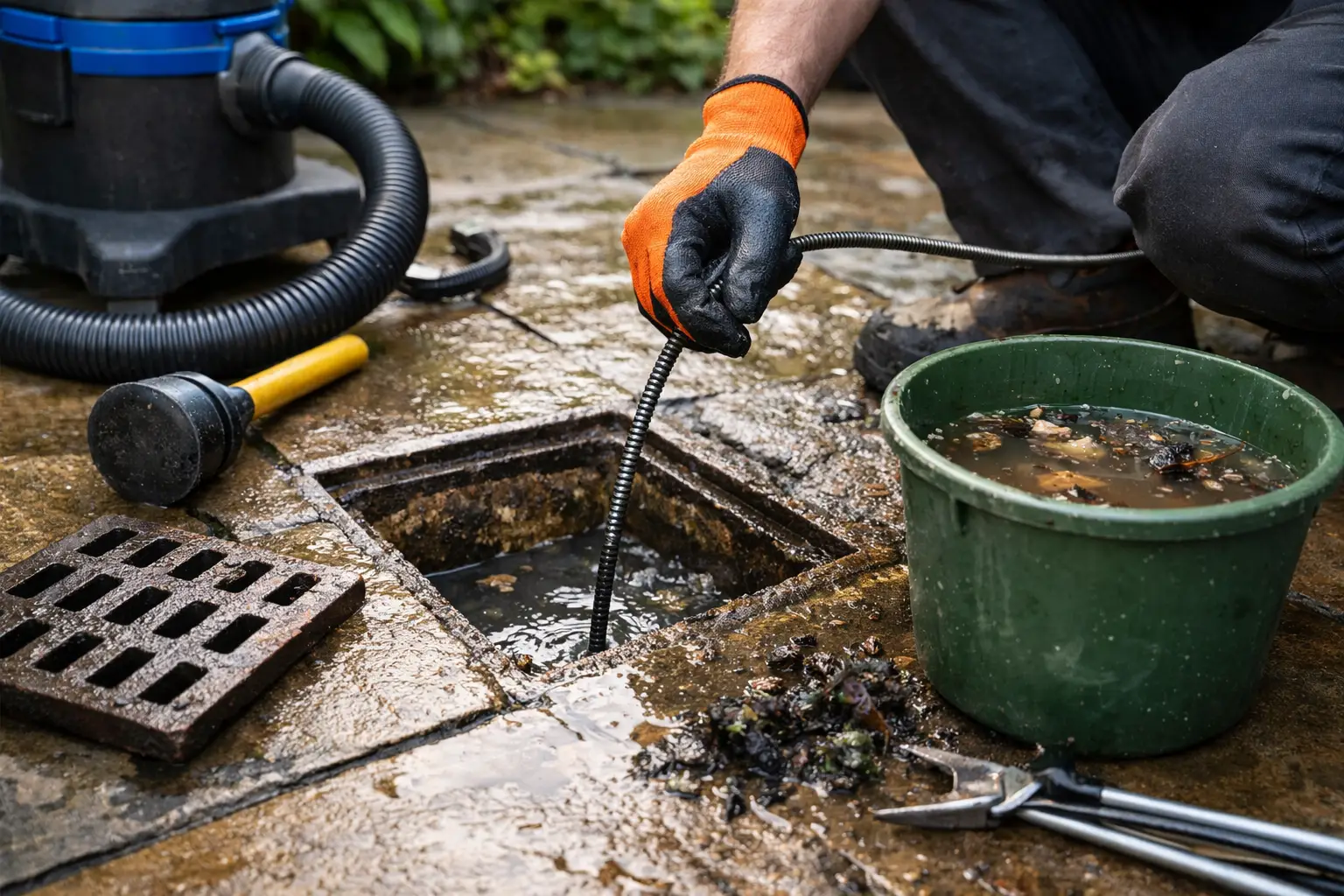
A drain that was coping fine yesterday can suddenly turn your patio, path or driveway into a shallow, grubby pond. If you are wondering how to unblock outdoor drains without turning it into a full weekend job, the good news is that many blockages can be cleared with a few basic tools, a bit of patience and the right approach.
Outdoor drains usually block for fairly boring reasons – leaves, mud, moss, silt, fat washed outside, or a build-up of garden debris after wet weather. The trick is working out whether you are dealing with a simple surface blockage or something deeper in the line. That tells you whether it is a quick DIY fix or a point where it is smarter to stop and get help.
Before you start, put on rubber gloves and old clothes, and if the drain is especially dirty, wear eye protection too. Outdoor drains can contain bacteria, sharp bits of debris and standing water you do not want splashing back at you. Keep children and pets away while you work, especially if you are lifting drain covers or using cleaning products.
Start with the easiest check first. Lift away any grates or covers and look at what is happening at the top of the drain. Quite often, the blockage is right there in plain sight – soggy leaves, clumps of moss, weeds, litter or compacted mud. If that is all it is, a gloved hand, a drain scoop or a small trowel may be enough to clear it.
Once the visible debris is out, pour a bucket of water into the drain and watch what happens. If it drains away freely, you have probably solved it. If the water rises, drains slowly or sits there, the blockage is likely a bit further down.
For a blockage close to the surface, manual clearing is usually the quickest option. Remove as much solid material as possible first. It is not glamorous, but it matters. Pushing water onto a drain packed with leaves and sludge often just compacts the mess.
After that, try flushing with several buckets of hot, not boiling, water. Hot water can help shift greasy residue and loosen sludge, but boiling water is not always a good idea, especially if there are older pipes involved or a sudden temperature shock could cause damage. If the drain handles the first bucket and the water level starts dropping, keep going.
A stiff outdoor brush can also help break up muck around the mouth of the drain. If there is a trapped gully beneath the cover, clear around the edges thoroughly. A lot of outdoor drain problems are less about one dramatic blockage and more about layers of grime building up until water has nowhere sensible to go.
If the blockage is further along, a plunger may work better than people expect. This is especially useful if there is standing water in the gully, because the water helps create pressure. Use a firm up-and-down motion and keep the seal as tight as you can. It can feel a bit awkward outdoors compared with a kitchen sink, but it is worth a try before moving on to heavier tools.
Drain rods are the next step when the obstruction is deeper in the pipe. Feed the rods in slowly and turn them gently. The important bit is not to force them. If you ram them forward too aggressively, you can compact the blockage or risk damaging pipework, particularly in older properties.
In the UK, many drain rods screw together. Keep tightening them as you work so sections do not come loose inside the drain. That turns an annoying blockage into a much bigger problem. When you feel resistance, work carefully to break up or pull back the obstruction, then flush with water to see if flow improves.
A pressure washer with a drain cleaning attachment can be very effective for silt, soft organic matter and greasy build-up. It is a handy option if the drain is accessible and you already know the blockage is not caused by a collapsed pipe or major root ingress.
That said, more pressure is not always better. If your drainage system is old, cracked or poorly joined, blasting water through it can make things worse. It also will not magically fix a solid obstruction such as bricks, heavy root growth or damaged pipework. If you try this method and get no movement at all, do not keep hammering away at it for hours.
If you keep having the same issue, the blockage itself is only half the story. Leaves and garden waste are common culprits, especially in autumn or after storms. Moss from roofs and patios can wash down and settle into a thick sludge. Mud and grit from shoes, bins, driveways and flowerbeds build up slowly until the water has no clear path.
Some outdoor drains also end up dealing with things they were never meant to handle. Paint, cement wash-off, cooking grease, pet bedding, wipes and bits of packaging can all cause trouble. Even if an item gets past the grate, it does not mean it belongs in the drain.
There is also the question of tree roots. If you notice repeated slow drainage, bad smells, or blockages that keep returning even after clearing, roots may have found their way into damaged joints or cracks. That is usually beyond basic DIY.
There is a point where trying one more thing stops being practical. If several drains are backing up at once, the issue may be further down the system rather than at one drain opening. If sewage smells are strong, waste water is coming back up, or the blockage returns almost immediately, it is sensible to get a drainage specialist involved.
The same applies if you suspect a collapsed pipe, root intrusion or a shared drainage problem. In some cases, especially with external drains connected to public sewers, responsibility may depend on where the blockage sits. For rented homes, you may also need to contact the landlord or managing agent rather than arranging repairs yourself.
Pay attention to the weather as well. During very heavy rain, an outdoor drain can appear blocked when it is actually overwhelmed by volume. If water drains away once the downpour eases, capacity may be the issue rather than a physical obstruction. If it happens every time it rains properly, your drainage may need maintenance or improvement rather than another quick clear-out.
Prevention is much easier than clearing a flooded patio in the rain. A quick check every few weeks can save a lot of hassle, especially in leaf-fall season or after windy weather. Remove leaves, weeds and silt before they form a soggy plug.
It also helps to keep nearby areas cleaner. Sweep patios and paths regularly, and try not to wash piles of dirt straight towards the drain. If you are cleaning up after gardening or outdoor DIY, pick up the heavy mess first instead of hosing everything into the nearest gully.
Drain guards and grates can make a real difference, provided you clean them often. They catch larger debris before it enters the system, which is exactly what you want, but they are not fit-and-forget. Left clogged, they simply create a blockage higher up.
For households that like practical fixes without overcomplicating the job, keeping a few basic maintenance tools on hand makes life easier – gloves, a scoop, a stiff brush and drain rods cover most of the common problems.
The best approach to how to unblock outdoor drains is to start simple, check what the water is telling you and avoid going straight for the harshest option. Most minor blockages come down to debris you can remove, loosen or flush through with basic kit and a bit of care.
If it clears, great. If it does not, that is useful information too. There is no prize for wrestling with a drain for half a day when the problem is deeper in the system. Sometimes the easiest life really does come from knowing when to do the straightforward fix yourself and when to hand it over.
