Address
86 Amesbury Road
Manchester M9 6JF United Kingdom
Our everyday cleaning tools guide helps you choose useful, affordable essentials for kitchens, bathrooms, floors and quick household jobs with less fuss.
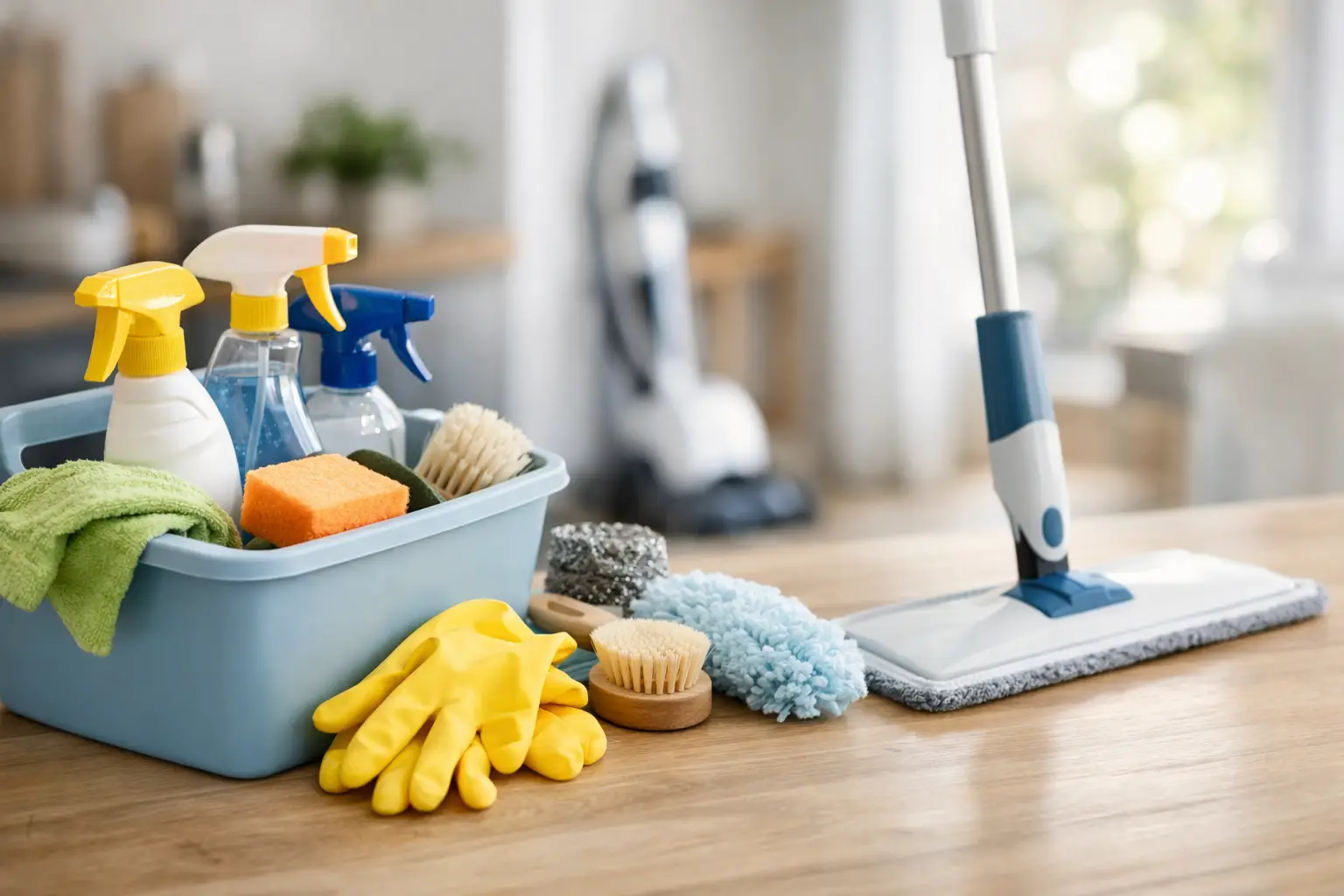
A sticky worktop, toothpaste marks on the bathroom mirror and crumbs under the table rarely need a cupboard full of specialist products. This everyday cleaning tools guide focuses on the useful basics that make routine jobs quicker, simpler and far less frustrating. With the right few tools close to hand, a ten-minute tidy can genuinely feel like ten minutes.
The best cleaning kit is not necessarily the biggest one. It is the one that suits your home, your flooring, your available storage and the way your household actually lives. A busy family kitchen needs different priorities from a compact flat with mostly hard floors, while pet owners may want to put hair removal at the top of the list.
Start by thinking in areas rather than buying products because they look useful on the shelf. Most homes need a reliable way to wipe surfaces, clean glass, tackle the loo, deal with floors and reach awkward spots. Once those jobs are covered, add extras only where they solve a regular problem.
A simple kit also makes it easier to keep cleaning going. If the duster, cloths and spray are all in different cupboards, it is tempting to leave a small job until later. Keep your most-used items together in a caddy or handled basket, then take it from room to room when needed.
If there is one item worth having several of, it is a good set of microfibre cloths. They pick up dust, grease and everyday marks without leaving much lint behind, making them handy for worktops, taps, tables, hob surrounds and many other hard surfaces.
Use different colours for different zones to avoid spreading bathroom germs onto kitchen surfaces. For example, reserve one colour for the bathroom, another for the kitchen and a third for general dusting. Wash cloths after use and allow them to dry properly. A cloth that smells damp is not doing anyone any favours.
Microfibre is practical, but it does need the right care. Avoid fabric conditioner, which can coat the fibres and reduce their ability to lift grime. For very greasy jobs, a washable scrub pad or tougher cloth can be the better choice.
Floors collect more than we notice: dust, hair, grit from shoes, cereal flakes and the odd trail of garden soil. The right tool depends on the surface. A soft broom and dustpan are useful for quick hard-floor sweeps, while a vacuum with the correct floor setting is often better for carpets, rugs and pet hair.
For mopping, choose a mop head you can wash or replace easily. Flat mops are great for regular passes under tables and along edges, while string or strip mops can hold more water for larger tiled areas. The trade-off is that more water is not always better. Wood and laminate can be damaged by soaking, so use a well-wrung mop and check the flooring maker’s care advice.
Keep a small hand brush and pan nearby too. It is one of those humble tools that prevents a full vacuum session every time someone drops dry food or brings mud in on their boots.
These are the rooms where mess builds up quickly, and where a few dedicated tools make the biggest difference. You do not need a different cleaner for every single surface, but you should avoid using the same sponge everywhere.
A non-scratch sponge, washing-up brush and dishcloth cover the daily washing-up and wipe-down jobs. Look for a brush with firm bristles that can reach into mugs, reusable bottles and awkward corners of pans. Replace sponges when they become worn, stained or whiffy rather than trying to make them last forever.
For worktops and appliance fronts, keep a clean microfibre cloth and a suitable multi-purpose cleaner nearby. A small scraper can be helpful for dried-on food on a glass hob, but use it carefully and only where the surface instructions allow. Never assume that an abrasive pad is safe for polished metal, non-stick coatings or glossy finishes.
A narrow bottle brush and a small detail brush earn their place in many kitchens. They reach reusable water bottles, blender seals, grater holes and the fiddly grooves around taps, where a regular cloth cannot do much.
Bathrooms respond well to little-and-often cleaning. A squeegee is particularly useful on shower screens and tiles. A quick pull after showering removes much of the water that becomes water marks and limescale, meaning less scrubbing at the weekend.
Keep a toilet brush in a stable holder that allows it to dry between uses. Choose a design that is easy to rinse and clean, and replace it when the bristles lose their shape. A separate small scrub brush is useful for grout, plugholes and around tap bases. It should never be used in the toilet bowl.
A glass cloth makes mirrors and chrome taps look finished rather than merely clean. For stubborn limescale, you may need a product designed for the job, but check whether it is suitable for natural stone, coloured grout or delicate fittings first. Strong products can solve one problem while creating another if used on the wrong surface.
Some of the most useful cleaning items are not glamorous, but they tackle the places that make a room look neglected. A flexible duster or extendable handle reaches ceiling corners, light fittings and the tops of cupboards without balancing on a chair. A crevice attachment for your vacuum handles skirting boards, sofa seams, radiators and the narrow gap beside appliances.
Rubber gloves are another sensible addition, especially when dealing with hot water, cleaning products or jobs such as the bin, pet area and bathroom. A pair with a soft lining can make regular cleaning more comfortable. Store them dry, ideally hanging up rather than scrunched at the bottom of a caddy.
For households with pets, a lint roller or reusable hair-removal brush can be worth keeping by the sofa. It is quicker than hauling out the vacuum for a cushion, coat or car seat. If you have children, keep a small cleaning caddy out of reach and make sure products are clearly labelled and securely closed.
Cleaning tools need cleaning too. Ignoring this is a common reason a room still feels grubby after a tidy-up. Empty the vacuum or change the bag before suction drops, rinse mop heads thoroughly and wash them according to their label, and disinfect or replace sponges regularly.
Brushes can usually be washed in warm soapy water, then left bristle-side down or hung to dry. Empty and rinse the dustpan after use so dried debris does not become part of the next sweep. It takes a minute, but it keeps odours down and means your equipment is ready when the next spill happens.
Store everything where air can circulate. A damp, closed cupboard encourages mildew and unpleasant smells, particularly with mops and cloths. If space is tight, choose stackable storage or a slim caddy rather than buying duplicate tools for every room.
Value does not mean choosing the cheapest item every time. A flimsy brush that sheds bristles, a mop with a weak handle or cloths that fall apart after two washes soon become false economies. Spend a little more on the tools you use weekly, especially floor equipment, cloths and brushes with sturdy handles.
On the other hand, it is easy to overbuy specialist gadgets. A tool designed for one tiny job can be handy, but only if that job appears often in your home. Before adding it to the basket, ask whether a microfibre cloth, detail brush or vacuum attachment already does the same thing well enough.
EasyPeasyMate.Shop is built around those everyday problem-solvers: practical pieces that help you get household jobs sorted without making a simple task complicated. Pick a small set of dependable tools, give them a proper home and replace them when they stop doing the job well. The result is not a showroom-perfect house every day, but a home that is easier to reset whenever life gets messy.
