Address
86 Amesbury Road
Manchester M9 6JF United Kingdom
Our heated windshield cover review explains what these winter car covers do, where they help, and the checks that make buying one simpler for UK drivers.
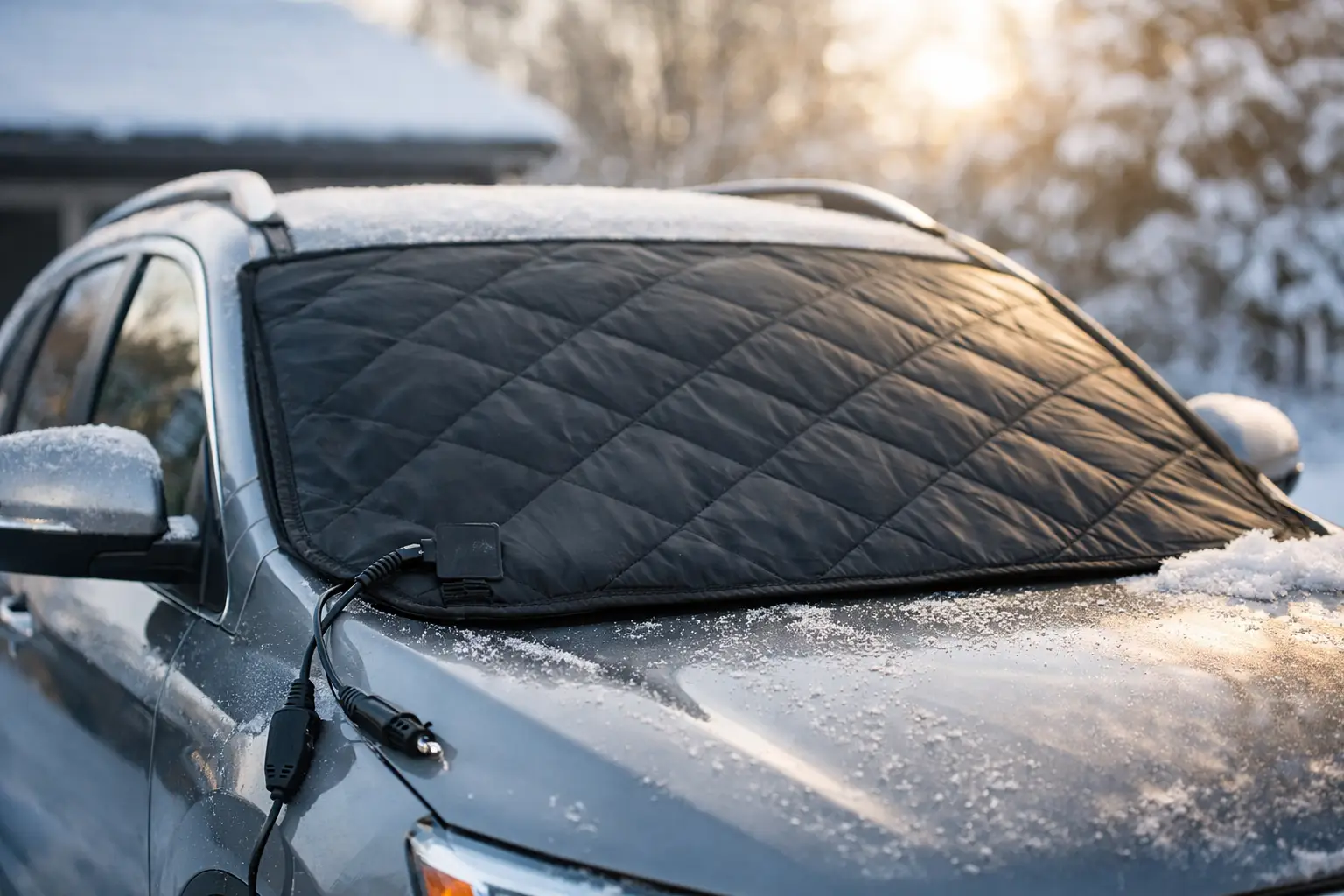
A frosty windscreen can turn a two-minute school run or early commute into a cold, late start. This heated windscreen cover review looks at whether these clever winter car accessories genuinely save time, or simply add another item to store in the boot.
For many UK drivers, the appeal is obvious: fit the cover overnight, remove it in the morning and avoid scraping thick ice from the glass. The reality depends on the type of cover, your parking spot and whether you are happy to spend a minute fitting it properly the night before. A good one can make winter mornings far less of a faff. A poor fit can flap, collect water or leave the edges of the screen frozen.
The name is used for two slightly different products. Some covers are insulated external screens designed to stop frost settling directly on the glass. Others include an electrical heating element and connect to a 12V vehicle socket or another power source to help loosen frost and snow.
An insulated cover does not actively warm the windscreen, but it can still be very effective. It forms a barrier between the glass and the cold, damp night air, so you lift away much of the frost with the cover. This is often the simplest and most dependable option for cars parked on a drive, roadside or outside a workplace.
A genuinely heated version may provide extra help in heavier frost, but it needs more care. Check how it is powered, the cable length, whether the connector is weather-protected, and whether your car socket works when the ignition is off. Never assume an electrical cover can be left running unattended or that it is suitable for every vehicle.
The best reason to buy a cover is not that it makes winter driving effortless. Your car still needs to be fully clear before you set off. The benefit is that it can cut the worst part of the job: attacking a solid sheet of ice with a scraper while your hands get colder by the second.
A well-fitted cover can also keep light snow, wet leaves and overnight condensation off the main windscreen. That is handy in the UK, where winter mornings are often more damp than deeply snowy. Less moisture on the glass can mean less refreezing and a clearer start once you use the car’s own heater and demister.
There is a small everyday benefit, too. Using a cover can reduce the temptation to leave the engine idling while you wait for the glass to clear. Your vehicle’s demister should be used as needed once you are in the car, but there is no need to waste fuel warming the engine solely to tackle frost that a cover could have prevented.
For drivers who regularly leave early, park outdoors or manage more than one car, the convenience soon adds up. It is one of those simple seasonal items that earns its keep through repeated use rather than one dramatic result.
No cover can clear every part of the car. Side windows, mirrors, lights, cameras and number plates still need checking. If rain has frozen around the doors or the wiper blades, you may still have a few jobs to do before setting off.
Fit is the biggest deciding factor. Universal covers can work well, especially on hatchbacks and saloons with conventional windscreens, but an oversized sheet may shift in wind. One that is too small leaves exposed strips of glass where frost can build up. Cars with a wide windscreen, a steep rake, roof rails or unusual mirror positions may need more careful measuring.
Electrical models have a further trade-off: power. A 12V socket may not operate when the car is switched off, so the cover may only be useful while you are sitting in the vehicle. That can still assist with stubborn ice, but it is not the same as waking up to a fully cleared screen. Any product with heating elements should have clear operating instructions, protected wiring and a stated suitability for outdoor use.
It is also worth being realistic about strong winds. Covers held in place only by closing the doors can be secure, but wet material may stick in a door seal if temperatures drop sharply. Shake off moisture and dry the cover indoors when you can. It will last longer and be more pleasant to handle the next morning.
A heated or insulated windscreen cover is a straightforward purchase, but a few details separate a useful winter helper from a cupboard-clutterer. Look beyond the word “heated” on the packaging and check the practical specification.
Storage matters more than it sounds. A cover that folds into a compact pouch is easier to keep in the glovebox, boot organiser or hallway cupboard. If it is bulky, awkward to fold or slow to dry, it is more likely to be forgotten until the first hard frost.
Fit the cover over a clean, dry-ish windscreen in the evening. Tuck the securing flaps inside the front doors, making sure they are flat rather than bunched near the seal. If your cover has straps, use them as intended instead of stretching them tightly around mirrors or wipers.
In the morning, remove the cover slowly. Lift it away rather than dragging grit across the glass. Give the screen, wipers and roof a quick check for ice or snow, then clear all windows, mirrors and lights before driving. A cover is a time-saver, not a substitute for safe visibility.
If the cover is wet, do not roll it tightly and forget it for a week. Hang it to dry where possible. This avoids musty smells, helps prevent material damage and means it will be ready for the next cold snap.
For most drivers, an insulated external cover offers the best value. It is simple, needs no socket or cable, and can make a noticeable difference to the morning frost routine. It suits households where different people use the car and nobody wants another gadget to charge, connect or troubleshoot.
A heated model may be worth considering if you face regular heavy frost, have reliable off-street parking and understand its power requirements. Treat its heating function as extra assistance rather than a promise of instant, hands-free de-icing. The product is only as convenient as its fitting, power setup and storage allow.
EasyPeasyMate shoppers looking for practical seasonal fixes should think of a windscreen cover alongside a decent ice scraper, de-icer and a pair of warm gloves. Together, they make a far better winter kit than relying on one item alone.
The right cover is the one you will actually put on before bed. Choose a size that fits, a fastening you can manage in the dark, and a material that dries without drama – then frosty mornings become one less thing to wrestle with.
