Address
86 Amesbury Road
Manchester M9 6JF United Kingdom
Use this outdoor doormat buying guide to choose a tougher, safer mat for muddy shoes, wet weather and a tidier entrance all year round at home daily.
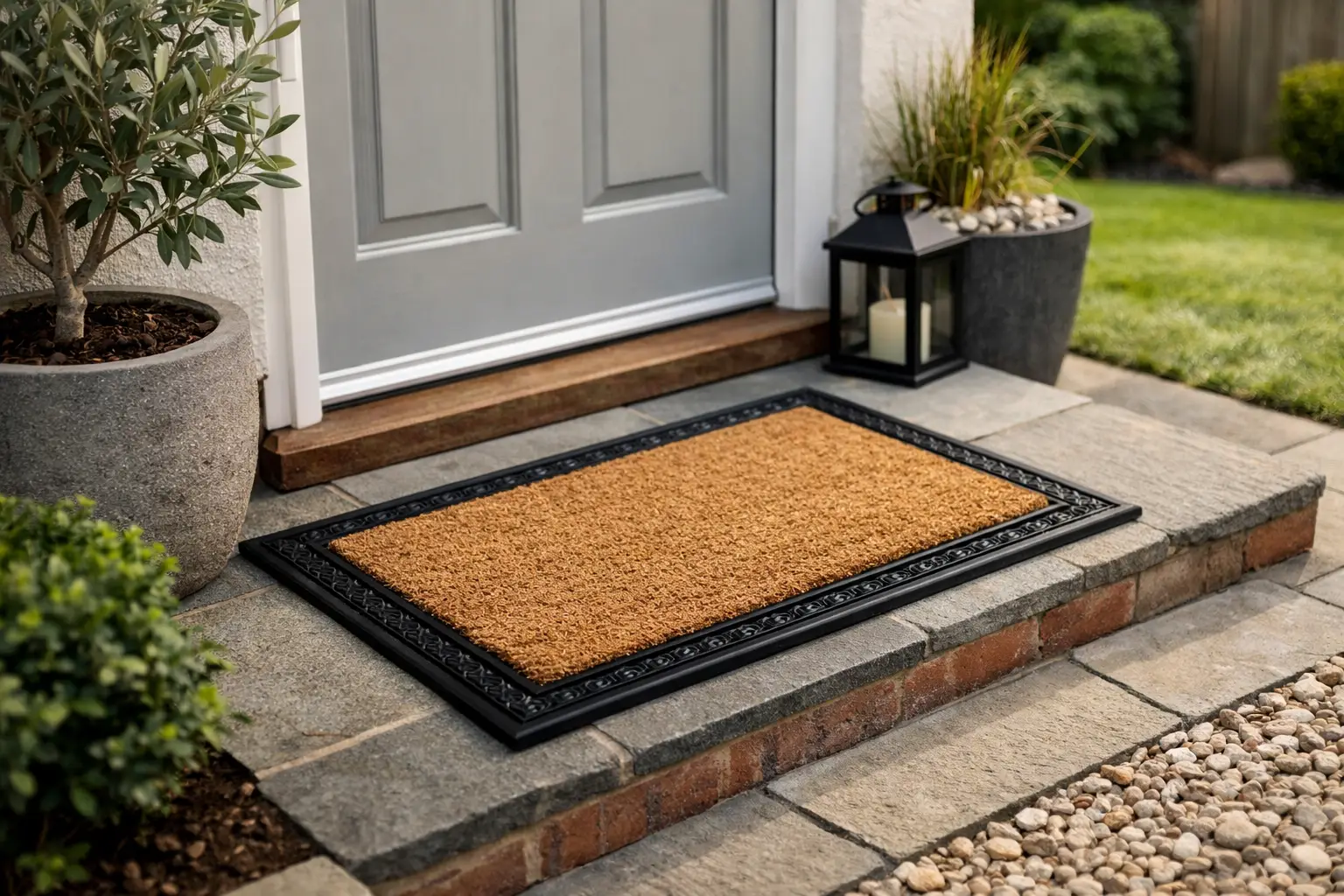
A doormat has a tougher job than it gets credit for. It is the first line of defence against wet trainers, muddy paws, garden soil and the grit that otherwise ends up across the hallway. This outdoor doormat buying guide helps you choose one that suits your entrance, stands up to British weather and makes everyday clean-ups a little easier.
Before picking a colour or pattern, think about what arrives at your door most often. A busy family entrance with school shoes, a dog and regular garden trips needs serious scraping power. A sheltered flat entrance may only need a neat, practical surface for damp soles and dust.
The best outdoor mat removes loose dirt before it crosses the threshold, while coping with rain without becoming soggy or slippery. It should also sit securely in place, leave enough clearance for the door to open and be simple to shake, brush or hose down.
For most UK homes, an outdoor mat works best as part of a two-mat set-up: one tougher mat outside for scraping and one absorbent mat inside for the last bit of moisture. This keeps floors cleaner without asking one mat to do everything.
Material affects how a doormat feels underfoot, how well it cleans shoes and how much weather it can handle. There is no single best option for every doorstep, so it helps to match the material to the location.
Coir is made from coconut husk fibres. It has the classic, natural look many people want by a front door, and its stiff fibres are good at loosening dry mud and debris from shoes. It is also easy to find in plain styles or with a cheerful greeting.
The trade-off is moisture. Coir can hold water and may shed fibres, particularly when new. It is better under a porch, canopy or other sheltered spot than on a completely exposed doorstep. Give it a regular shake and allow it to dry properly after prolonged rain to help it last longer.
Rubber mats are a reliable choice for exposed doorways, side gates, sheds and back doors. Their raised patterns and holes allow water and mud to fall through rather than building up on the surface. Many are heavy enough to stay put, too.
They are especially handy for households with dogs, keen gardeners or children who arrive home with more of the outdoors on their shoes than on the path. Rubber is easy to rinse clean, but choose a mat with a textured backing or enough weight to prevent it moving on smooth paving.
Synthetic outdoor mats are usually hard-wearing, quick-drying and available in a wider choice of colours and patterns. They can offer a softer finish than rubber while still dealing well with everyday dirt. This makes them a good all-rounder for a covered entrance or patio door.
Check whether the product is labelled for outdoor use rather than simply water-resistant. A mat made for outdoor conditions is less likely to fade, fray or lose its shape after repeated rain and sun.
For a workshop, garage, allotment gate or very muddy back entrance, a heavy-duty scraper mat can be the sensible option. These styles are built for function first and often have firm ridges or open sections for aggressive dirt removal.
They are not always the cosiest choice for a formal front door, but they can save a great deal of sweeping where boots and work shoes are involved. Pair one with an indoor absorbent mat and the difference is noticeable.
A doormat that is too small can look lost and will not catch much dirt. One that is too large can curl at the edges, block drainage or stop the door opening freely. Measure the available width and depth, then leave space around the mat so water can drain away and the area still feels tidy.
For a standard front door, choose a width that looks balanced with the doorway rather than filling the whole path. Wider entrances and double doors benefit from a larger mat, particularly if more than one person often comes in at once. At a back door, coverage is usually more useful than appearance, so a generous size can be worthwhile.
Door clearance is the detail that catches people out. Measure the gap beneath an outward-opening door and allow for the mat’s pile or raised pattern. If clearance is tight, opt for a low-profile rubber or synthetic design. Never force a door over a thick mat: it can damage the mat, scuff the door and create a trip hazard.
A good-looking doormat is not much use if it slides when someone steps on it with wet shoes. On smooth stone, decking or tiled porches, look for a non-slip backing, a substantial rubber base or a mat heavy enough to stay in position.
Drainage matters just as much in an exposed area. Solid mats can collect water if they sit in a dip or on a surface with poor drainage. Open-grid rubber mats and designs with channels are useful where rain regularly pools. If your doorstep slopes towards the house, take a moment to check that the mat will not direct water towards the threshold.
Keep an eye on the edges over time. Curling corners, splits and worn patches are signs that a mat is ready to be replaced. A tidy entrance should make coming home easier, not add a stumble to the school run or the weekly shop.
The front door is part of the first impression of your home, so style still has a place. Natural coir suits traditional brick, painted doors and cottage-style entrances. Black, grey and charcoal rubber styles are practical choices for modern homes and high-traffic back doors. Patterned synthetic mats can add colour while disguising everyday marks better than pale plain designs.
Be realistic about light colours and novelty wording. A cream mat may look fresh on day one but can show mud quickly by a busy pavement-facing door. A seasonal design can be fun, though it is worth keeping a dependable all-weather mat ready for the wettest months.
If you rent, avoid mats with adhesives or fittings that could mark communal flooring. A loose, low-profile mat that stays within your doorway is usually the easiest option. For shared entrances, check that the mat does not obstruct neighbours or fire safety routes.
Regular care is quick and prevents trapped dirt from turning into a permanent grimy layer. Shake or brush the mat weekly, more often during rainy spells or after gardening. Rubber and most synthetic mats can be rinsed with a hose and left to dry flat. Always check the care guidance first, especially for printed designs.
Coir needs a gentler approach. Shake it out, brush away dry dirt and avoid soaking it for long periods. If it gets drenched, lift it from the ground and dry it in an airy place before putting it back. Letting any outdoor mat dry occasionally also helps prevent musty smells and slippery build-up beneath it.
Rotating a mat now and then can even out wear, particularly where everyone steps in the same spot. It is a small job that can stretch the life of a useful household essential.
For an exposed, muddy entrance, choose a heavy rubber or open-grid scraper mat. For a covered front porch, coir offers classic looks and effective dirt removal. For an easy-care all-round option, a weather-ready synthetic mat is hard to beat. At EasyPeasyMate, practical home choices are all about solving the everyday mess without making a fuss.
Choose for the weather, the foot traffic and the door clearance first, then enjoy finding a finish that makes the entrance feel like yours. The right mat quietly keeps the mess where it belongs – outside.
