Address
86 Amesbury Road
Manchester M9 6JF United Kingdom
Watering wand vs sprinkler: compare control, coverage and water use to choose the right tool for borders, pots, lawns and busy UK gardens with confidence.
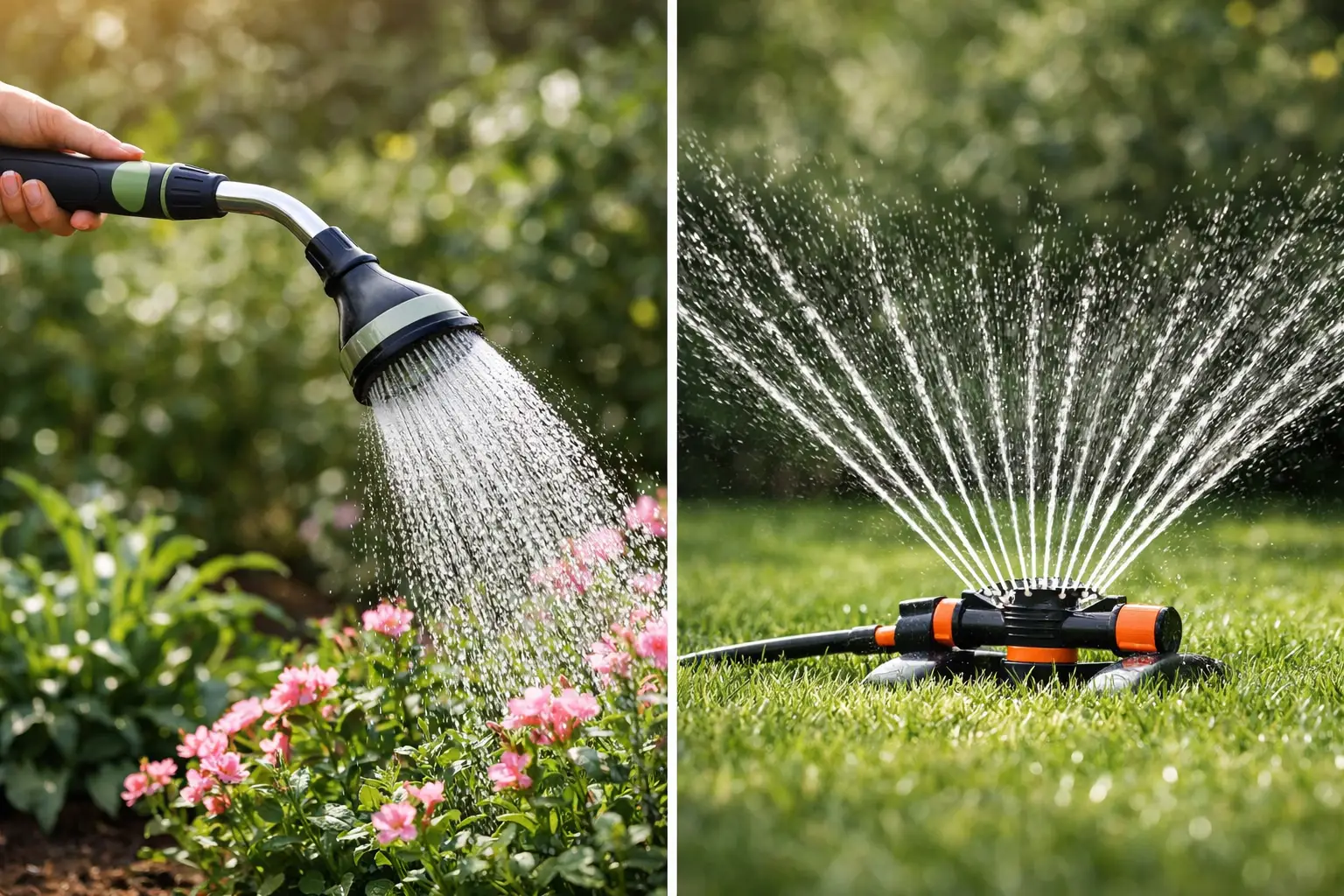
A thirsty hanging basket, newly planted border and patchy lawn do not all need watering in the same way. That is where the watering wand vs sprinkler choice matters. One gives you close control over each plant, while the other covers a wider area with far less standing around. For most UK gardens, the easiest answer is not choosing one tool forever – it is choosing the right one for the job in front of you.
Choose a watering wand when you need accuracy. It is ideal for pots, baskets, seedlings, greenhouse plants, narrow borders and any area where watering the leaves, path or fence would be wasteful. Its long reach also makes it much easier to water at the back of a border without trampling plants or stretching over them.
Choose a sprinkler when you need to water an open, planted area evenly, especially a lawn. Set it up, adjust the spray pattern and let it do the work while you get on with another garden task. This is particularly handy in dry spells, when a lawn needs a slower, deeper soak rather than a quick splash from a hose.
The trade-off is simple: watering wands save water through precision but take more of your time. Sprinklers save time across bigger areas but can waste water if the pattern is poorly placed or the wind catches the spray.
A watering wand is a hose attachment with an extended handle and a shower-style head. Most have a trigger and several spray settings, such as mist, shower, jet or flat spray. The gentle shower setting is the everyday favourite because it delivers water without blasting soil out of pots or flattening delicate flowers.
It is the more practical option for container gardening. Pots dry out quickly in warm or windy weather, but they do not always need the same amount of water. With a wand, you can check each pot as you go, give a dry tomato plant a proper drink and skip the one that is still damp below the surface. That kind of control is difficult with a sprinkler.
It also suits gardeners with packed borders. Direct water at the base of roses, shrubs, perennials and vegetables, rather than soaking foliage. Keeping leaves drier can help reduce conditions that encourage some fungal problems, particularly where plants are close together and air movement is limited.
The longer shaft is more than a nice extra. It saves bending over hanging baskets, low planters and patio pots, and it lets you reach behind plants with less fuss. If you have a small courtyard, a balcony garden or a mix of containers and flower beds, a wand is likely to earn its place quickly.
Not every wand feels the same in the hand. A model with a comfortable grip and a lockable trigger is useful if you water for longer periods, while a solid connection helps avoid drips at the hose fitting. Very high water pressure can still disturb loose compost, so start gently around seedlings and newly planted areas.
A wand is not the quickest choice for a large lawn. You can water one, but you will spend a long time moving the hose, and it is easy to apply water unevenly. Save the wand for detail work and use it where its accuracy genuinely pays off.
A sprinkler comes into its own when your garden has a sizeable stretch of grass or a broad, open bed. Instead of walking back and forth with a hose, you can place the sprinkler where it is needed and allow water to fall over the area for a set time.
For lawns, a sprinkler can support deeper watering during prolonged dry weather. Grass roots generally benefit more from a thorough soak less often than frequent, shallow watering. A light daily sprinkle may make the surface look greener for a short time, but it does not encourage roots to seek moisture lower down.
The best sprinkler style depends on your layout. Oscillating sprinklers send a fan of water back and forth and are useful for rectangular lawns. Rotating or circular sprinklers suit rounder areas and can cover a wider radius. Spike sprinklers are handy for moving around borders, while sled-base designs sit securely on firmer ground or paving.
Before buying, think about the corners of your lawn, not just its total size. A sprinkler that throws water well beyond the edge is not more efficient if half of it lands on the patio, driveway or neighbour’s fence. Adjustable range and pattern settings are worth having in smaller or awkwardly shaped gardens.
A sprinkler is easy to leave running too long, especially when you cannot see where the water is landing. Use a simple hose timer if you can, or set a reminder on your mobile phone. This prevents an overly wet lawn and helps keep water use under control.
Early morning is usually the most practical time to water. There is less heat for water to evaporate, plants have time to dry during the day, and you are less likely to be trying to dodge the spray while using the garden. Avoid using a sprinkler in strong wind. You will get patchy coverage and may give the garden furniture a better drink than the grass.
There is no universal winner because the two tools solve different problems. A sprinkler is about coverage and convenience. A watering wand is about control and care.
If you have a lawn, several metres of open border and limited time, a sprinkler makes regular watering much less of a chore. It can be a sensible choice for families who want the garden ready for weekend use without spending an hour holding a hose. Just make sure it is placed accurately and adjusted to suit the area.
If your outdoor space is mostly pots, raised beds, herbs, baskets and mixed planting, a watering wand will be more useful day to day. It puts water into the compost and soil where roots can use it, rather than coating every nearby surface. It is also easier to pause and inspect plants as you water, spotting wilting leaves, pests or dry compost before they become bigger jobs.
For many homes, having both is the genuinely easy-peasy approach. Run a sprinkler on the lawn or large bed, then use the wand for containers, corners and plants sheltered beneath larger shrubs. You spend less time overall and avoid treating every part of the garden as if it has identical needs.
Whichever option you choose, a few habits make a real difference. Water slowly enough for moisture to soak in rather than run off hard ground. Focus on the root zone, and check the soil with a finger or hand trowel before watering simply because the surface looks dry.
Mulch around established borders with compost, bark or other suitable material to help hold moisture in the soil. Grouping pots together can also reduce drying from wind, although plants still need enough space for healthy airflow. On hot days, move lightweight containers out of harsh afternoon sun where possible.
Keep an eye on hose length too. A hose that barely reaches encourages rushed watering and awkward stretching. One that reaches all parts of the garden comfortably makes a wand or sprinkler far more useful. Check connectors for leaks at the start of the season, as even a small drip wastes water over time.
Pick a watering wand if precision, delicate plants and container care are your priorities. Pick a sprinkler if you need to cover lawn or open ground efficiently. If your garden includes both, do not overthink it: use the sprinkler for the broad work and the wand for everything that needs a gentler, more personal touch.
A well-watered garden is not about using the most water. It is about getting water to the right place, at the right pace, so your plants get what they need and you get more time to enjoy the garden.
