Address
86 Amesbury Road
Manchester M9 6JF United Kingdom
Use this foodservice cleaning checklist to keep prep areas, equipment and service spaces safer, cleaner and ready for every busy shift on every shift.
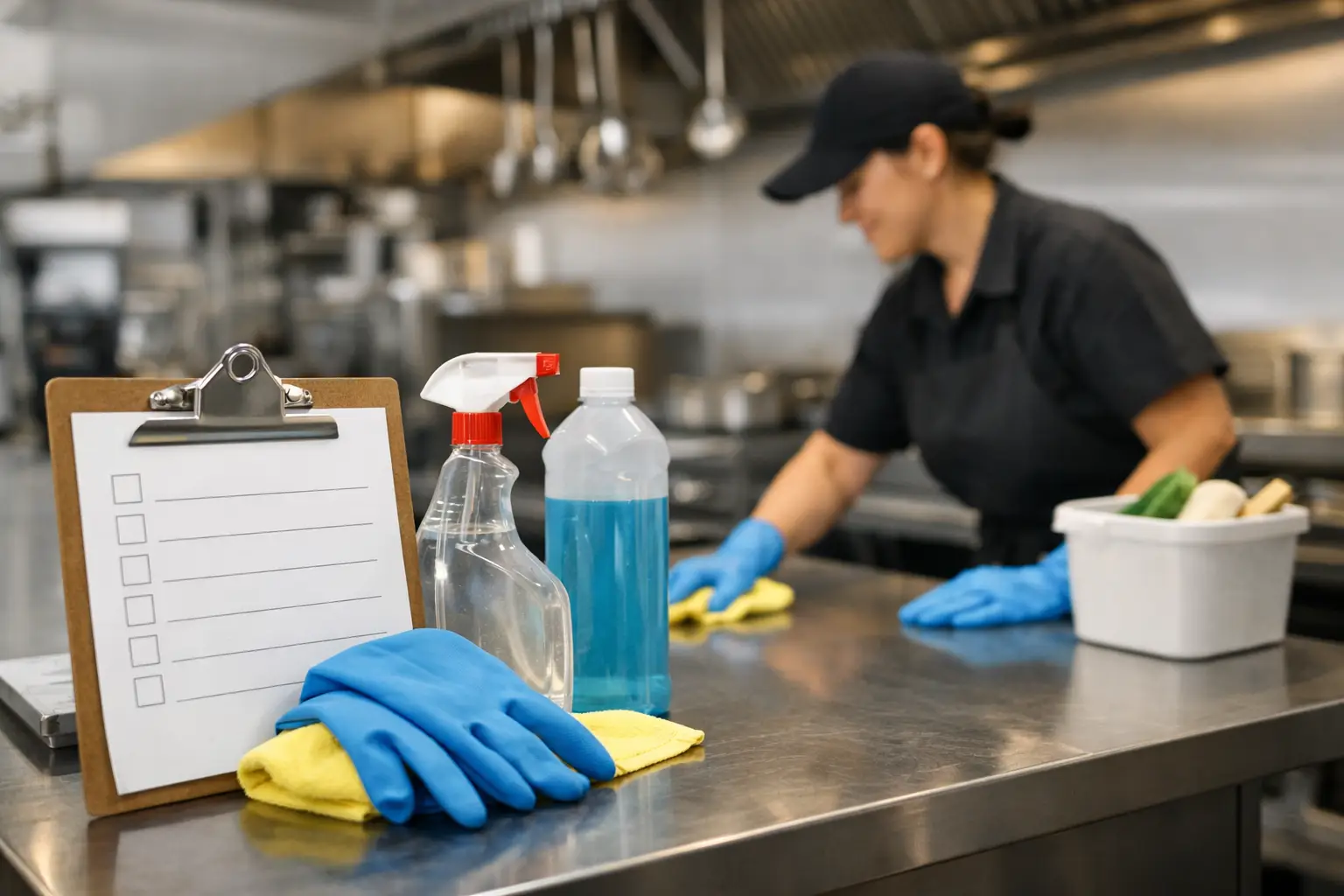
The Friday lunch rush is not the time to discover sticky fridge handles, a greasy extractor edge or a sanitiser bottle that has run empty. A practical foodservice cleaning checklist gives every person on shift a clear job, keeps food areas presentable and helps prevent small oversights becoming hygiene problems.
Whether you run a café, mobile catering unit, village hall kitchen, workplace canteen or occasional food stall, the principle is the same: clean as you go, sanitise food-contact surfaces properly, and make sure someone is accountable for the less obvious jobs. This is not about making a kitchen look spotless for show. It is about keeping the space safe, workable and ready to serve.
Foodservice spaces collect mess at speed. Crumbs, spills, grease, packaging, fingerprints and food debris can build up across a single service. Add heat, moisture and constant handling, and surfaces that appeared clean at the start of the day can quickly become a hygiene risk.
A good routine separates cleaning from sanitising. Cleaning removes visible dirt, grease and debris. Sanitising reduces harmful bacteria on a surface after it has been cleaned. One does not replace the other. Spraying sanitiser over a dirty chopping board, for example, is unlikely to do the job properly.
The right frequency depends on how busy you are and what you serve. A quiet counter serving wrapped cakes will have different needs from a kitchen preparing raw chicken, fresh salads and hot meals. Still, a consistent checklist makes standards easier to maintain when staff change, queues form or a busy weekend gets in the way.
Start each shift with a short reset. It takes less time than trying to correct problems halfway through service, and it helps staff spot missing supplies before they are needed.
Before food preparation begins, check that food-contact surfaces are clean, dry and sanitised. This includes worktops, chopping boards, preparation tables, slicers, tongs, utensils and the inside surfaces of containers used for ready-to-eat food. Wash hands properly, put on clean workwear or an apron where required, and replace any dirty cloths rather than moving contamination from one area to another.
Use this opening check:
Take a moment to look at the less visible areas too. The underside of a counter, the rim of a bin, a microwave handle or the back edge of a shelf may not appear in a customer photograph, but they still affect day-to-day hygiene.
The most useful habit in a busy food area is cleaning small messes straight away. A spill dealt with in thirty seconds is safer and easier than a dried-on patch left until closing. It also stops the end-of-day clean becoming a miserable, time-consuming job.
Keep separate cloths or a clear colour-coded system for different tasks, such as food preparation, wash-up, front counter and toilets. If you use reusable cloths, wash them thoroughly and replace them frequently. A dirty cloth is not a cleaning tool.
Clear scraps and packaging as you work. Wash, then sanitise, food-contact surfaces between tasks, particularly after raw meat, fish, eggs or unwashed produce. Use separate boards and utensils where your food safety procedures require them, and do not place clean equipment back onto a surface that has not been sanitised.
Equipment deserves the same attention. Clean spills from fridge shelves promptly, wipe appliance controls that are handled throughout the day, and deal with food trapped in toaster trays, sandwich presses or microwave interiors before it burns on. Always let hot equipment cool and follow its care instructions rather than soaking or spraying electrical parts.
A clean serving area reassures customers before they have tasted a thing. Keep counters crumb-free, wipe card terminals and menu holders, and clean table tops between customers where applicable. Check chair backs, condiment stations and door handles during quieter moments.
Do not forget the bits customers touch repeatedly: reusable trays, cutlery containers, sugar dispensers and self-service fridge handles. They need regular attention, but avoid spraying chemicals near exposed food or clean utensils. Apply the product to a cloth where appropriate and follow the label directions.
Toilets need their own equipment and cleaning cloths. Never carry toilet-cleaning tools into food preparation or service areas. Check soap, paper and bin capacity more often during events and peak periods.
In the wash-up area, keep clean and dirty items moving in one direction where possible. Scrape plates first, wash using the correct method for your equipment, then allow items to air-dry rather than drying them with a potentially contaminated tea towel. Keep sinks, draining boards and taps clean throughout the shift.
Closing is the time for a fuller clean, but it should not be rushed by one tired person after everyone else has left. Share jobs clearly and sign them off. A simple laminated sheet or wipe-clean board works well, especially for part-time staff and changing rotas.
At the end of service, remove food waste, clean and sanitise all preparation surfaces, and wash utensils, boards and removable equipment parts. Sweep up debris before mopping floors, because a mop pushed through crumbs and grease only spreads the problem. Pay particular attention to corners, under counters and behind movable equipment.
Wipe down external surfaces of fridges, freezers, ovens and small appliances. Clean sinks, taps, splashbacks, bins and bin lids. Restock handwashing and cleaning supplies so the opening team is not left hunting for essentials. Finally, store equipment dry and protect it from dust or splashes overnight.
Some tasks are not needed every shift, but they should never be left until something smells, sticks or breaks. Put these jobs on a weekly or monthly rota, assigning a named person and a completion date.
Weekly tasks often include descaling kettles or hot-water equipment where needed, cleaning fridge seals, washing reusable storage containers, wiping wall tiles and cleaning beneath movable appliances. Check shelving, dry stores and delivery areas for spills, damaged packaging and signs of pests.
Monthly work may include cleaning extractor filters in line with the manufacturer guidance, pulling out heavier equipment where it is safe to do so, checking light fittings and vents, and reviewing less-used cupboards. How often these jobs are needed depends on your volume of cooking and the type of equipment you use. A fryer-heavy kitchen, for instance, will need a more frequent grease-control routine than a cold-food counter.
More cleaning product does not automatically mean a cleaner kitchen. Use products designed for the job, follow the dilution instructions and allow the stated contact time before wiping or rinsing. Too little product may not work; too much can leave residue and waste money.
Keep chemicals in their original labelled containers or clearly marked spray bottles. Store them away from food, packaging and clean utensils. Never mix cleaning products, especially bleach with other chemicals, as dangerous fumes can result. Gloves can be useful for certain products, but they do not replace handwashing or sensible handling.
For food-contact surfaces, check whether the sanitiser needs rinsing after use. Labels and your established food safety procedures should guide this. If you are unsure, do not guess.
A cleaning list only works when it suits the real rhythm of the shift. Keep it short enough to use, specific enough to be useful and visible where the team can reach it. “Clean kitchen” is too vague. “Wash and sanitise prep tables, slicer guard, fridge handles and sink taps” leaves much less room for confusion.
Assign tasks by area rather than hoping someone will remember. One person can own the front counter, another the wash-up zone and another the food-prep close-down, with a manager or shift lead checking completion. If a job cannot be done because equipment is still hot, a delivery arrives late or service overruns, note it and make sure it is completed safely afterwards.
A reliable routine is one of those quiet things customers rarely notice, which is exactly the point. With the right supplies close at hand and a checklist that fits your operation, cleaner shifts become the normal way of working rather than a last-minute scramble.
