Address
86 Amesbury Road
Manchester M9 6JF United Kingdom
Our guide to fence repair kits helps you choose the right fix for loose panels, broken posts and tired timber, so your garden stays safe and smart too.
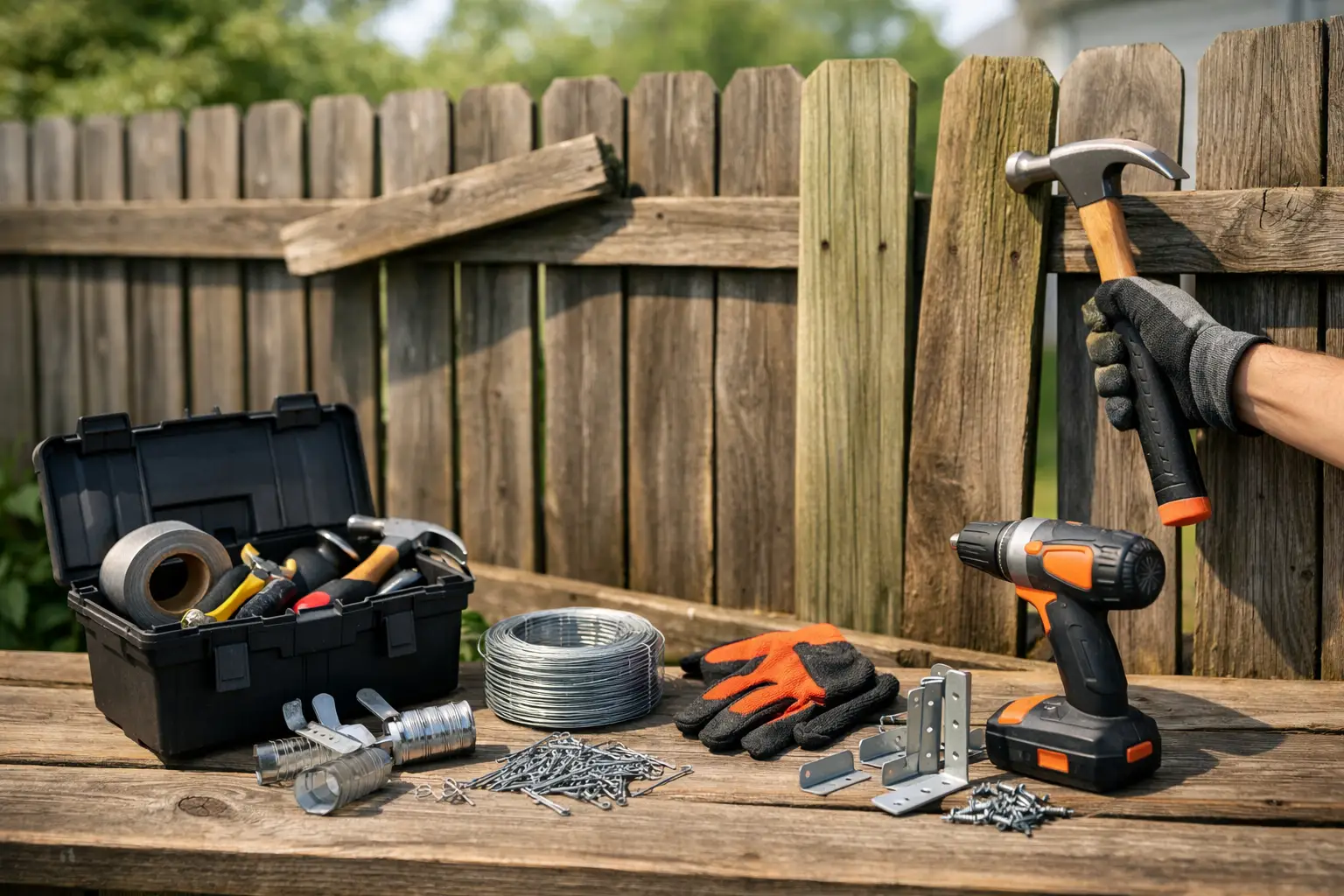
A fence rarely picks a convenient moment to fail. One windy night, a panel starts rattling; after a wet winter, a post leans towards the flower bed; then the dog discovers a gap that was not there yesterday. This guide to fence repair kits helps you work out what has actually gone wrong, what you need to fix it, and when a small repair is likely to save you the cost and hassle of replacing a whole run of fencing.
A good kit should make a targeted job easier, not leave you with fittings that do not suit your fence. Start by checking the material, the condition of the posts and whether the ground itself has caused the problem. With the right parts and a sensible plan, many common fence issues are manageable in an afternoon.
A damaged panel is not always the main problem. If the timber panel has split but both posts are solid and upright, a panel repair or replacement may be all that is needed. If the panel keeps dropping out of its slots, check whether the posts have moved, the gravel boards are loose, or the panel is simply the wrong size for the gap.
Posts deserve a closer look. Give each one a firm push at ground level. Movement, soft timber, deep cracks or rot around the base usually point to a post problem. A leaning post can put pressure on otherwise sound panels, so fixing the panel alone may only be a short-lived answer.
Also consider what happened before the damage appeared. Strong winds can snap rails and loosen fixings, while standing water can rot wooden posts from below ground. Heavy climbers, ivy and stored garden items leaning against a fence can gradually pull it out of line. Remove the cause where possible, or the same repair may soon be needed again.
Fence repair kits are not all alike. Some are designed to strengthen a broken timber post, while others secure loose boards, repair cracked rails or provide new fittings for a panel. The best choice depends on the failure, not simply on which kit contains the most pieces.
A timber repair kit often includes galvanised steel plates or brackets, bolts, screws and washers. These can reinforce a split rail, secure a loose board or join sections of timber where the wood is still dry and structurally sound. Galvanised or coated metal matters outdoors because ordinary steel fixings can rust, stain the timber and become difficult to remove.
For a failing post, look for a metal repair spur. This is a sturdy support fixed alongside the existing post, usually with bolts. The spur is set into concrete and takes over much of the load, allowing you to keep the fence in place rather than dismantling several panels. It is a particularly handy option when only one post in a long fence line has rotted at the base.
Post supports solve a slightly different job. Drive-in spikes, bolt-down post shoes and concrete-in supports are normally used when fitting a new post. They can be useful for a replacement section, but they will not reliably rescue a post that is already loose below ground.
Panel repair kits may include timber battens, repair plates, clips or brackets. They are useful for a single cracked board, a split horizontal rail or a panel that needs extra support. If several boards are brittle, warped or rotten, replacing the panel is usually better value than trying to patch every weak point.
The easiest way to choose is to think in terms of the part that is failing.
For loose boards, use exterior-rated screws and small galvanised repair plates or timber battens. Screws hold better than nails when timber has worked loose, and they make future repairs simpler. Pre-drill near the end of a board to reduce the chance of splitting.
For a cracked rail, a metal mending plate can work well if the surrounding timber is firm. Position the plate across the crack, use suitable exterior screws or bolts, and add a matching plate to the opposite side when the rail carries weight. A rail that is soft, darkened or crumbling should be replaced instead.
For a dropped or rattling fence panel, first check the panel dimensions and the condition of the grooves in concrete posts or the support battens on timber posts. Fresh clips, brackets or battens can hold a sound panel securely. If a panel is bowing badly or multiple rails have failed, a new panel will look neater and give a stronger result.
For a leaning or rotten timber post, a repair spur is often the practical choice. It saves lifting out panels and digging out an old concrete footing, which can be the toughest part of the job. The trade-off is that you need enough clear space beside the post to dig, position the spur and pour concrete. If the post is snapped high above ground, severely twisted, or part of a gate opening, full replacement may be the safer route.
For a damaged concrete post, check carefully for large cracks or movement. Small chips above ground may be cosmetic, but a cracked post that no longer supports the panels properly needs professional attention or replacement. Do not rely on light brackets to hold a heavy fence together.
Measure before choosing a kit. Record the width and thickness of timber rails, the size of the existing post, and the clearance around it. For repair spurs, height matters too: the spur must provide enough support above ground while being embedded deeply enough for stability.
Most garden fencing in the UK uses pressure-treated softwood, but older fencing may have untreated timber that has weathered heavily. A repair plate can strengthen solid wood, yet it cannot restore rotten fibres. Press a screwdriver into suspect areas, especially where the post meets soil. If it sinks in easily, the timber has probably reached the end of its useful life.
Choose outdoor fixings that suit the material. Galvanised screws and bolts are a reliable everyday option for treated timber. Stainless steel is excellent in persistently damp areas, although it costs more. Avoid mixing random old screws into the job – weak or rusty fixings can undo the benefit of a decent repair kit.
If your fence adjoins a neighbour’s property, establish who is responsible before carrying out major work. The familiar rule about the left- or right-hand boundary is not a legal shortcut. Check your property documents where available, then have a quick, friendly conversation before changing a shared boundary fence.
Most small fence repairs need a tape measure, pencil, spirit level, drill driver, suitable drill bits, socket set or spanners, hammer and safety gloves. For post-spur work, add a spade, post-hole digger if you have one, ready-mix post concrete and a bucket for water if the product instructions call for it.
A long spirit level is worth having for posts. A fence can look upright from one angle while still leaning along the line of the garden. Temporary timber props are helpful too, especially on a breezy day. Use them to hold the fence straight while you fit a plate, tighten bolts or allow concrete to set.
Wear eye protection when drilling into old timber or cutting metal fixings. Check for buried cables before digging and take care near sheds, outdoor lights or water pipes. If a fence is supporting a gate, work with another adult where possible – gates are heavy and alignment matters.
Clear plants, soil and loose debris from around the damaged post so you can see the extent of the rot. Support the fence with a temporary prop, keeping the panels level and the post upright. Dig a hole beside the existing post deep enough for the repair spur as specified by its manufacturer.
Place the spur against the post, check it is vertical with the spirit level, and secure it with the supplied bolts or compatible galvanised bolts. Keep checking the fence line as you tighten. Then add the concrete around the spur, following the mix instructions and allowing the recommended setting time before removing the temporary support.
Do not rush this stage. A post that is slightly out of plumb can make panels sit unevenly and can cause a gate to drag. A few extra minutes spent levelling now will make the repair look far more tidy.
Repair kits are excellent for isolated problems, but they are not a cure for an entire fence that is reaching the end of its life. Consider replacement if several posts are rotting, panels are breaking in multiple places, or the fence has shifted because the ground is unstable. Repeated patching can become more expensive than replacing the weakest section properly.
Likewise, get professional help for very tall fencing, retaining structures, boundary disputes, extensive storm damage or fences close to public paths. The goal is not just to make the garden look presentable. A secure fence helps keep children and pets contained, protects your outdoor space and prevents a loose panel becoming somebody else’s problem in the next gust of wind.
Choose a kit that fixes the part that has failed, use weather-ready fixings, and give the repair time to set before putting the fence back under strain. A small, well-chosen repair now can keep the garden looking neat and make the next weekend job a good deal easier.
