Address
86 Amesbury Road
Manchester M9 6JF United Kingdom
Make garden watering simpler with practical timing, techniques and tools for healthier plants, greener lawns and less water wasted at home this summer.
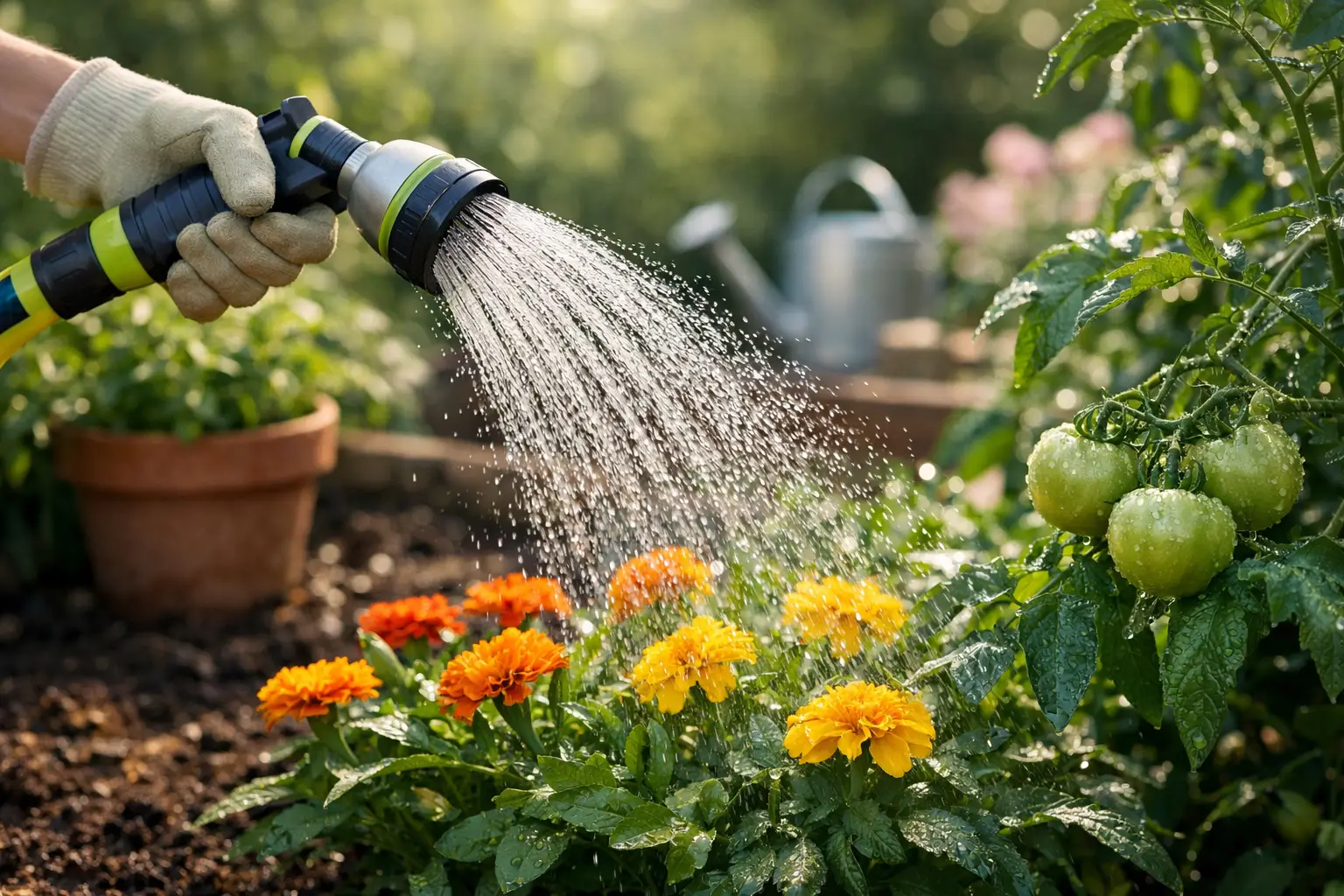
A drooping plant on a hot afternoon does not always mean it needs a soaking. It may simply be protecting itself from the heat, while the soil below is still damp. Good garden watering is less about reaching for the hose every day and more about knowing what your plants, soil and weather are telling you. Get that right and you will use less water, spend less time fussing, and give flowers, veg and containers a much better chance of thriving.
There is no perfect watering schedule for every UK garden. A sheltered courtyard, a windy patio and a large open lawn can all dry out at completely different rates, even when they are only a few streets apart. Rainfall matters, of course, but so do sun, wind, soil type and the size of the plant’s roots.
Before watering, push a finger a few centimetres into the soil. If it feels cool and damp, leave it alone. If it is dry beneath the surface, it is time to water. For pots, lift them if you can. A container that feels noticeably light usually needs a drink.
Clay soil holds water for longer but can become compacted, so it benefits from slower watering that has time to sink in. Sandy soil drains quickly and may need watering more often, especially in warm spells. Adding compost or other organic matter helps both types by improving moisture retention and soil structure.
Plants take up water through their roots, so aim it at the base of the plant rather than spraying the leaves. Wet foliage can encourage fungal problems, particularly with roses, tomatoes, courgettes and other dense plants where air does not circulate freely.
A proper soak every few days is generally more useful than a light sprinkle each evening. Shallow watering keeps roots near the surface, where they dry out quickly. Watering deeply encourages roots to grow down into cooler, more reliable soil. That makes established plants more resilient when the weather turns dry.
The exception is newly planted flowers, shrubs and young veg. Their root systems have not yet spread out, so they need regular attention while they settle in. Check them daily during dry or windy weather, but still water at the base and avoid leaving the surrounding soil permanently soggy.
Early morning is usually the best time to water. Temperatures are lower, there is less evaporation, and leaves have time to dry if they get splashed. Evening watering is a sensible second choice when mornings are busy, although slugs and damp foliage can be more of a nuisance overnight. Try not to water in the strongest midday sun, when much of it can evaporate before reaching the roots.
Treating the whole garden the same is a common way to waste water. Borders, pots, lawns and food-growing areas all need a slightly different approach.
Containers dry out faster than beds because their roots have limited compost around them. Small pots and hanging baskets may need watering daily in a heatwave, sometimes twice a day if they are in full sun. Water slowly until it starts to run from the drainage holes, then stop. If water rushes straight through a bone-dry pot, stand it in a tray of water for a short while or water it in stages so the compost can rehydrate.
Do make sure pots have drainage holes. A decorative container without drainage can leave roots sitting in water after heavy rain, which is just as damaging as letting it dry out.
Veg needs consistent moisture, especially while seedlings are establishing and crops are forming. Tomatoes, cucumbers, beans, squash and leafy salads are less likely to suffer when the soil moisture stays fairly even. Big swings between very dry and very wet conditions can lead to split tomatoes, bitter lettuce and disappointing yields.
Water the soil rather than showering the whole plant. A watering can with a rose is handy for young seedlings, while a hose, soaker hose or drip system makes more sense for a larger patch. Mulch around plants with compost, bark or straw, keeping it a little away from stems, to slow evaporation and reduce weeds.
A healthy established lawn often turns a little brown in a dry summer. It usually recovers when rain returns, so there is rarely a need to use precious water trying to keep every blade green. If you do water a lawn, do it deeply and infrequently rather than giving it a quick daily spray.
Well-established trees, shrubs and many perennial borders can cope with short dry spells. Focus your effort on anything newly planted in the past year, plants growing close to walls, and sun-loving borders with light soil. Watering these areas slowly gives more benefit than trying to cover the entire garden little and often.
The best tool depends on the size and layout of your outdoor space. A watering can gives control for seedlings, pots and small borders, and helps avoid blasting delicate plants. For a bigger garden, a hose with an adjustable spray head saves time and lets you switch from a gentle shower to a targeted flow.
A soaker hose or simple drip irrigation set-up is useful if you regularly water long borders, raised beds or greenhouse crops. It delivers water close to the roots and can reduce waste from wind and evaporation. It does need checking occasionally for blocked holes, leaks or uneven flow, particularly if your water pressure varies.
A water butt is another straightforward win. It collects rainwater from a downpipe for pots and borders, reducing tap-water use when the garden is thirsty. Keep the lid secure, fit a filter where possible, and position it on a firm, level base before it is full. Rainwater is particularly welcome for plants that prefer less alkaline conditions, such as camellias and blueberries.
If you use an automatic timer, set it as a helpful back-up rather than a substitute for looking at the garden. A timer cannot tell whether it rained all night, whether a pot has blown over, or whether one plant needs more attention than another.
Overwatering is often more harmful than underwatering. Roots need oxygen as well as moisture, and permanently wet compost can lead to yellow leaves, weak growth and root rot. If a plant looks limp but the soil is wet, do not add more water immediately. Check drainage, shade and root health instead.
Another common mistake is watering too quickly. When water pools or runs across the surface, it is not reaching the roots. Pause for a moment, then return for a second slower pass. Around large shrubs and trees, build a shallow ring of soil around the base to help water stay where it is needed.
Do not forget that wind dries soil as effectively as sunshine. A breezy day can leave pots parched even when temperatures are modest. Equally, a brief summer shower may only wet the surface, especially beneath dense shrubs or eaves. Check below the top layer before assuming nature has handled the job.
A few small habits can cut the amount of watering your garden needs. Group thirstier pots together so they create a slightly more humid pocket. Move containers out of harsh afternoon sun where that suits the plant. Use saucers sparingly beneath pots during hot weather, then empty them after rain so roots are not left sitting in water.
Mulch is one of the simplest ways to keep moisture in the ground. A 5 to 8 cm layer over bare soil helps slow evaporation, protects roots from temperature swings and makes weeding easier. Leave a gap around stems and trunks to prevent rot.
When planning new beds, choose plants that suit the conditions you already have. A sunny, free-draining patch may be happier with lavender, sedums and ornamental grasses than with plants that demand constantly damp soil. That is not about settling for less colour – it is about creating a garden that looks good without becoming another daily chore.
A quick soil check, a targeted soak and the right tool are usually all garden watering needs. Keep an eye on the plants that dry out fastest, let established ones build a little resilience, and enjoy the extra time saved for the better parts of being outdoors.
