Address
86 Amesbury Road
Manchester M9 6JF United Kingdom
Choosing between a microfibre mop vs steam mop? Compare cost, cleaning power, floor safety and everyday ease to find the right mop for your home today.
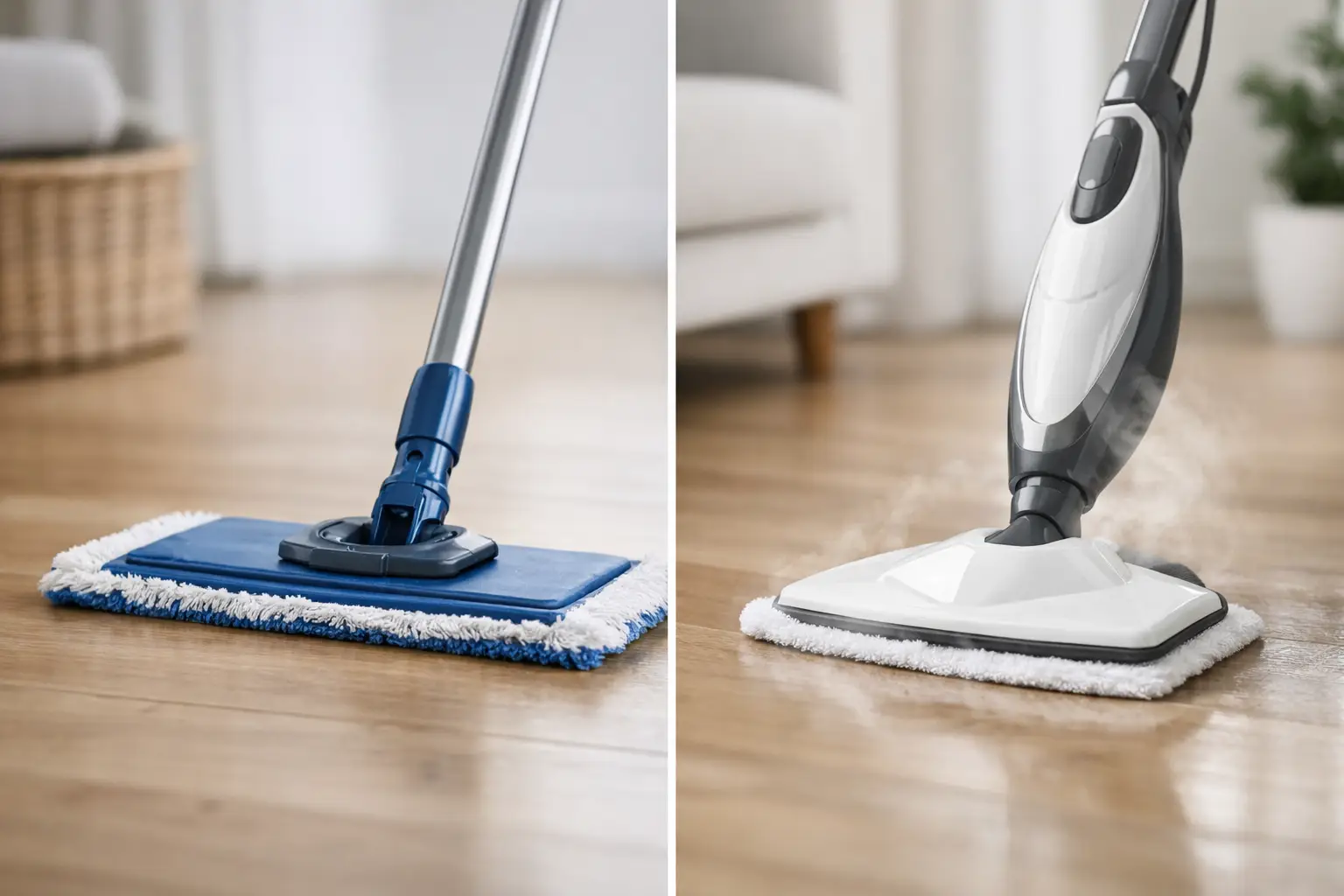
A muddy paw print by the back door, a splash of pasta sauce beside the high chair, and crumbs that somehow travel across the kitchen – floor cleaning rarely waits for a convenient moment. The microfibre mop vs steam mop decision comes down to how your household lives, what flooring you have and how much effort you want to put into each clean.
Both can leave hard floors looking far better than a tired old string mop and bucket. But they work in very different ways. A microfibre mop is quick, affordable and brilliantly useful for everyday spills. A steam mop uses heat to lift grime and refresh sealed hard floors without relying on floor cleaner. Neither is automatically the best choice for every home.
A microfibre mop cleans with finely woven synthetic fibres. Used dry, the pad attracts dust, hair and loose debris. Used damp, it picks up marks and dirt from hard floors. Most styles have a washable, reusable pad, while spray mops make it easy to add a small amount of water or suitable floor cleaner as you go.
A steam mop heats water inside its tank and releases steam through a fitted pad. The warmth softens dried-on dirt while the pad lifts it away. It can feel especially satisfying on a kitchen floor that needs more than a light once-over.
The practical difference is simple: a microfibre mop gives you greater control over moisture and cleaning solution, while a steam mop adds heat but also has more rules. Steam is not suitable for every surface, and using too much on the wrong floor can cause expensive trouble.
For most day-to-day cleaning, a microfibre mop is hard to beat. It is light, ready in seconds and does not need plugging in, heating up or descaling. That makes it ideal for a quick tidy before visitors arrive, after dinner, or when children and pets have been through the house at full speed.
Microfibre is particularly good at collecting dust, pet hair and fine particles that can be pushed around by a traditional mop. A dry pad works well on laminate, vinyl, sealed wood and tile, while a lightly damp pad handles everyday footprints and splashes. You are not soaking the floor, so it usually dries quickly too.
It is also the more flexible option if your home has different floor finishes. Because you can control exactly how wet the pad is, a microfibre mop is often a safer bet for laminate and engineered wood. Always follow the flooring maker’s cleaning advice, but less water is generally better around joins and edges.
Running costs are another win. A decent reusable pad can be washed many times, and a simple mop has no electricity use or replacement cartridges to think about. Keep a spare pad on hand and you can swap it over halfway through a larger clean rather than carrying on with a grubby one.
A microfibre mop does not provide the heat of steam, so stubborn grease or dried food may need a little more work. You may need to pre-treat a sticky patch, use a suitable cleaner or make a second pass with a freshly rinsed pad.
The pad also needs washing properly. If it is left damp in a pile after cleaning, it can smell musty and will not perform at its best. Wash reusable pads according to their care label, avoid fabric conditioner as it can coat the fibres, and let them dry fully before putting them away.
A steam mop comes into its own on sealed tile, ceramic, stone approved for steam cleaning, and some sealed vinyl floors. It is a handy choice for busy kitchens, utility rooms and bathrooms, where grime can build up and a plain damp mop sometimes feels underpowered.
Many households like steam because it uses plain water. There is no need to measure out cleaner, and there is less concern about leaving product residue on the floor. For homes with toddlers crawling about or pets stretching out on the tiles, that simplicity can be reassuring.
Steam can also be useful for refreshing a floor after a more thorough sweep or vacuum. It helps loosen marks that have dried onto the surface, and the mop pad captures the dirt. The floor should still be cleared of crumbs, grit and pet hair first. A steam mop is not a replacement for vacuuming, and dragging grit across a floor risks scratches.
There is a little more preparation involved than with a basic microfibre mop. You need to fill the tank, wait for it to heat, work around a lead and empty it afterwards. In a large open-plan area that may be no bother. For one small spill, it can feel like bringing out more kit than necessary.
Never assume steam is safe simply because a floor looks hard. Steam can force moisture into gaps and under edges, potentially causing laminate to swell, wood to warp, adhesive to weaken or finishes to dull. This is especially relevant with older flooring, damaged sealant, unsealed surfaces and click-lock joints.
Many laminate, solid wood and engineered wood manufacturers advise against steam mops altogether. Some vinyl and luxury vinyl floors also have specific rules. Check the care guidance for your exact floor before using one. If you cannot confirm that steam is approved, choose a well-wrung microfibre mop instead.
Even on suitable tile, keep the mop moving. Holding hot steam in one place for too long is unnecessary and may affect sealants or grout over time. Use a clean pad, avoid overfilling the tank and allow the floor to dry before everyone walks across it.
A microfibre mop is normally the lower-cost choice to buy and run. It takes up little cupboard space, has few parts to go wrong and is easy to use for all sorts of quick jobs. If your priority is fast, everyday cleaning on mixed flooring, it gives excellent value.
A steam mop costs more initially and uses electricity, but it may be worthwhile if most of your hard flooring is steam-safe tile or sealed surfaces. It can make deeper weekly cleans feel less labour-intensive, particularly in high-traffic family areas. Remember to factor in replacement pads and occasional descaling if you live in a hard-water area.
For cleaning results, neither tool wins every round. A clean microfibre pad with the right amount of moisture can leave a floor spotless. Steam gives added help with greasy or dried-on dirt, but it cannot compensate for a dirty pad or unsuitable flooring. The best tool is the one you will use regularly and correctly.
If you rent, have laminate in several rooms, or live with a mixture of carpet, vinyl and wood-effect floors, start with a microfibre mop. It is the lower-risk, lower-fuss option and useful for almost every household. A spray-style microfibre mop can be particularly handy for quick kitchen and hallway jobs.
If your downstairs is mainly sealed ceramic tile and you want a cleaner-free way to tackle regular kitchen and bathroom grime, a steam mop could be a worthwhile extra. It is best thought of as a specialist helper rather than a one-tool answer for every floor in the house.
Some homes benefit from both. Use a microfibre mop for dust, fast spills and delicate surfaces, then bring out the steam mop for approved tiled areas when they need a proper refresh. This approach avoids asking one cleaning tool to do a job it is not designed for.
Before choosing, look at the floors you clean most often rather than the messiest corner you can remember. A mop that suits your real routine, stores easily and is safe for your surfaces is the one that will make cleaning feel a bit more easy-peasy, every week.
