Address
86 Amesbury Road
Manchester M9 6JF United Kingdom
Our electric airer review explains running costs, drying times and key features, so you can decide whether this handy indoor clothes dryer suits your home.
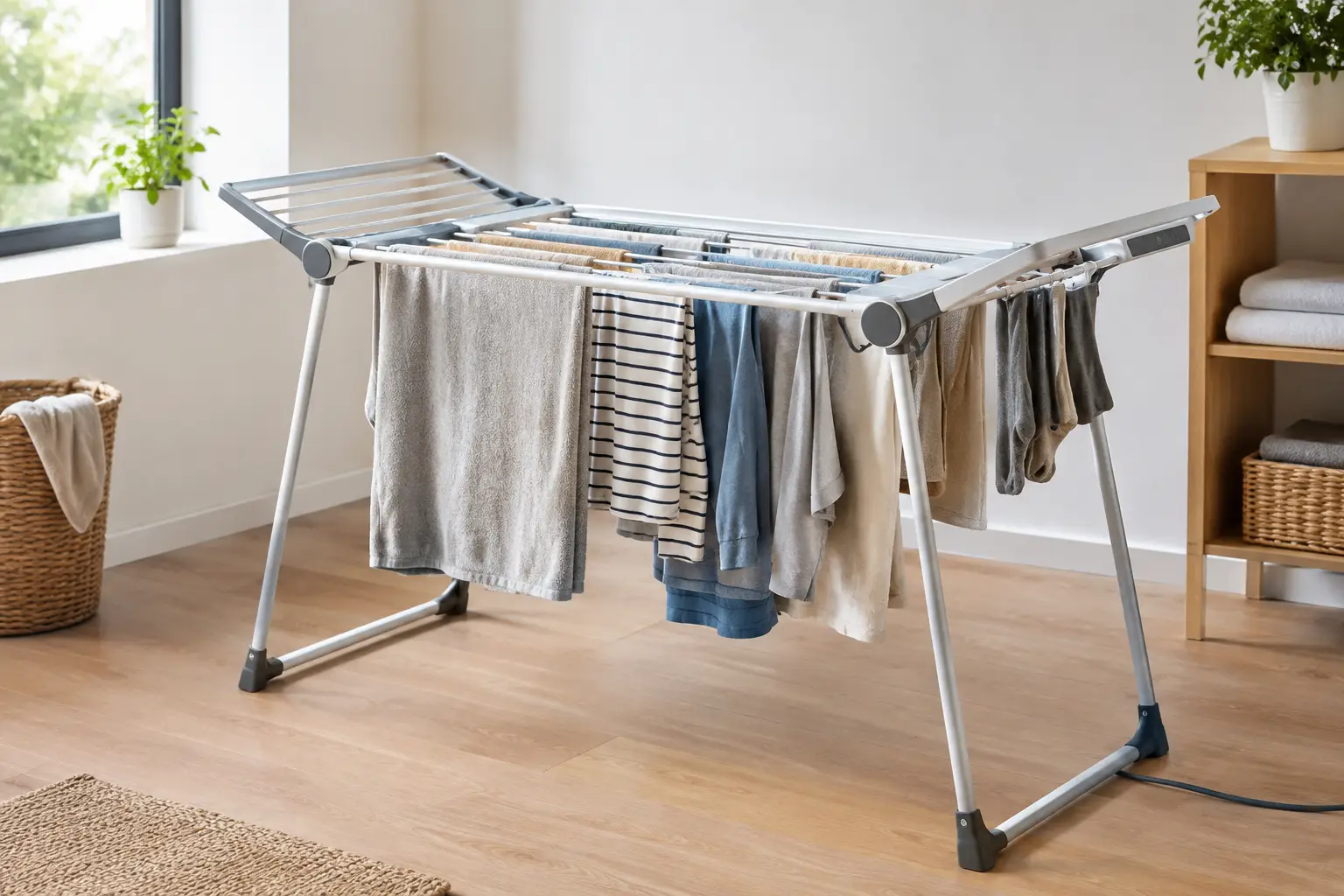
A rainy week, a full washing basket and no space for another clothes horse across the lounge: that is when an electric airer starts to look like a very sensible household buy. This electric airer review looks at what these heated drying racks do well, where they fall short and how to tell whether one will genuinely make wash day easier in your home.
Electric airers are not tumble dryers in disguise. They use gentle heat through the rails to speed up indoor drying, rather than blasting clothes with hot air. That makes them a practical middle ground for homes without a utility room, outdoor line or appetite for running a tumble dryer every day.
An electric airer looks much like a folding clothes horse, but its rails warm up when plugged in. You hang laundry over the bars as usual, and the mild heat helps moisture evaporate more quickly. Most models are designed for everyday loads such as shirts, school uniform, underwear, tea towels and smaller towels.
The key word is gently. Rails are warm rather than hot, so drying tends to take several hours rather than minutes. A standard open-frame electric airer is best thought of as an all-day or overnight helper. Covered versions, often supplied with a zip-up heated cover, hold warmth around the laundry and can make a noticeable difference to drying time.
This slower approach suits fabrics that you would rather not put through high tumble-dryer heat. It can also be useful for keeping clothes moving through the wash without turning the spare room, kitchen or landing into a permanent drying zone.
The biggest attraction is running cost. Electric airers generally use far less electricity than a tumble dryer, commonly around 100W to 300W depending on size and design. Your exact cost depends on your electricity tariff and how long it is switched on, but even several hours of use can be a budget-friendlier option than a tumble-drying cycle.
They are also simple. There are no complicated programmes to select and no heavy appliance to install. Fold it out, load it evenly, plug it in and allow time for the heat to do its job. For renters, smaller homes and anyone who needs a flexible laundry solution, that simplicity is a real plus.
Space-saving design is another win. Most electric airers fold flat enough to slide behind a door, beside a wardrobe or into a cupboard when not needed. That is useful if you only need extra drying capacity during winter, wet weather or the endless run of school PE kits.
For many households, the gentler treatment of clothes is just as valuable. High heat can be hard on elastic, printed tops and certain delicate fabrics over time. While you should always check the care label, an airer is generally a kinder option for items you would not want to tumble dry.
An electric airer saves energy compared with many tumble dryers, but it still needs time and indoor space. If you regularly wash bulky bedding, thick bath sheets or several family loads in one day, a compact rack may feel too slow or too small. It helps to see it as a useful drying tool, not a one-size-fits-all replacement for every laundry job.
Drying time also varies more than product packaging can suggest. A lightly loaded covered airer in a warm, ventilated room may dry a load in a few hours. Dense fabrics, poor airflow, a cold room or rails packed shoulder to shoulder can make the same load take much longer.
There is also the question of humidity. Wet laundry releases moisture into the room whether it dries on a standard airer or a heated one. In a home that already suffers from condensation or mould, use the airer in a well-ventilated area and consider opening a trickle vent, running an extractor fan nearby where appropriate, or using a dehumidifier. Avoid drying laundry in a closed, unventilated bedroom.
An open electric airer is the straightforward, affordable choice. It is easy to load, gives you access to every rail and works well for a smaller daily wash. It is particularly handy when you want a little extra drying power without buying another large appliance.
A covered model makes better use of the heat by keeping it around the clothes. It can be the better pick for winter washing, family homes and people who need clothes dry by the following morning. The cover creates a tent-like drying area, so garments dry more evenly when there is sensible space between them.
The compromise is that covered designs may take up more vertical room and can be slightly more fiddly to load. If the airer will live in a narrow box room or compact flat, measure the floor space and height before choosing. A cover also needs to be fitted correctly, rather than draped over a model that was not designed for one.
Start with capacity, but do not rely on the number alone. Manufacturers often state drying space in metres, which is useful, yet the layout matters too. Closely spaced rails can make loading awkward, while raised wings, hanging sections and a sturdy centre frame give you more options for different garments.
Check the dimensions both open and folded. A large family-size airer is no bargain if it blocks the only route through the kitchen. Think about where you will use it on wet days, where it will be stored and whether there is a safe socket nearby without stretching leads across a walkway.
A timer is a handy extra, especially if you plan to dry overnight or while getting on with the rest of the day. It allows you to set a run time rather than remembering to switch it off later. An on/off switch, stable feet and a decent cable length are smaller details that make everyday use less of a faff.
Before you buy, check these practical points:
Good loading makes a bigger difference than most people expect. Spin clothes thoroughly in the washing machine first, then shake out shirts, sleeves and trouser legs before hanging them. Do not fold a heavy hoodie over one rail and expect the middle to dry quickly. Spread bulky pieces across several rails where possible.
Leave a small gap between garments, particularly around thick waistbands, pockets and cuffs. It may be tempting to fill every bar, but an overloaded airer traps dampness and slows the whole load down. Two smaller, well-spaced loads are often quicker and fresher than one tightly packed one.
Place the airer in a room with reasonable airflow, away from splashes, sinks and baths. Follow the manufacturer’s instructions on safe use, keep it upright and do not cover electrical parts. Never use it if the cable, plug or frame is damaged. A heated airer is designed for laundry, not for warming blankets, drying shoes directly on the rails or heating a room.
If you own a dehumidifier, running it in the same ventilated room can be a smart pairing. It removes moisture from the air as the laundry dries, which may reduce condensation and help garments dry faster. That combination can be particularly useful through a damp British winter.
Electric airers are a strong fit for smaller households, flats, renters and anyone who wants to reduce reliance on a tumble dryer. They also make life easier for families dealing with regular uniform washes, baby clothes, gym kit or everyday laundry that needs a gentle dry.
They are less ideal as the only solution for a busy household producing multiple large loads every day. If you regularly need to dry king-size bedding and piles of heavy towels at speed, you may need an outdoor line when the weather allows, a laundry room setup or occasional tumble drying alongside it.
For most homes, the best value comes from using an electric airer strategically. Put it to work for regular clothes, delicates and midweek loads, then save high-energy drying for the occasions when speed really matters.
A good electric airer will not make laundry disappear, sadly. But choose the right size, give clothes room to breathe and use it where moisture can escape, and it can turn a damp-weather chore into one less thing to worry about. That is the sort of everyday shortcut EasyPeasyMate.Shop is all about.
