Address
86 Amesbury Road
Manchester M9 6JF United Kingdom
Find the best household step stools for kitchens, cupboards and cleaning, with simple safety checks to choose a stable, useful option for every room today.
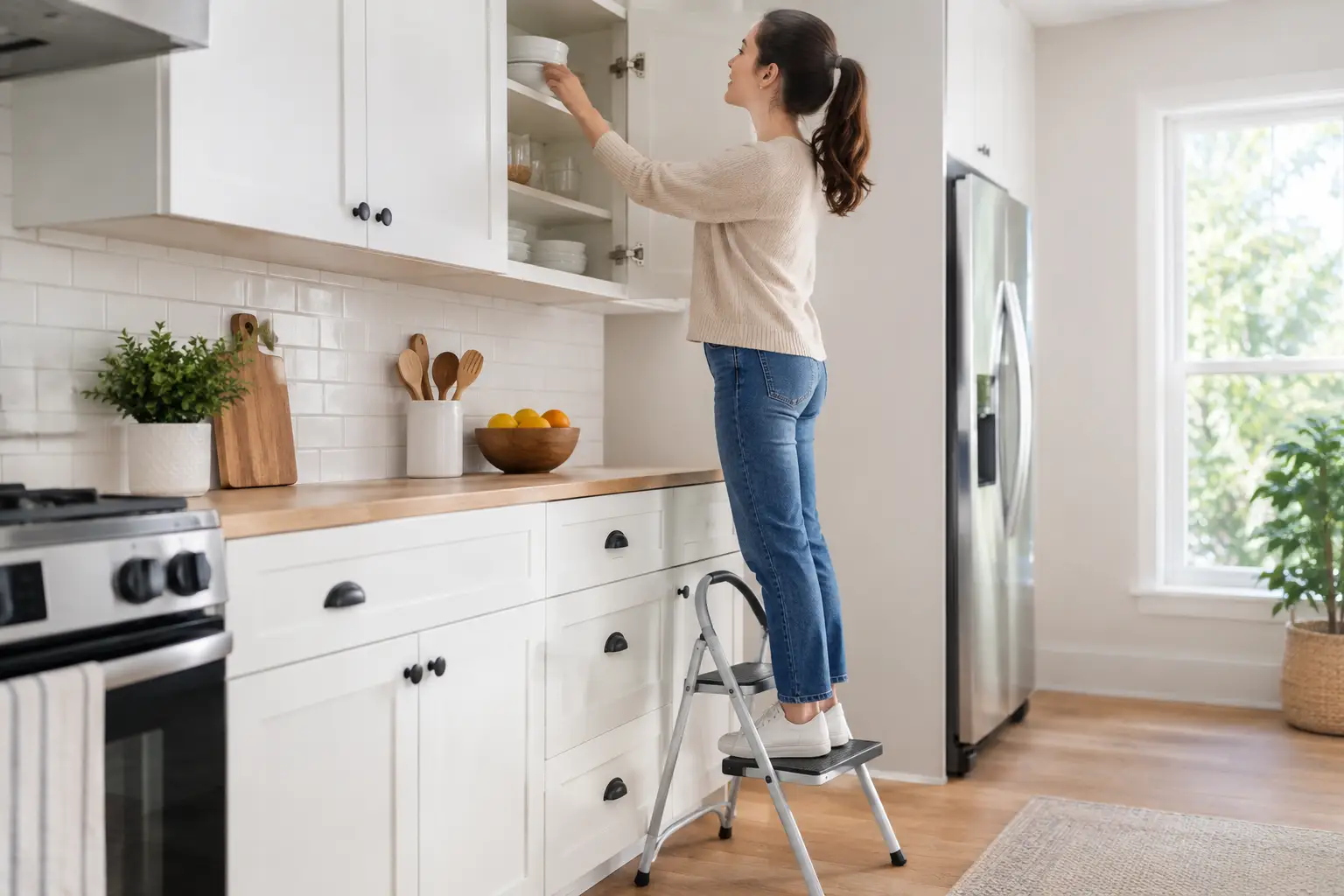
That top kitchen shelf always seems to hold the one thing you need, just out of reach. Rather than balancing on a dining chair or stretching awkwardly over the worktop, the best household step stools give you a safer, steadier way to tackle everyday jobs. From putting away groceries to cleaning high windows, a good stool earns its place surprisingly quickly.
The right choice is not always the tallest or the cheapest one. It needs to suit the jobs you actually do, the space you have and the people using it. A compact folding stool can be ideal in a small flat, while a two-step design may make more sense for a busy family kitchen with high cupboards.
Think about where you regularly need an extra lift. Reaching a cupboard above the fridge, changing a light bulb or wiping down the top of a wardrobe call for different levels of support. For low-level tasks, such as helping a child reach the basin or resting your feet while sitting, a simple one-step stool is often enough.
For most homes, a one- or two-step stool is the useful middle ground. It gives enough height for kitchen storage, laundry shelves and routine cleaning without becoming bulky to carry around. If you are tempted by a taller model, consider whether a proper step ladder would be safer for the task. Household stools are made for short, light jobs, not extended DIY work at height.
It also pays to consider how often the stool will be moved. A lightweight plastic design is easy to grab with one hand, while a steel-framed model can feel more planted underfoot. Neither is automatically better. The practical answer depends on whether you value quick storage, a higher weight capacity or extra stability.
A step stool should make a job easier, not introduce a wobble halfway through it. Before buying, look closely at the features that affect day-to-day safety rather than focusing on colour or a clever folding mechanism alone.
A broad, textured top surface is a strong starting point. Grip patterns, rubber inserts or an anti-slip finish help footwear stay in place, particularly in kitchens, utility rooms and bathrooms where floors can become damp. The feet matter just as much. Non-slip rubber feet help stop the stool skating across laminate, tile or vinyl when you step on it.
Check the maximum load stated by the manufacturer. This limit should allow for the user’s weight plus anything they may be carrying, such as a basket of washing or a small storage box. Do not assume a lightweight stool has a low limit, or that a heavier one has a high one – always check the label or product details.
For folding designs, the locking action is essential. The stool should open fully and sit flat before use, with no loose hinges or sections that can shift under pressure. Test it on a level floor and never use it partly folded. If children will be around it, choose a design that is straightforward for adults to open but does not leave fingers exposed around awkward pinch points.
A recognised household step-stool standard, such as EN 14183 where applicable, can offer extra reassurance. It is still worth inspecting the stool yourself and using it sensibly. A safety marking does not make uneven flooring, socks on a slippery step or overreaching safe.
Even a well-made stool becomes less stable when you lean too far to one side. Place it close to the area you need to reach, face the work and keep your weight centred over the step. Step down and move it rather than stretching sideways for the last item. It takes a few extra seconds and avoids the sort of awkward twist that can lead to a fall.
Avoid placing a stool on a worktop, a rug, a bed, a garden table or another raised surface. It should always sit on firm, level ground. For outdoor chores, use it only on stable paving or decking, and bring it back inside afterwards unless it is specifically made for weather exposure.
Folding stools are a brilliant choice when cupboard space is limited. They can slide beside a fridge, hang in a utility cupboard or tuck into a caravan locker, ready for those little reach-up jobs. Look for a handle that feels comfortable and a folded shape that stays shut when carried.
Their trade-off is that hinges need occasional attention. Check that the opening mechanism is clean, secure and free from cracks, especially if the stool is used daily. A slim folding model is handy, but very narrow steps may not feel as confident under larger feet.
A fixed plastic step stool is often the grab-and-go option for the kitchen or bathroom. There are no hinges to open, and many designs are light enough for older children to move with supervision. Choose one with a wide base and properly grippy feet, rather than a smooth, lightweight shape that may shift on hard flooring.
Plastic is easy to wipe clean, which is useful near muddy boots, pets or food preparation areas. On the other hand, it should be checked for splits or stress marks, particularly after being stored in a cold shed or used outside in strong sunshine.
Two-step stools with metal frames tend to feel more substantial and are a sensible option for frequent access to higher cupboards. Many include a handrail, which can be useful for anyone who wants more confidence when stepping up and down. They usually take up more room than a folding plastic stool, so measure the cupboard or gap where you plan to keep one.
Metal frames are durable, but inspect the step treads and feet over time. Replace a worn rubber foot or damaged tread rather than carrying on with a stool that has lost its grip.
The kitchen is where many households get the most use from a step stool. A one-step or low two-step model helps with cereal boxes, serving dishes, cleaning products and the back of top cupboards. Keep it somewhere easy to access, but not where it creates a trip hazard in a busy walkway.
In the bathroom, grip is the priority. Choose a stool with a non-slip surface and keep the floor dry before using it. If it is intended to help a child reach the sink, an adult should check that it cannot slide and that the child can get on and off comfortably. A stool is not a substitute for supervision around water.
Utility rooms, garages and sheds often need a tougher option with a useful load rating. Here, you may be carrying paint, tools or washing products, so a broader platform and secure footing are worth having. For changing bulbs, clearing gutters or reaching high shelves in a garage, switch to a suitable ladder if the job requires working at greater height or using both hands for any length of time.
A quick wipe with warm, soapy water keeps mud, grease and cleaning residue from making the surface slippery. Dry it properly before folding or storing it away. Every so often, check the feet, hinges, tread and frame for wear, loose fittings or damage.
Try not to leave an indoor stool permanently outdoors. Rain, frost and sunlight can weaken materials or reduce grip over time. Store it somewhere dry, and keep heavier items from being piled on top of a folding model, as this can bend the mechanism.
The most useful step stool is the one you can reach easily, trust underfoot and store without a fuss. Whether you are organising cupboards, helping little ones at the sink or sorting the utility room, choosing a stable design with the right height turns an awkward daily stretch into one less thing to worry about. That is exactly the kind of simple household win that makes life a little easier.
