Address
86 Amesbury Road
Manchester M9 6JF United Kingdom
Raised beds vs planters: compare space, cost, drainage and care to choose the easiest option for your garden, patio, balcony or rented home with confidence
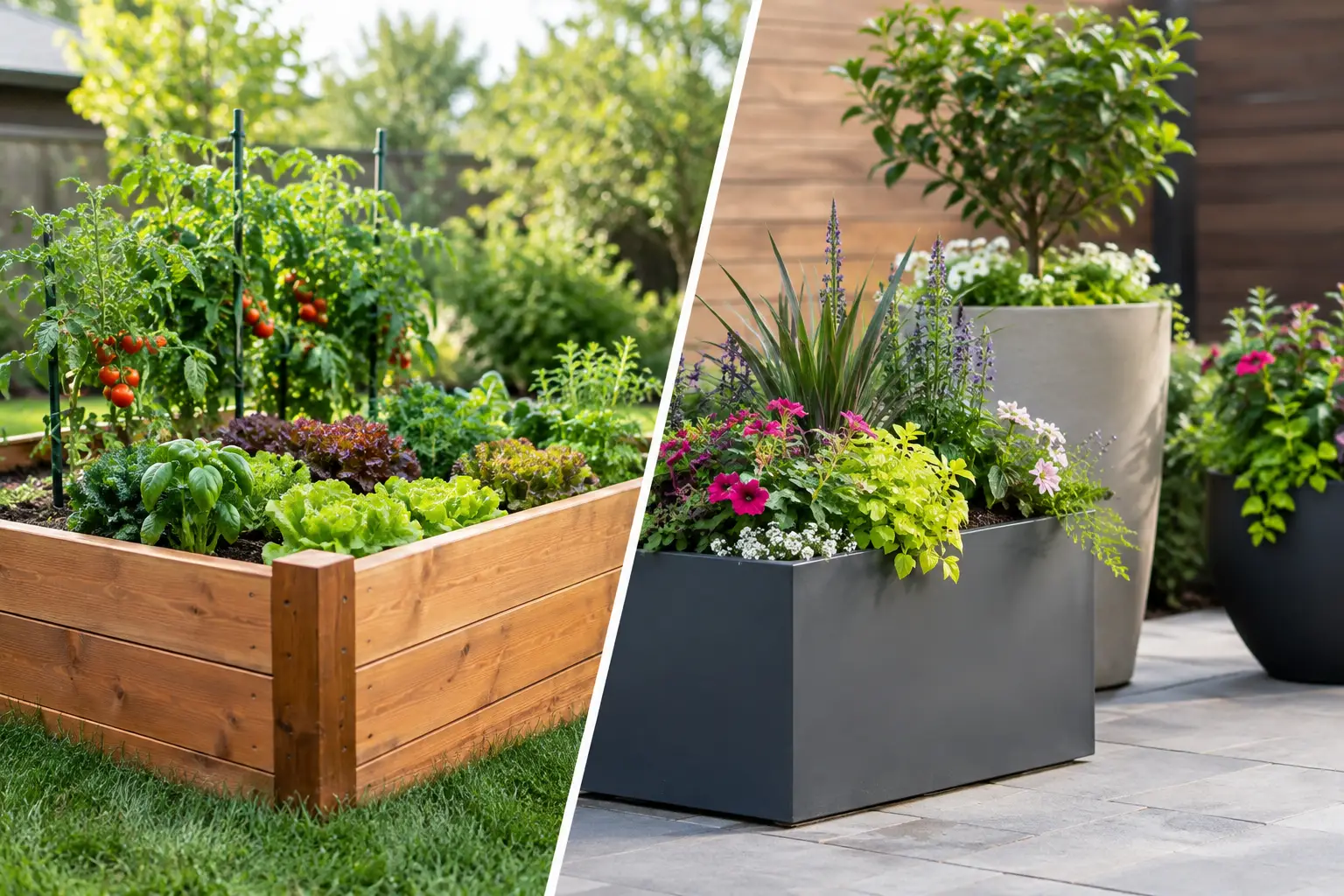
A bare patch by the fence, a sunny patio corner or a balcony with room for a few pots can all become productive growing space. When choosing raised beds vs planters, the best answer is not simply which looks nicer. It comes down to how much space you have, what you want to grow and how much lifting, watering and upkeep suits your routine.
Raised beds give you a dedicated growing area with depth and structure. Planters offer flexibility and are easy to move around as the seasons change. Both can make gardening more manageable, especially where the existing soil is poor, paved or simply not where you want to be kneeling every weekend.
A raised bed is a larger open-bottomed or enclosed growing area, usually made from timber, metal or recycled plastic. It sits above ground level and is filled with soil and compost. Some are built directly on a lawn or soil, while raised beds on patios and hard surfaces need a base or liner to keep the growing medium contained.
A planter is a separate container. It may be a classic pot, trough, window box, tall planter or lightweight resin container. It has a base and drainage holes, so every plant relies entirely on the compost, water and nutrients inside it.
That difference matters more than it first appears. A raised bed behaves more like a small garden plot, with room for roots to spread and soil conditions that become more stable over time. A planter gives each plant, or small group of plants, its own self-contained space. This makes it easier to rearrange your garden, but it also means containers can dry out faster.
If you want to grow several vegetables, herbs or flowers together, a raised bed is often the more practical choice. One well-filled bed can hold a mix of salad leaves, beetroot, onions, carrots, peas and companion flowers without turning the whole garden into a collection of separate pots.
The extra soil volume is the real advantage. It holds moisture longer than most containers, gives roots more room and is less affected by sudden hot or cold spells. This is useful in a British summer, when a warm sunny day can quickly be followed by wind and rain. Plants still need watering during dry periods, but a raised bed is generally more forgiving if you miss one evening.
Raised beds are also popular because they reduce bending. Even a modest bed height can make sowing, weeding and harvesting far more comfortable. Taller options can be a sensible solution for gardeners with stiff knees, back discomfort or limited mobility.
They are particularly good for:
There are trade-offs. Filling a raised bed takes a surprising amount of compost and soil, particularly if it is deep. It is also more of a commitment: once built and filled, it is not something you will casually shift to the other side of the garden. Timber beds may need occasional treatment or eventual replacement, while metal versions can warm up quickly in a very sunny spot.
Planters earn their place where a raised bed would feel too permanent or too bulky. They work brilliantly on patios, decking, balconies, beside a front door and in rented homes where you do not want to alter the garden. If the sun moves through your outdoor space, containers can move with it.
This flexibility is especially helpful for plants with different needs. Mediterranean herbs such as rosemary, thyme and lavender enjoy free-draining compost and plenty of sun. Hostas and ferns prefer shadier conditions. With planters, you can place each group where it is happiest instead of trying to make one bed suit everything.
Planters are ideal for individual crops too. Tomatoes, chillies, strawberries, dwarf beans, potatoes and compact fruit trees all grow well in suitably sized containers. Tall planters can add greenery without taking up much floor space, while troughs make practical mini herb gardens close to the kitchen.
The catch is watering. Because a planter has less compost than a raised bed, it can dry out very quickly in warm weather, especially terracotta pots and dark containers in full sun. In July, thirsty plants may need a daily check. Drainage matters just as much: waterlogged compost can damage roots, so make sure holes are clear and do not let pots sit permanently in water-filled trays.
A planter can also become root-bound if it is too small. Check the expected mature size of the plant, not just how neat it looks at the garden centre. A large tomato plant in a tiny pot is likely to struggle, no matter how much feed it receives.
The ground beneath your growing area can make the decision easy. Raised beds are at their simplest on soil because excess water can drain down naturally and plant roots may eventually reach deeper layers. Place cardboard beneath a new bed if you want to suppress weeds, then fill it with quality soil and compost.
On paving, decking or concrete, planters are usually the straightforward option. They are designed to contain compost and water in one place. Use pot feet or small risers beneath larger containers where possible, as this helps water drain away and reduces staining on patios.
A raised bed can still work on a hard surface, but choose a purpose-made raised planter with a base, or make sure the design includes a suitable liner and drainage plan. Remember that wet compost is heavy. Before placing a large bed or several oversized containers on a balcony, roof terrace or raised deck, check the weight limits with the property owner or managing agent.
Planters usually offer the lower-cost starting point. You can begin with a couple of containers, compost and a few plants, then add more when you know what works. This is a sensible route for new gardeners or anyone testing a sunny corner before investing in a larger set-up.
Raised beds can deliver better value over several years if you want to grow a lot. The frame costs more upfront, and filling it is the biggest initial expense, but it creates a productive space that can be refreshed season after season. Rather than replacing all the soil each year, remove weeds, add a layer of compost and mix in a suitable organic feed before planting.
Containers need their own annual attention. Top up compost in spring, refresh some of the old growing medium when it becomes compacted and feed hungry plants regularly through the growing season. Use fresh peat-free compost for new sowing and planting where possible. It gives young roots a better start than tired, depleted compost from last year.
Whichever option you choose, buying the right size first is usually cheaper than upgrading later. A slightly larger planter holds more moisture and gives roots more breathing room. A bed that is no wider than you can comfortably reach across makes weeding much easier.
Raised beds suit crops that need room and benefit from growing in rows or blocks. Lettuce, spinach, kale, carrots, beetroot, radishes, courgettes and runner beans are all strong choices. You can also create a generous cut-flower bed with cosmos, sweet peas and zinnias for colour through summer.
Planters suit plants you want close at hand or those that deserve their own conditions. Keep herbs by the back door, strawberries in hanging or raised containers, and tomatoes in large pots where they can be supported with canes. Containers are also useful for plants that spread enthusiastically, such as mint. Keeping mint in a pot stops it taking over a whole bed.
Do not feel you must choose one approach for the entire garden. A raised bed for vegetables plus a few planters for herbs, flowers and tomatoes is often the easiest, most useful arrangement. It gives you reliable growing space while keeping the patio or entrance looking cheerful and changeable.
Choose raised beds if you have a permanent spot, want to grow more food and would welcome less bending. Choose planters if you have limited space, rent your home, garden on paving or like the freedom to move things around. If watering is likely to be an occasional rather than daily job, larger containers and raised beds will generally make life easier.
Start with the space you actually use, not the garden you imagine maintaining every Saturday. A few well-positioned planters or one manageable raised bed can turn everyday outdoor space into something you will enjoy tending, picking from and showing off all season.
