Address
86 Amesbury Road
Manchester M9 6JF United Kingdom
Our air purifier review explains filters, room size, noise and running costs, so you can choose a practical cleaner-air option for your UK home today.
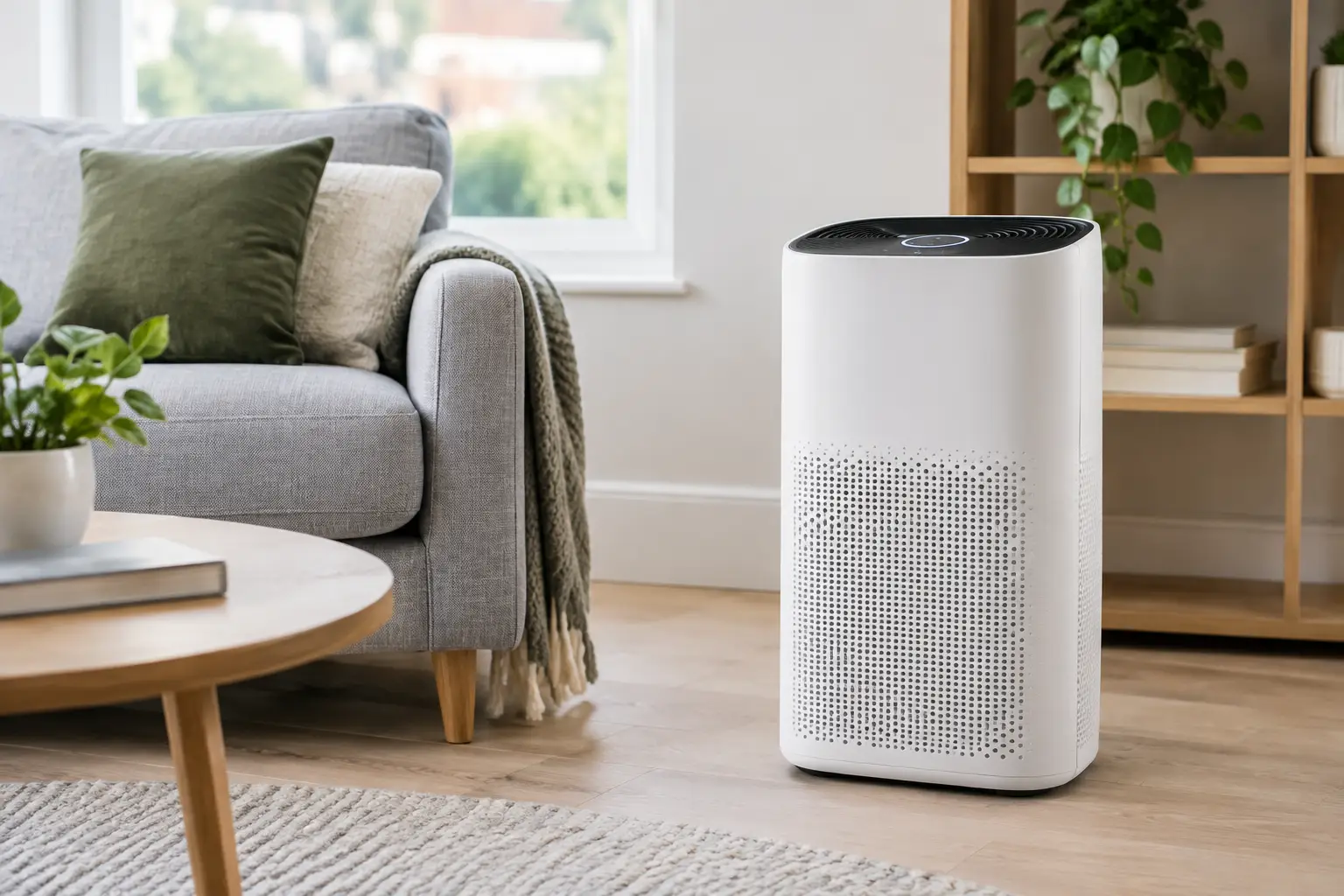
A lingering fish supper, a busy pet bed, pollen drifting through an open bedroom window: these are the everyday moments that make cleaner indoor air appealing. This air purifier review focuses on what matters in real UK homes, from filter performance and room size to noise, running costs and the claims worth treating with caution.
An air purifier is not a magic fix for every air-quality problem. It can reduce airborne particles when it is the right size, used properly and maintained well. It cannot replace cleaning, ventilation or dealing with the source of damp and mould. Think of it as one useful household tool, not a reason to ignore a leaking pipe or a steamy bathroom.
The strongest case for an air purifier is usually fine particles floating in the air. These can come from pollen, dust, pet dander, outdoor traffic pollution entering through windows, smoke and cooking. A machine that pulls room air through an effective particle filter can lower the concentration over time.
That can be helpful for households where hay fever makes bedrooms uncomfortable, pets share the sofa, or a main road is close by. It may also be handy after cooking, particularly in open-plan homes where smells and fine grease particles travel further than expected.
Odours are a separate job. For them, look for a meaningful amount of activated carbon. A thin black sheet may offer a little help, but it will not perform like a substantial carbon filter. Even then, opening a window when safe to do so and using an extractor fan remains the sensible first move after cooking.
Be wary of broad promises that a purifier will remove every virus, cure allergies or solve mould. Air cleaning can form part of a practical routine, but it does not diagnose health conditions or replace medical advice. For visible mould, persistent condensation or damp smells, find and fix the moisture problem first.
A smart-looking unit with a colourful light is not automatically the best buy. Start with the practical details below, then decide which compromises suit the room where it will live.
For particle filtration, a HEPA filter is the familiar term shoppers look for. Check the product information carefully: some brands state a recognised HEPA grade, while others use phrases such as “HEPA-type” or “high-efficiency”. The wording is not always equivalent. Clear information on the filter grade, what it captures and how often it should be changed is a good sign.
A pre-filter is useful too. It catches larger fluff, hair and dust before they reach the main filter. If it is washable or easy to vacuum, this can help the main filter last longer. For homes with dogs or cats, that small feature is genuinely worthwhile.
Do not judge value by the machine price alone. Check the cost and availability of replacement filters before buying. A cheap purifier that needs expensive filters every six months can cost more over a few years than a better-value model with readily available replacements.
Room coverage figures can be confusing because manufacturers may quote ideal conditions or a very low air-change target. Look for a clean air delivery rate, often called CADR, where available. In simple terms, a higher figure means the purifier can clean more air in a given time.
Measure the room rather than guessing. Multiply its length by width and ceiling height to find the volume in cubic metres. A small bedside purifier may be fine for a compact bedroom, but it will struggle in a large kitchen-diner. Buying too small is one of the most common reasons people feel a purifier has made little difference.
If you plan to move one machine between rooms, size it for the largest room you will use it in. It may cost a little more upfront, but it can run at a quieter, lower setting in smaller spaces.
Most purifiers are quiet on their lowest setting and much louder on boost. That is normal, but the top speed is often where the machine does its most useful work after cooking or during high-pollen days.
For a bedroom, compare the quoted decibel level on sleep mode and check whether display lights can be dimmed or switched off. For a living room, a modest fan sound may be perfectly acceptable. The best choice depends on where it will sit and whether you are likely to turn it down because the noise becomes irritating.
A purifier only cleans air while it is switched on, so running costs matter. Check the wattage at low and high fan speeds. A lower-watt model used steadily can be more practical than a power-hungry unit that spends most of its time unplugged.
Auto mode can be convenient, especially if the purifier has a particle sensor that responds to cooking or dust. Still, sensors are not infallible. Use auto mode as a helpful setting rather than proof that the room is always perfectly clean.
The useful extras are usually the simple ones: a timer, filter-change reminder, child lock, adjustable fan speeds and dimmable lights. App control can be handy if you want to start the unit before getting home, but it should not be the deciding factor.
Avoid paying extra for features you will never use. A reliable machine with clear controls, affordable filters and a sensible room rating will often be the easier option to live with.
For a bedroom, prioritise quiet operation, a dim or switchable display and enough capacity for the whole room. Place it away from curtains and bedding, with clear space around the air intake. Running it for several hours before bed can be more comfortable than relying only on a noisy boost setting overnight.
For a lounge or open-plan area, capacity comes first. Choose a model designed for the room volume and expect to use higher speeds after vacuuming, entertaining or cooking. Keep doors and windows in mind: a purifier is not designed to keep up with a wide-open patio door on a windy day.
For pet households, a washable pre-filter and easy-to-source replacement filters should be near the top of the list. Purifiers can reduce airborne dander and dust, but they will not remove fur from rugs or stop muddy paw prints in the hallway. Regular vacuuming and washing pet bedding still do much of the heavy lifting.
For kitchens, deal with the source first. Use the cooker hood or extractor, cover pans where practical and ventilate after cooking. A purifier with carbon filtration can then help with lingering odours and airborne particles in adjoining rooms.
Ionisers and ozone-generating functions deserve extra care. Some products use ions as part of their air-cleaning approach, but ozone is an airway irritant and is not something you need added to your home. If a purifier offers an ioniser, check whether it can be switched off and look for clear safety information.
Likewise, “covers up to” room-size claims need context. A model may technically cover a large area, yet clean it slowly at a quiet setting. Look for the clean-air rate, recommended room volume and noise level together rather than relying on one large number on the box.
A built-in air-quality display can be interesting, but it often measures only certain particles. It may not tell you about humidity, carbon dioxide, gas leaks or every odour. A purifier is not a carbon monoxide alarm, so keep appropriate alarms fitted and tested in your home.
Once you have chosen a suitable model, give it a fair chance to work. Put it on a level surface, keep the intake and outlet clear, and avoid tucking it behind furniture. Close windows during periods of heavy pollen, smoke or roadside pollution if that is the reason you are using it, then ventilate at more suitable times.
Clean the pre-filter as directed and replace the main filter on schedule, or sooner if it becomes heavily soiled. Do not wash a filter unless the manufacturer specifically says it is washable. A clogged filter reduces airflow and can make even a good purifier underperform.
The most satisfying purchase is usually not the fanciest one. It is the purifier that suits your room, stays quiet enough to use and has replacement filters you can afford to keep buying. Choose that, pair it with good cleaning and ventilation habits, and your home air routine becomes a little more easy-peasy.
