Address
86 Amesbury Road
Manchester M9 6JF United Kingdom
Pressure washer vs hose: see which suits patios, cars, driveways and daily cleaning, with costs, water use and effort explained simply.
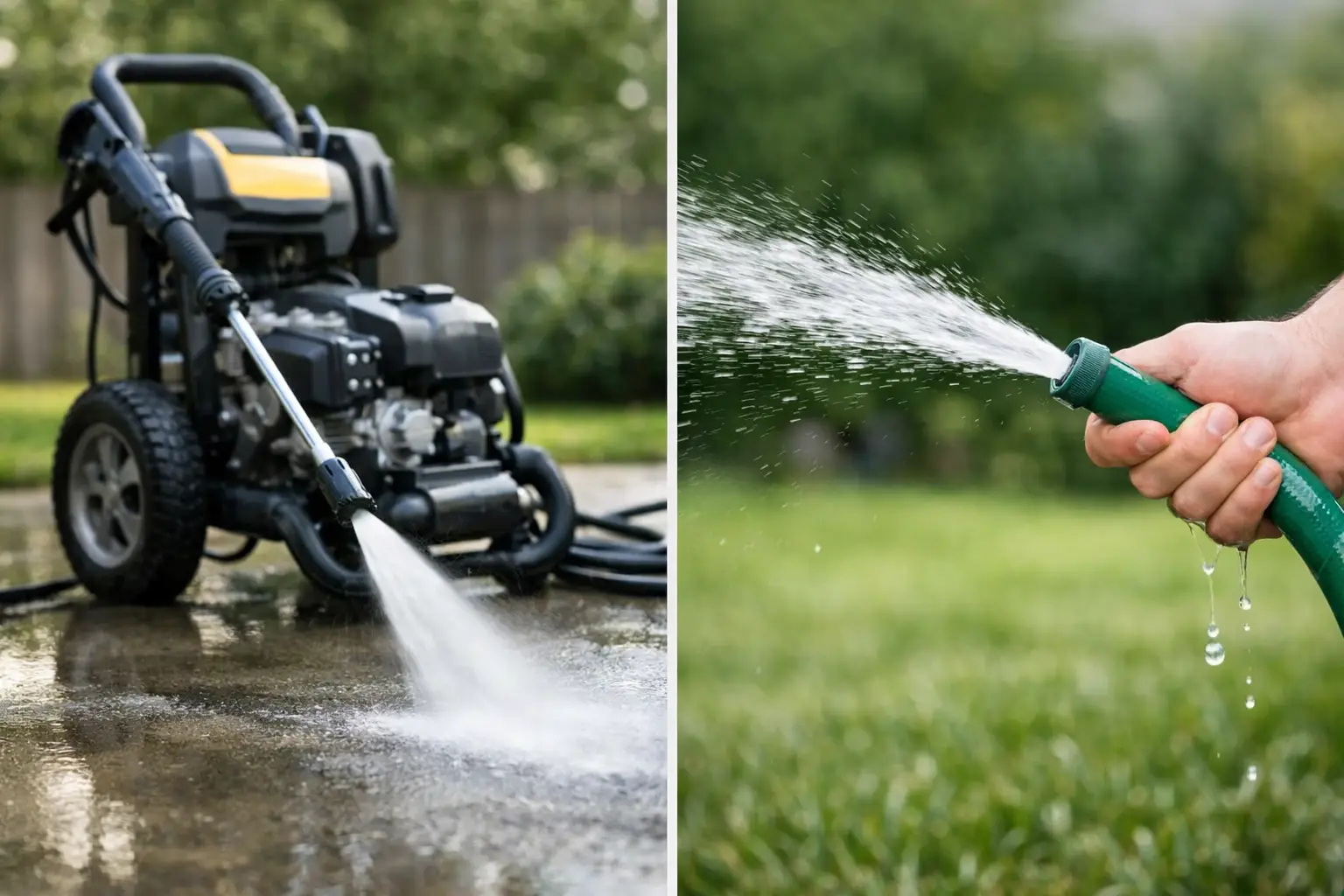
Saturday morning, the patio is green, the car is dusty, and the bins have made a mess again. That is usually when the pressure washer vs hose question comes up. One feels quick and powerful, the other is already there, easy to grab, and often good enough. The right choice depends less on which tool looks better and more on what you are actually cleaning, how often you do it, and how much effort you want to put in.
If you want the short answer, a pressure washer is better for stubborn outdoor grime, larger hard surfaces and jobs where speed matters. A hose is better for gentle rinsing, light cleaning and everyday tasks where blasting high pressure would be overkill. Most homes can make good use of both, but if you are choosing just one first, it helps to know where each really earns its keep.
A garden hose is simple, familiar and flexible. You turn it on, rinse what needs rinsing and put it away. For watering plants, washing muddy wellies, hosing down garden furniture, filling paddling pools or giving the car a quick pre-rinse, it does the job without fuss. It is also less likely to damage paint, timber, seals or softer surfaces if used sensibly.
A pressure washer is a different kind of tool. It is built to shift dirt that has bonded to a surface – moss on paving, algae on decking, grime on walls, mud packed into wheel arches, old dirt on bins and fencing. It saves a lot of scrubbing, especially on textured or porous surfaces where a hose just skims over the top.
That difference matters because many people buy a pressure washer expecting it to replace a hose entirely. It will not. It is brilliant in bursts, but not ideal for every routine task. Setting it up, plugging it in, connecting hoses and choosing the right nozzle takes more time than simply using a hosepipe. If the job is small and light, the simpler option often wins.
If you have a driveway, patio or paved path that has gone dark over winter, a pressure washer is usually the better tool by a mile. A standard hose can rinse away loose dirt, but it will struggle with built-up algae, moss stains and ingrained grime. Pressure cuts through that layer fast, and that speed is the main selling point.
The same goes for wheelie bins, garden walls, caravans with stubborn lower-panel road film, and outdoor furniture that has sat through months of rain and pollen. On these jobs, a pressure washer does not just make cleaning easier – it can make the job possible without a lot of manual effort.
It is also useful if you clean larger areas regularly. If your household includes pets, kids, messy outdoor play, muddy bikes or a car that always seems to collect grime, the time saved can be worth it. A job that might take half an hour with a hose, detergent and a stiff brush can often be cut down sharply with a pressure washer.
That said, stronger is not always better. Too much pressure can strip paint, mark timber, loosen pointing, damage car paintwork if used carelessly, or force water into places it should not go. The tool is only as good as the person holding it.
A hose wins on convenience. There is almost no barrier to using it, which means you are more likely to do quick jobs before they become bigger ones. It is also the safer option for delicate surfaces and lighter tasks.
For cars, for example, a hose is often underrated. If you are doing a careful wash with shampoo, wash mitts and a proper rinse, a hose gives you control without the risk of blasting grit across the paint. A pressure washer can still be useful for wheels, arches and an initial rinse, but for many drivers a hose is enough for regular upkeep.
It is also the better choice for watering, rinsing pet items, topping up a pond, washing windows with gentle flow, or cleaning anything that does not need force. If you live in a flat with only limited outdoor access, or a small terrace with no driveway or large paved area, a pressure washer may feel like more kit than you really need.
There is a cost point too. A hosepipe setup is far cheaper to buy and maintain. If you only clean heavy outdoor grime a few times a year, it may not make sense to invest in a machine unless you know you will use it often.
This is where things get a bit less obvious. Many people assume a pressure washer always uses more water because it looks more powerful. In practice, it can use less water than a hose for certain jobs because it cleans more efficiently.
A hose can pour out a lot of water over time, especially if it is left running through a long wash. A pressure washer pushes less water at much higher pressure, so it can remove dirt faster and with less waste during heavy cleaning. For a grimy patio, that can make it the more efficient option.
But efficiency depends on how you use it. If you spend ages setting up, stopping, switching nozzles and repeatedly washing areas that did not need pressure in the first place, the savings disappear. A hose still makes more sense for basic rinsing and short, low-effort jobs.
Running costs matter as well. A pressure washer uses electricity and may need occasional maintenance, replacement accessories or detergents. A hose has very little ongoing cost beyond water use and the odd replacement fitting or spray gun. If you are trying to keep household spending practical, this is worth factoring in.
This is the easiest call. If the surface is solid and badly soiled, a pressure washer is the better choice. It deals with grime deep in the texture of slabs and block paving far more effectively than a hose. Just be careful around loose jointing sand, cracked pointing and older surfaces.
This one depends on your approach. A hose is perfectly fine for routine washing and is gentler for paintwork. A pressure washer is handy for pre-rinsing, alloy wheels, wheel arches and lower panels where road dirt sticks. For caravans and motorhomes, pressure should be used carefully around seals, decals and trims.
This is where caution matters. A hose is safer for regular rinsing and light cleaning. A pressure washer can revive timber, but used badly it can fur up the wood, leave visible lines or cause damage. Lower pressure and the right nozzle make a big difference.
A hose works well for plastic furniture, toys, tools and quick clean-ups. A pressure washer helps if the dirt is heavy, but it is not always necessary. If the surface is painted or lightweight, gentle is usually better.
If your main jobs are watering, car rinsing, light outdoor cleaning and general garden use, start with a decent hosepipe, good fittings and a spray nozzle with adjustable settings. For a lot of households, that covers the majority of regular jobs without cluttering up the shed.
If your main headaches are slippery paving, dirty bins, algae-covered walls, muddy driveways or repeated heavy mess, a pressure washer will probably make life easier. It saves time, reduces scrubbing and gets results that a hose often cannot match on its own.
For plenty of homes, the sweet spot is simple: use the hose little and often, and bring in the pressure washer for the tough stuff. That way you are not overcomplicating easy jobs or struggling through hard ones.
At EasyPeasyMate, that kind of choice matters because the best cleaning tool is the one that actually suits your home, not the one that sounds most impressive.
The pressure washer vs hose debate is not really about which is better overall. It is about matching the tool to the mess. If the dirt is light, fresh or on a delicate surface, a hose is often the smarter option. If the grime is heavy, stubborn and spread over hard outdoor areas, a pressure washer earns its place quickly.
Think about the jobs you do every month, not the one big clean you are planning this weekend. Buy for your normal routine, and cleaning gets a lot easier from the start.
