Address
86 Amesbury Road
Manchester M9 6JF United Kingdom
Have you ever spent an afternoon wrestling with a new appliance only to find the drain pipe is just a few centimetres too short to reach the waste...
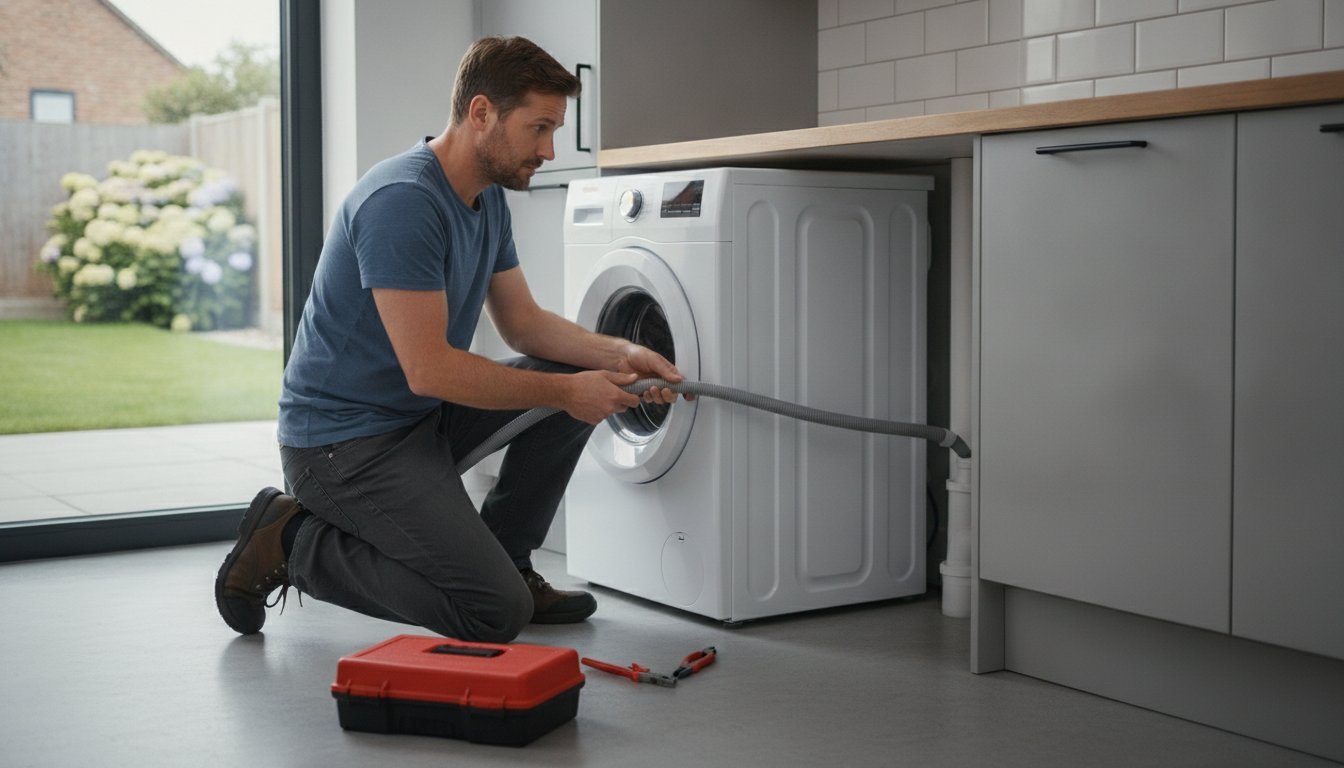
Have you ever spent an afternoon wrestling with a new appliance only to find the drain pipe is just a few centimetres too short to reach the waste outlet? It is a common headache that often leads to risky “quick fixes” like overstretching the plastic or using mismatched connectors. You are right to be cautious. A poorly fitted setup is the main reason for a washing machine drain hose extension leaking, which can quickly turn your kitchen or utility room floor into a miniature lake. With 60% of households facing appliance issues in the last five years, nobody wants to add a preventable flood to the list.
We understand the anxiety of potentially burning out your pump or dealing with expensive water damage. The good news is that you don’t need to pay a plumber a service fee of £80 or more for such a straightforward task. This guide provides the ultimate 2026 checklist for a secure, leak-proof extension that lasts for years. You will discover how to match pipe diameters perfectly, avoid common error codes, and ensure your machine drains efficiently without any messy surprises. Let’s get your laundry routine back on track with a simple, low-cost fix.
Finding that your drain hose doesn’t quite reach the standpipe is a common frustration during a kitchen refit or when moving into a new home. A hose is officially “too short” if it’s pulled taut when the machine is in its final position. You should be able to push your appliance flush against the wall without the pipe kinking or feeling like a guitar string. If the hose is under tension, it isn’t just a minor inconvenience; it’s a structural risk to your appliance.
Perform the “Stretch Test” before you start your first load. Pull the machine out, then slowly push it back whilst watching the hose. If the plastic starts to whiten or the connection at the back of the drum looks strained, you’re heading for trouble. This constant pulling is a primary cause of a washing machine drain hose extension leaking at the seal. Over time, the aggressive vibrations of a 1400rpm spin cycle will turn that small amount of tension into a split pipe or a disconnected joiner.
You might worry about your warranty. Many manufacturers’ terms suggest that “unauthorised modifications” can void your cover. However, a properly installed, secure extension is generally considered standard maintenance for modern kitchen layouts. It’s certainly safer for your machine than a DIY “bodge” that puts physical stress on the internal centrifugal pump fittings. These pumps are designed to push water through a specific volume of space, and as long as you follow the rules of physics, your machine will stay happy.
You don’t always need to replace the entire internal hose. For most integrated appliances or modern kitchen layouts, adding a Washing Machine Drain Hose Extension Pipe is the “EasyPeasy” choice. It avoids the need to dismantle the machine, which is a complex job that often requires a professional. If your original hose is over ten years old or feels brittle, a full replacement is best. Otherwise, an extension is perfectly fine. Just ensure the total length of your drainage setup never exceeds 4 metres to avoid overworking the pump or triggering the ‘Siphon Effect’.
Before you pull your washing machine out from the wall, you need to have the right kit on hand. Using the wrong parts or skipping a few pence on a connector is the most common cause of a washing machine drain hose extension leaking once the cycle starts. It isn’t just about the pipe itself; it’s about the security of the joints. High-pressure wastewater, often reaching temperatures of 60 degrees or higher, can easily pop a loose connection apart, leaving you with a utility room full of sudsy water.
Preparation is the key to a no-fuss fix. You’ll need a few specific items to ensure the connection is permanent and leak-proof. If you’re looking to get the job done right first time, you can find everything you need in our home maintenance collection. Having these bits ready means you won’t be left with a half-finished job and a pile of wet laundry.
The Washing Machine Drain Hose Extension Pipe is designed as a universal solution for most UK households. It’s flexible enough to navigate tight corners behind kitchen units whilst being sturdy enough to withstand years of heavy-duty cycles.
Never rely on a simple “push-fit” connection. As the machine vibrates and the water heats up, the plastic expands and can slide right off a joiner. You need a ribbed plastic connector that provides a “bite” grip inside both hoses. This creates a mechanical seal that won’t budge under pressure. To make it truly secure, you must use stainless steel Jubilee clips on both ends of the join. Stainless steel is essential here because the area behind a washing machine is often damp and humid; cheaper clips will rust and fail within a year.
Finally, don’t forget the U-bend support bracket. This plastic “hook” keeps the hose in a permanent curve. It prevents the hose from flopping down, which is vital for maintaining the correct height and preventing gravity-related leaks or siphoning issues. To fit these, you’ll usually just need a flat-head screwdriver or a small spanner to tighten the clips until they’re snug. Don’t over-tighten, as you don’t want to crush the plastic joiner inside.
Ready to get stuck in? Before you start, safety is the priority. Switch off the power at the wall and unplug the machine completely. You’ll also want a shallow tray or a few old towels handy. Even if the machine hasn’t run for a while, there’s almost always residual water sitting in the pipe. When you disconnect the existing hose to add the extension, gravity will do its work, and you don’t want a puddle forming under your kitchen units.
The mechanical connection is the most vital part of the job. Take your ribbed plastic joiner and push it halfway into the existing drain hose. It should be a tight fit. If it feels loose, double-check your measurements. Once it’s firmly seated, slide the second hose over the remaining half of the joiner until the two pipes meet in the middle. This is where many people stop, but a simple push-fit is the quickest way to end up with a washing machine drain hose extension leaking under pressure. Slide your Jubilee clips over the joints and tighten them with a flat-head screwdriver until they’re snug. They need to be firm enough to prevent the hose from sliding, but don’t tighten them so hard that you crush the plastic joiner inside.
When you’ve secured the join, plan your route back to the waste pipe. Avoid sharp 90-degree bends, as these create “choke points” where lint and hair can build up over time. Ensure the hose isn’t going to be crushed or pinched when you push the machine back into its housing. A flattened pipe will overwork the pump and eventually lead to a “drain error” code on your display.
In most UK homes, you’ll either use a standpipe or an under-sink spigot. If you’re using a standpipe, use the plastic “U” hook to keep the hose in place. Don’t push the hose too far down, and never tape it up to make it airtight; the pipe needs to “breathe” to prevent pressure issues. If you’re connecting to a new sink spigot, ensure you’ve removed the plastic blanking plug from the inside of the spigot first. Without doing this, the water has nowhere to go. Always aim to keep your connection point between 60cm and 100cm from the floor to help the pump work efficiently.
Don’t push the machine back until you’ve run a test. Set the appliance to a “Rinse and Spin” cycle. You need a full drum of water to create enough pressure to properly test the new joints. Whilst the machine is draining, wrap a dry paper towel around the connection. This is the best way to spot a tiny, pin-sized drip that might be missed by the naked eye. If the towel stays bone dry, you’re good to go. Carefully slide the machine back, checking one last time that the hose hasn’t kinked during the process.
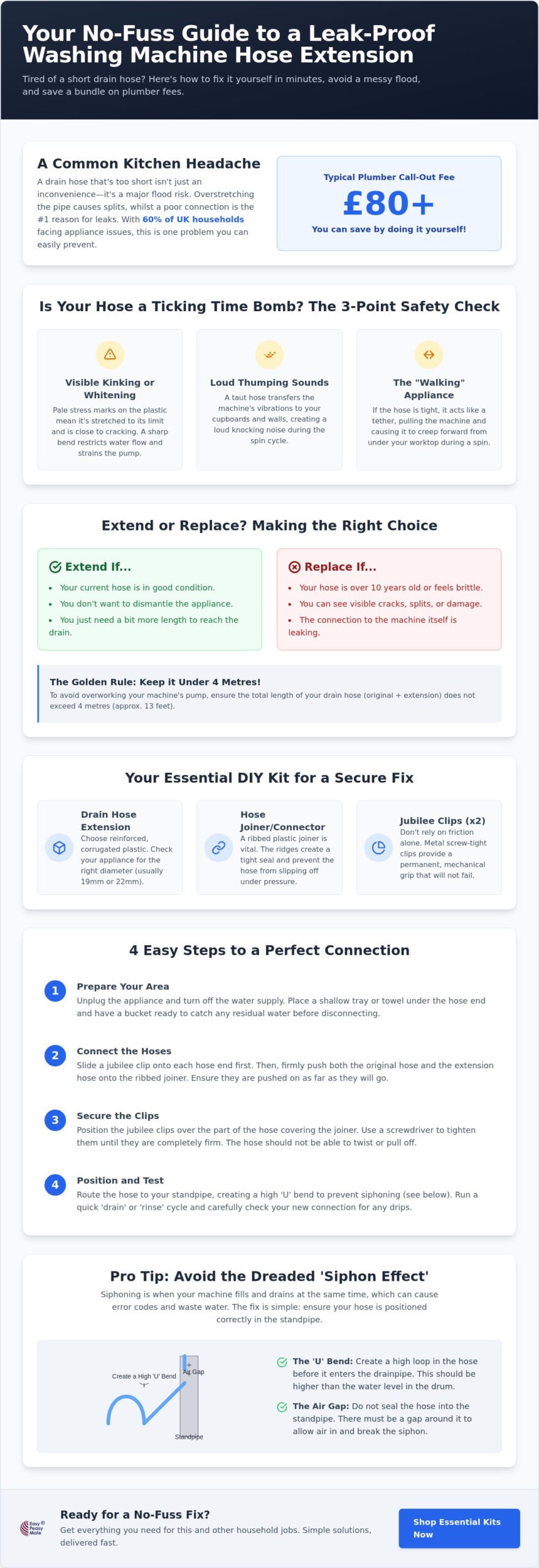
Installing the hardware is only half the battle. If you’ve ever noticed your machine filling and draining at the same time, you’ve likely fallen victim to the “siphon effect.” This happens when the end of the drain hose is positioned lower than the water level inside the drum. Gravity simply takes over, pulling the fresh water straight back out before the cycle can even start. It is a common mistake that leads to wasted water and confusing error codes on your display.
Another frequent culprit is ignoring the “Air Gap” rule. You might be tempted to wrap duct tape around the standpipe to make it “extra secure,” but this is a mistake. The connection between the hose and the waste pipe must not be airtight. Without a small gap for air to circulate, a vacuum forms. This pressure imbalance is a hidden cause of a washing machine drain hose extension leaking as water is forced back up the pipe or out of the top of the standpipe. Keep the connection loose enough for pressure to equalise naturally.
Think about the path your hose takes across the floor. If the extension has a low “belly” or sag where it sits flat on the tiles, greywater will pool there. This stagnant water becomes a breeding ground for bacteria and lint, eventually leading to a foul, eggy smell that wafts into your kitchen. To keep your home fresh and your pump healthy, ensure the hose is always angled or supported so water flows directly toward the waste outlet. Domestic pumps are only built for so much work; exceeding a combined length of 4 metres will eventually burn out the motor.
If you’re connecting under a sink, use the “High Loop” trick. Fasten the hose to the very top of the cabinet, well above the sink’s own drain level. This prevents dirty dishwater from flowing back into your clean washing machine. Secure the pipe to the wall or cabinetry using clips to prevent “kickback” when the pump starts a high-pressure drain cycle. Gravity works as your assistant when the hose is angled correctly, allowing the pump to clear the drum with minimal effort.
An extended hose requires a little more attention than a standard setup. We recommend checking the joiner every six months for any “gunk” or limescale buildup that could cause a blockage. A monthly hot service wash at 60°C or higher is essential for clearing out detergent residue and bacteria from the longer line. For more detail on specific plumbing setups, read our guide on Washing Machine Drain Hose Connection Types: A Practical UK Guide. If you need to upgrade your current setup, you can find heavy-duty spares in the EasyPeasyMate shop.
At EasyPeasyMate, we believe that looking after your home shouldn’t be a chore. We understand the frustration of a kitchen layout that doesn’t quite work or a new appliance that falls short of the waste pipe. That is why we’ve dedicated ourselves to finding straightforward, heavy-duty products that solve these daily niggles quickly and affordably. Our goal is to give you the confidence to tackle these tasks yourself, ensuring you never have to worry about a washing machine drain hose extension leaking in the middle of the night.
When you are dealing with a potential flood, you don’t want to wait weeks for a specialist part or navigate a confusing international marketplace. We provide UK-based support and fast delivery across the country because we know that home maintenance often can’t wait. Whether you’re a homeowner looking for a permanent fix or a renter needing a non-destructive solution, we’re here to make the process as easy as possible. You have the checklist and the knowledge; now it’s time to get the job done and get back to your weekend.
Our kits offer a universal fitment designed specifically for the UK market and standard appliance brands. We prioritise heavy-duty construction that easily resists the heat and chemicals of modern laundry detergents. You can find more detail on choosing the right length in The Complete Guide to Using a 4 Metre Drain Hose for Your Washing Machine. These components are built to last, giving you peace of mind with every spin cycle.
Beyond plumbing, we help you organise and maintain your entire home with ease. Our curated selection includes everything from a Broom Head Stiff Bristle Garden Brush for the patio to a Super-Absorbent Microfibre Pet Drying Towel for your four-legged friends. We offer free delivery across the United Kingdom on all orders, ensuring value and convenience are always at the forefront. Browse our Washing Machine Drain Hose Extension Pipes and more at EasyPeasyMate to find your next smart home solution.
There is no need for expensive call-outs when you have the right tools and a bit of “can-do” spirit. By following our safety checks and using high-quality parts, you’ve protected your appliance and your floor. It’s practical, it’s reliable, and most importantly, it’s EasyPeasy.
You now have the knowledge to fix that short hose once and for all. By following our 5-point safety check and ensuring every connection is secured with stainless steel clips, you’ve removed the primary risks of a washing machine drain hose extension leaking. It’s all about the details; keeping that “Air Gap” clear and maintaining a total length under 4 metres will ensure your appliance pump stays healthy and your kitchen floor stays bone dry.
At EasyPeasyMate, we take the guesswork out of home maintenance with universal kits designed to fit all major UK appliance brands. Our dedicated customer support team is always ready to help if you have a question, and we provide Free UK Delivery on every order to make your DIY fix even more convenient. There is no need for expensive plumber call-outs when you have the right parts and a simple plan.
Get your leak-proof Washing Machine Drain Hose Extension at EasyPeasyMate and tick this job off your to-do list today. You’ve got the skills and the right checklist to make your home maintenance truly EasyPeasy.
Yes, you can join two hoses together using a dedicated ribbed plastic joiner and two stainless steel jubilee clips. It is a common solution when your appliance is situated further away from the waste pipe than the original hose allows. Just make sure the connection is mechanical and secure. Never rely on waterproof tape or a simple push-fit, as the pressure of the drain cycle will eventually pop the joint apart.
The maximum recommended total length for a domestic washing machine drain hose is 4 metres. If you extend the pipe beyond this limit, you risk overworking the centrifugal pump and causing a premature motor failure. A hose that is too long also increases the chance of “drain error” codes appearing on your machine’s display. Keep the run as short and straight as possible for the best results.
No, you don’t need a professional plumber to extend your hose. It is a simple DIY task that most homeowners can complete in about 15 to 20 minutes with basic tools. By using a universal extension kit and following a clear checklist, you can achieve a professional, leak-proof result whilst saving yourself the cost of an expensive service call-out fee.
This unpleasant smell is usually caused by stagnant water pooling in a low section of the hose that sits flat on the floor. When water can’t drain away completely, bacteria and detergent residue build up in the corrugated ridges of the pipe. To fix this, ensure the hose is supported so it angles directly towards the waste outlet and run a hot service wash at 60°C once a month.
Correctly installing a standard extension usually won’t void your warranty, but a poorly fitted one that damages the pump might. Most manufacturers accept extensions as a standard part of installation in modern UK kitchens. However, if the extension causes the machine to work harder than designed, they may refuse a repair claim. Always follow the 4-metre rule and use high-quality parts to stay on the safe side.
You generally need a jubilee clip with a range of 16mm to 25mm for a standard UK drain hose. Most hoses have an outer diameter between 20mm and 24mm at the connection point. Always choose stainless steel clips rather than zinc-plated ones. The area behind a washing machine is often humid and damp; stainless steel won’t rust and fail over time like cheaper alternatives.
To prevent a washing machine drain hose extension leaking during the high-pressure spin cycle, you must use a ribbed joiner secured with jubilee clips. The ribs “bite” into the inside of the rubber ends to create a seal that won’t slide. Tighten the clips until they are firm but don’t crush the plastic joiner. This creates a permanent, watertight bond that can withstand the vibrations of a 1400rpm spin.
Yes, most universal extension hoses are perfectly compatible with standard UK dishwashers. They typically use the same 19mm or 22mm diameter fittings found on washing machines. Since dishwasher waste water is often very hot, ensure the extension you choose is made from reinforced, heat-resistant plastic. It’s a versatile solution that works for almost any modern kitchen appliance with a pumped drain system.
The content on this blog is provided for general informational and educational purposes only. While we strive to provide accurate DIY and gardening advice, it does not constitute professional structural, electrical, plumbing, or landscaping advice. Always consult a qualified professional before undertaking major home improvements. EasyPeasyMate accepts no liability for any loss, damage, or injury incurred as a result of using the information provided on this website. Any reliance you place on such information is strictly at your own risk.
