Address
86 Amesbury Road
Manchester M9 6JF United Kingdom
Choose the best non-slip bath mats with practical advice on materials, fit, cleaning and features for safer, busier UK bathrooms every single day at home.
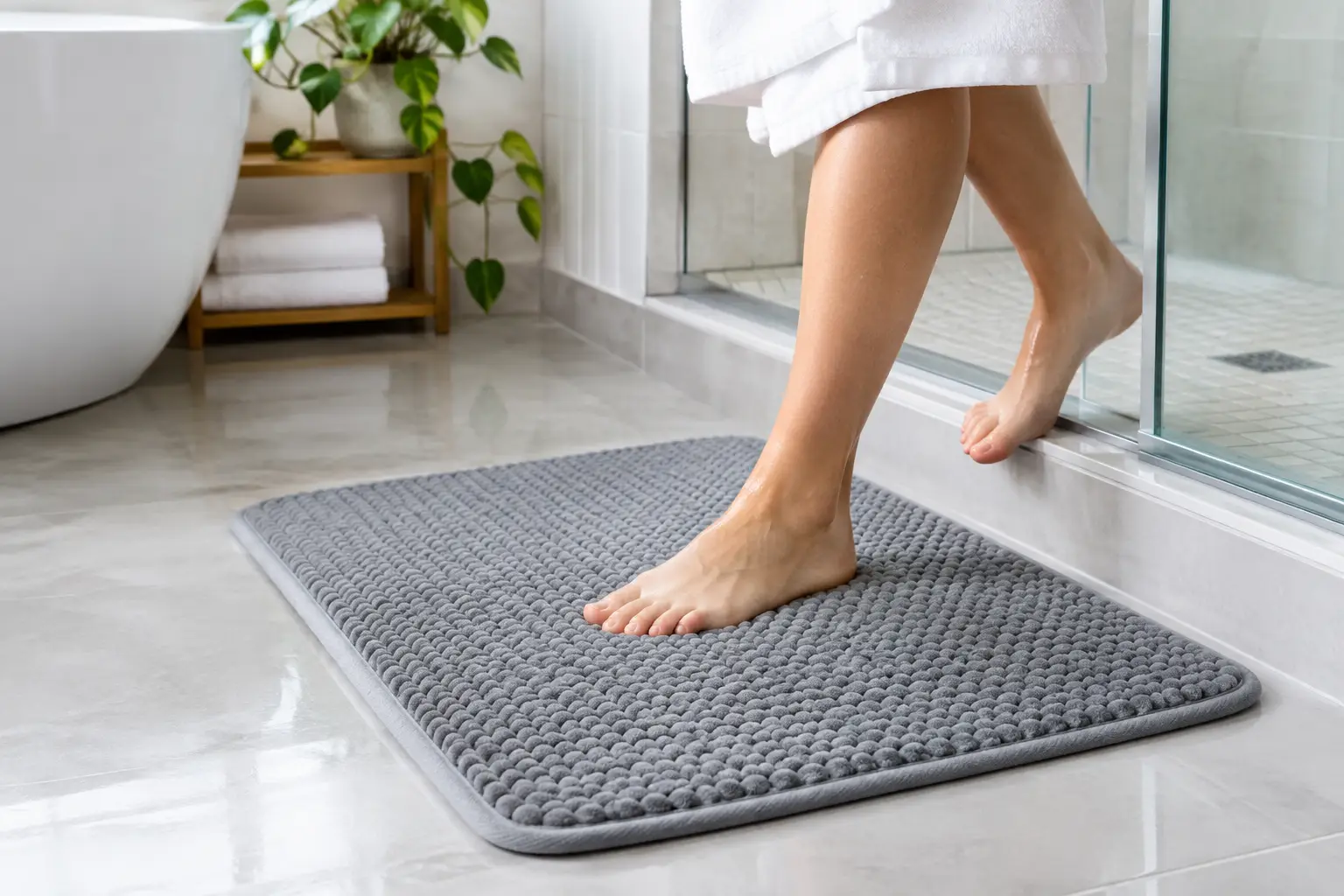
A wet bathroom floor can turn a normal morning into an avoidable slip hazard in seconds. The best non-slip bath mats do more than look tidy beside the bath or shower: they grip where they should, soak up water quickly and stay easy to clean between busy family routines.
The right choice depends on where the mat will sit. A mat inside a bath needs secure suction cups and drainage, while a mat on the floor needs a reliable non-slip backing as well as an absorbent top layer. They solve different problems, so treating them as interchangeable is where many households go wrong.
Before choosing a colour, pattern or pile height, decide whether you need a mat for inside the bath or shower, outside it, or both.
An in-bath mat is usually made from rubber, PVC or a similar water-resistant material. Its job is to create traction under bare feet on a smooth, wet surface. Most designs use suction cups underneath to hold the mat in place and small holes through the surface so water can drain away.
A bathroom floor mat sits next to the bath, shower or basin. It catches drips and gives you a drier, warmer landing spot after washing. For this job, look for an absorbent surface with a grippy base. Cotton, microfibre and chenille are common choices, each with a different feel and drying time.
For homes with young children, older relatives or anyone less steady on their feet, using both types can make everyday routines simpler. One prevents slipping while washing; the other reduces the risk when stepping out.
“Non-slip” is a useful feature, but it is not a guarantee on every surface and in every condition. A mat only works properly when it is the right size, fitted correctly and kept clean.
For floor mats, rubberised or latex-style backing is the feature doing the hard work. It should sit flat without curling at the corners or shifting when you step on it. Test it on your actual bathroom floor rather than assuming it will behave the same on tile, vinyl, laminate or sealed stone.
Be cautious with underfloor heating and newly treated flooring. Some rubber backings can mark, discolour or lose grip over time, especially when heat and moisture are involved. Check the care guidance for both the mat and the floor finish if this applies in your home.
Inside a bath or shower, suction cups need a smooth, clean, non-textured surface to grip properly. They are usually less effective on heavily textured shower trays, uneven tiles, grout lines and anti-slip coated bases.
Press the mat down firmly once the surface is wet and clean, then check the edges before getting in. If it lifts easily, slides or has loose corners, it is not a safe fit for that surface. Never place an in-bath mat over soap scum, bath oil residue or a second mat.
A good in-bath mat should have plenty of drainage holes. Without them, water can collect underneath, leaving dampness trapped against the bath or shower tray. That is unpleasant underfoot and can encourage mould.
For floor mats, absorbency matters just as much. A very plush mat may feel lovely, but if it stays soaked for hours in a busy family bathroom, it becomes less practical. A medium-pile microfibre mat often offers a handy balance between softness, absorbency and quicker drying.
There is no single best material for every bathroom. Think about how often the room is used, who uses it and how much laundry you realistically want to add each week.
Cotton bath mats feel familiar, wash well and suit homes that prefer natural fibres. They can take longer to dry than synthetic options, particularly in bathrooms with limited ventilation. They are a good choice for a well-aired room where you can hang the mat between uses.
Microfibre mats are soft, absorbent and generally quick to dry. They work well outside showers and baths, especially where several people are getting ready in the morning. Their main trade-off is that fabric conditioner can reduce absorbency and affect the grip of some backings, so follow the washing instructions closely.
Chenille mats have a thicker, more cushioned feel and can be very effective at catching water. They are comfortable for bare feet, though a deeper pile may need more thorough drying after washing. If the bathroom has poor airflow, choose a lighter, quicker-drying design instead.
Rubber or PVC in-bath mats are practical, hard-wearing and easy to rinse. They may not have the cosy feel of a fabric floor mat, but comfort is not their primary job. Their value is in grip, drainage and simple maintenance.
A bath mat that is too small can leave the wettest part of the floor uncovered. One that is too large can bunch up against a door, toilet pedestal or cupboard, creating a trip point of its own.
Measure the clear floor space beside the bath or shower with the door open. If you have a shower enclosure, make sure the mat reaches the usual step-out point without catching under the door. In a compact bathroom or en suite, a narrow runner can sometimes be more useful than a square mat.
For in-bath mats, choose a size that covers the main standing area while leaving a little space around the edges for water to drain. It should lie flat, without folding up the sides of the bath. A mat that does not fit neatly is unlikely to stay secure for long.
Even the best non-slip bath mats lose effectiveness when they are covered in residue. Shampoo, shower gel, body oils, dust and cleaning product build-up can all affect grip and leave the mat looking tired.
Rinse an in-bath mat after use and hang it, or lift it, so the underside can dry. Do not leave it permanently stuck to the bath. Once or twice a week, clean it according to the label, paying attention to the suction cups and drainage holes. If you spot black marks, lingering odours or stubborn residue, clean it promptly rather than covering the problem with more bathroom spray.
Washable floor mats should be laundered regularly, particularly in family bathrooms. Shake them out first, wash at the recommended temperature and avoid overloading the machine so water and detergent can rinse through properly. Make sure the backing is fully dry before putting the mat back down.
It helps to keep a spare. While one mat is being washed or dried, the bathroom is not left with a bare, slippery floor. This is a small change that makes household maintenance much less of a scramble.
A higher price does not automatically mean better grip. Focus on details you can use every day: a backing that stays flat, sufficient absorbency, a washable construction and dimensions that fit your space.
Low-profile edges are useful where bathroom doors open over the mat. Machine-washable fabrics save time. A simple, neutral finish can also be a sensible buy if you want a mat that works through several décor changes rather than needing replaced with every new set of towels.
Be wary of mats marketed mainly for their extra-thick pile or decorative finish if the practical details are vague. If there is no clear information about the backing, washability or suitable surfaces, it may not be the dependable choice it first appears to be.
At EasyPeasyMate.Shop, practical home essentials are about taking one small job off your list. A well-chosen bath mat is exactly that sort of purchase: uncomplicated, affordable and useful from the first shower.
Replace a floor mat when the backing feels sticky, cracked, brittle or noticeably less grippy. It is also time for a new one if the edges curl, the pile stays damp for too long or washing no longer removes odours.
Replace an in-bath mat if suction cups are misshapen, missing or no longer attach securely. Discolouration alone is not always a safety issue, but persistent mould, splits and a loose fit are clear signs that it has done its job.
A bath mat is a modest household essential, but it earns its place every day. Choose one that suits your surfaces and routine, keep it clean, and give it a quick grip check now and then – your bathroom will feel safer without adding any fuss.
