Address
86 Amesbury Road
Manchester M9 6JF United Kingdom
Find the best indoor clothes airers for flats, family homes and damp days, with practical tips on size, airflow, heat and drying space at home all year.
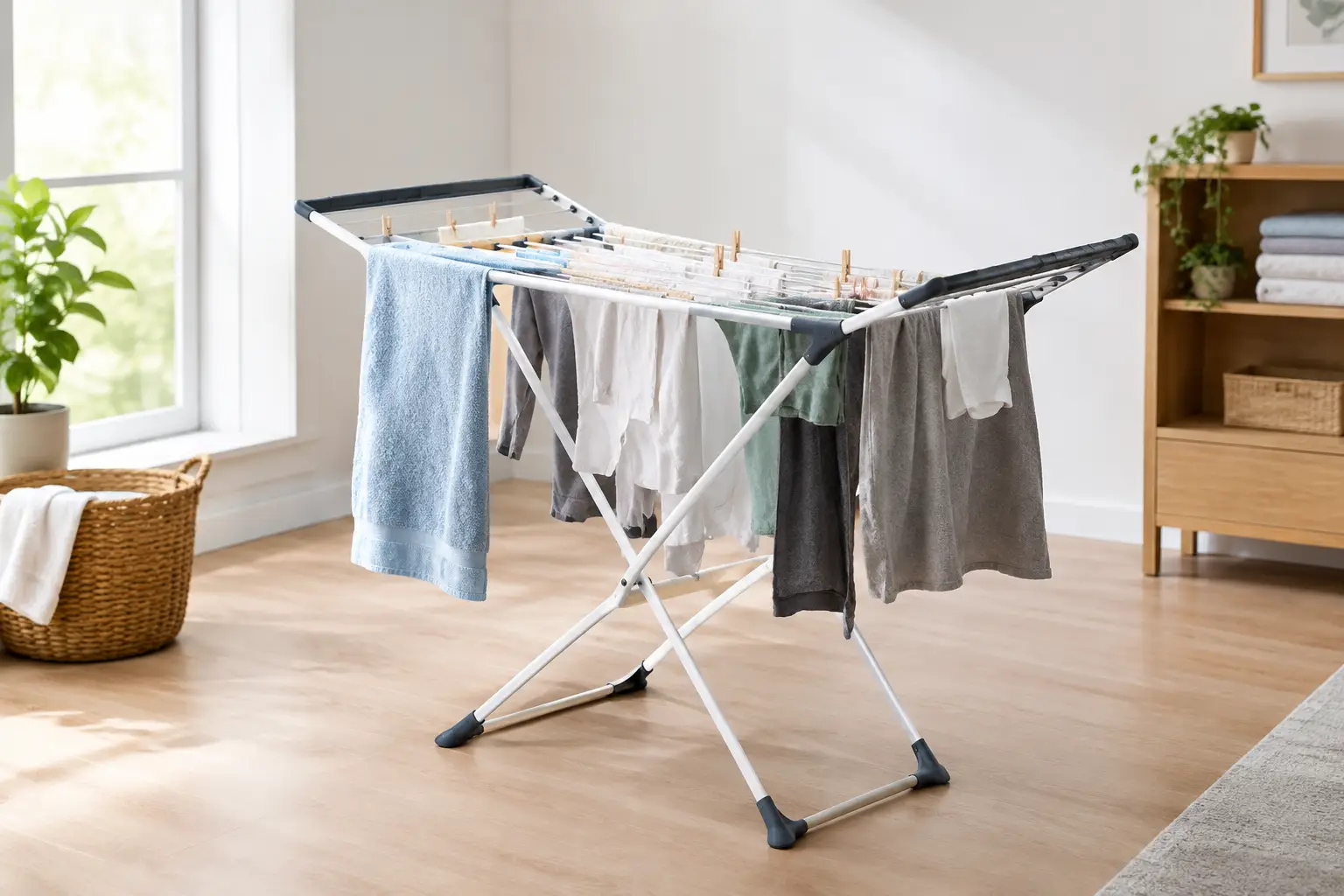
A washing pile has a habit of appearing just when the weather turns wet and the radiators are already working overtime. The best indoor clothes airers give you a reliable place to dry everyday laundry without draping it over doors, chairs and every available surface in the house.
The right choice is not always the largest one. A compact flat needs an airer that folds away quickly, while a busy family home may need plenty of hanging space for school uniforms, towels and several loads at once. Before choosing, think about where it will stand, how much washing you usually do and how easily you can keep air moving around it.
A good indoor airer should make laundry day simpler, not turn the lounge into an obstacle course. The essentials are a sturdy frame, enough space between rails for air to circulate, and a shape that works in your home when it is both open and folded away.
Drying capacity matters, but it is not just about the number of metres of rail. Closely packed washing dries slowly, especially with thicker items such as jeans, hoodies and towels. An airer with several levels or adjustable wings lets you spread garments out, rather than piling them together.
Look at the feet, too. Wide, non-slip feet are useful on laminate, tile and vinyl floors, while a solid locking mechanism helps prevent a loaded airer from folding unexpectedly. If you move yours from room to room, a lightweight model is handy, but it still needs to feel stable once damp laundry is added.
Finally, consider storage. Most homes do not have a utility room waiting to house a large drying rack. A slim-folding design that fits beside a fridge, behind a door or under a bed can be more useful than a giant model that is awkward to put away.
The familiar winged airer remains a favourite for good reason. Its central section holds a generous amount of laundry, and the side wings create extra room for long items. They are a sensible all-round choice for households doing regular mixed loads.
The trade-off is floor space. With both wings open, these airers can take up much of a small room. They work best in a spare room, utility area, larger kitchen or a well-ventilated living space where people can still move around comfortably. For long dresses, trousers and bedding, check the height of the wing rails before buying.
Tower airers use height instead of width. Several shelves stack laundry upwards, making them one of the best indoor clothes airers for flats, box rooms and narrow kitchens. Many have fold-out sections that can be opened only when needed, so you are not committed to the full footprint every time.
They are particularly useful for smaller garments, children’s clothes, underwear and T-shirts. Hang heavier pieces across the top rails or use the lower levels for socks and lighter items. The main drawback is that large sheets and duvet covers can be harder to manage, although draping them carefully over the top can still work for occasional loads.
A heated clothes airer gently warms the rails, helping laundry dry faster than it would on an unheated rack. It can be a handy answer during cold, rainy spells, particularly in homes where outdoor line drying is not an option.
It is worth being realistic about what it does. A heated airer is not a tumble dryer, and very thick fabrics will still need time. It also uses electricity, so check the running cost against how often you expect to use it. A fitted cover can help retain warmth and speed up drying, but leave enough room for air to circulate and follow the product instructions carefully.
For many households, a heated airer makes most sense as a winter helper rather than the only drying solution. Use it for school uniforms, work clothes and the items you need back in rotation quickly.
When clear floor space is the problem, wall-mounted or over-door airers can be a tidy fix. They suit utility rooms, bathrooms and sheltered spaces near a heat source, and they are ideal for a small amount of washing between bigger loads.
Their capacity is limited, so they are not normally the answer to a full family wash. They are best treated as an extra drying spot for tea towels, gym kit, baby clothes or delicate items that should not go in the tumble dryer. Make sure any door-mounted model will not prevent the door from closing properly or mark the surface.
Measure the space where the airer will actually be used, not just the cupboard where it will be stored. Leave a little space around the rack so that air can reach both sides of the washing. If an airer fills a corner from wall to wall, the laundry will take longer to dry and the room may feel damp.
Think about your usual load size. One or two people who wash little and often may be well served by a compact tower or small winged rack. A household with children may need a full-size winged model, a large tower airer, or two smaller racks that can be set up in separate rooms.
Bed linen is often the deciding factor. If you regularly wash double or king-size sheets, choose an airer with a tall top rail or wide wings. Otherwise, sheets can trail on the floor, blocking airflow and picking up dust again. For bulky towels, make sure the rails are strong enough not to bow under the weight.
Indoor drying naturally releases moisture into the air. Without ventilation, that moisture can settle on cold walls and windows, contributing to condensation and mould. The answer is not necessarily to avoid drying indoors, but to give the washing the best possible conditions.
Place the airer in the warmest practical room and open a window slightly when weather and security allow. If you have an extractor fan in a bathroom or kitchen, use it. A dehumidifier can also be useful in homes prone to condensation, as it draws moisture from the air while the clothes dry.
Avoid cramming items together. Shake each garment out before hanging it and leave a gap between thicker pieces. Turn jeans, jumpers and towels once the outside feels dry but the seams are still damp. This small job can cut down the total drying time and helps prevent that stale, not-quite-dry smell.
Try not to dry washing in bedrooms where possible, especially overnight. Bedrooms are often cooler and less ventilated, and drying clothes there can add unwanted moisture to the air while you sleep. If it is your only option, use a dehumidifier or ventilate the room well afterwards.
The little details can make an airer far more pleasant to use. Sock clips or a hanging section stop small items taking over the main rails. A dedicated shoe shelf is useful after a muddy walk or a wet school run. Wheels can help with moving a loaded tower airer, though they should lock firmly in place.
For delicate clothing, smooth coated rails are kinder than rough metal edges that can catch fabric. If you dry lots of knitwear, a mesh drying shelf is worth considering, as it supports jumpers flat and helps them keep their shape. Households with children or pets may prefer a design that locks securely and has rounded corners.
EasyPeasyMate shoppers tend to value household buys that earn their place at home. That usually means choosing an airer for the washing you really do each week, rather than paying for the biggest model on the shelf.
A few simple habits will improve results whatever type of rack you choose. Run an extra spin cycle for sturdy laundry if the care label allows it, as less water in the fabric means less drying time indoors. Separate heavy items from light ones so air can move freely, and avoid putting a fully loaded airer directly against a radiator.
Gentle warmth nearby is helpful, but laundry sitting on a radiator can restrict heat in the room and raise humidity around windows. Position the airer a short distance away instead. Once clothes are dry, fold and put them away promptly, then wipe down the rails if needed before folding the airer for storage.
The best choice is the one that fits your available space, washing routine and winter drying needs without making daily life harder. Pick a stable design, leave room for airflow and give laundry a proper spread out – a small bit of planning makes those wet-weather wash days much easier.
