Address
86 Amesbury Road
Manchester M9 6JF United Kingdom
Compare the best lint remover tools for clothes, sofas and car seats, and choose the right reusable brush, roller or fabric shaver for daily care at home.
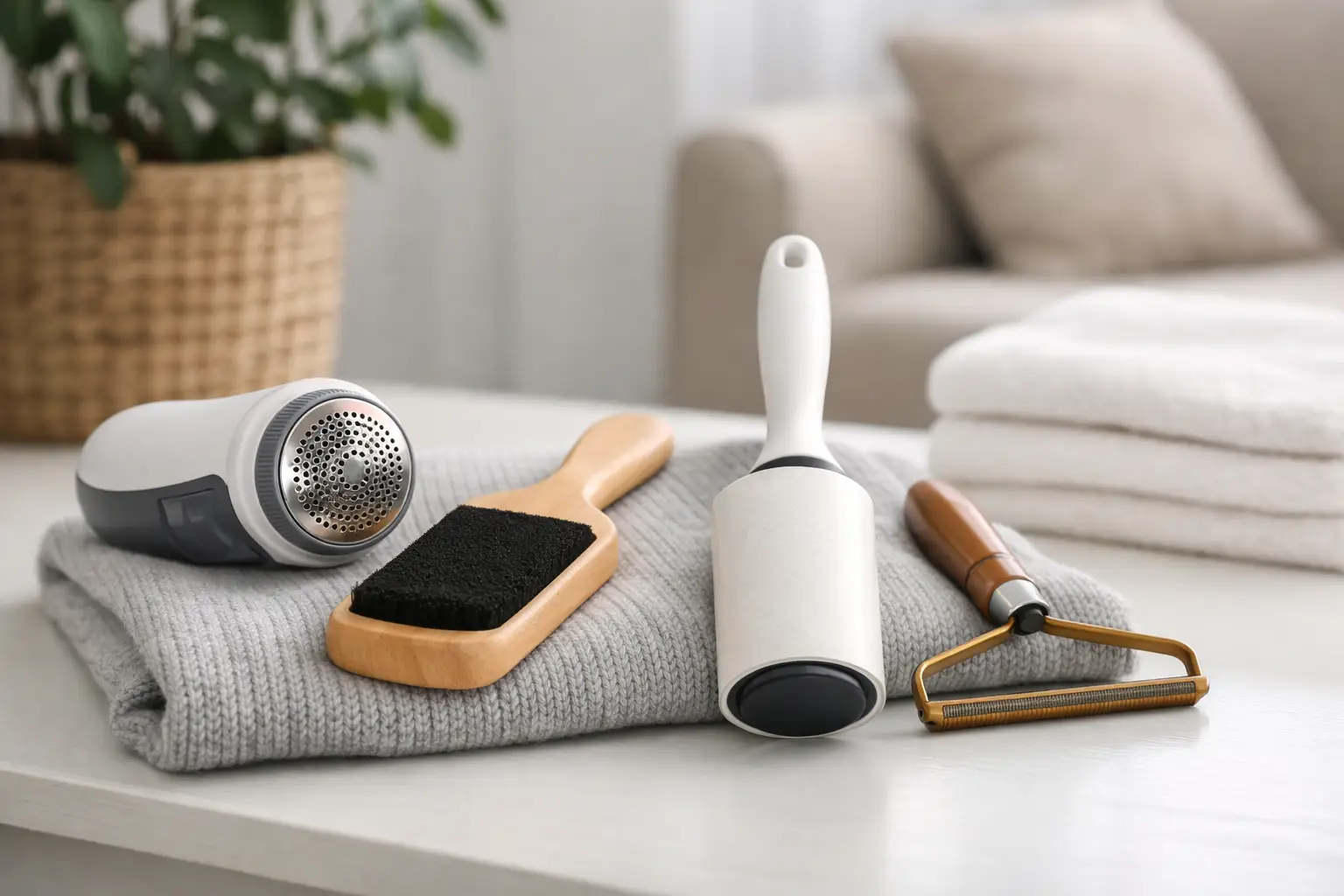
A black jumper can look freshly washed one minute and covered in fluff the next. Add a shedding pet, a pale sofa or a busy car interior, and lint becomes one of those small household annoyances that never quite goes away. The best lint remover tools make the job quick, whether you are smartening up before work, refreshing the settee or clearing pet hair from the boot.
The right choice depends on what you are cleaning. A sticky roller is brilliant for a quick once-over, but it is not the most economical option for a whole sofa. A fabric shaver can revive bobbled knitwear beautifully, yet it needs a gentle hand on delicate materials. Knowing where each tool works best helps you spend less time picking at fluff and more time enjoying a cleaner-looking home.
There is no single tool that does everything perfectly. A handy home cleaning kit often has two or three options, ready for clothes, upholstery and the car. These are the main types worth considering.
The familiar sticky roller is the fast fix. Tear off a fresh sheet, roll it over your coat, trousers or top, and loose hairs, crumbs and fluff lift away in seconds. It is especially useful near the front door, in a wardrobe, or in the car before you arrive somewhere looking rather more polished than when you set off.
Choose a roller with sheets that peel away cleanly and a comfortable handle. Wide rollers cover cushions and larger garments faster, while compact travel versions are handy for a work bag or glove compartment. The trade-off is waste and replacement sheets. If you use one every day on a pet-friendly sofa, the refill cost can soon add up.
A reusable brush is a sensible, low-waste choice for regular clothing care. Most use a directional fabric surface: brush one way to collect lint and pet hair, then clean it by brushing in the opposite direction or emptying its self-cleaning base.
These brushes work particularly well on coats, school uniforms, blazers and fabric chairs. They do not need refills, and they are gentle enough for many woven fabrics. They can be less effective on deeply embedded hairs, though, particularly on thick pile rugs or textured upholstery. A few steady passes are usually better than pressing hard.
Lint and bobbling are not quite the same thing. Loose lint sits on the surface; pilling happens when tiny fabric fibres knot together after friction and washing. A fabric shaver, sometimes called a de-bobbler, uses protected rotating blades to trim those little pills away and make tired-looking knitwear look neater.
It is a useful tool for jumpers, cardigans, blankets and some upholstery, particularly where fabric rubs against arms, bags or seat belts. Keep the fabric taut, use light pressure and work slowly. Do not use it on very fine, loose-weave, embellished or damaged fabrics unless the care guidance says it is suitable. The aim is to tidy the surface, not shave the material thinner.
For sofas, pet beds, carpets and car seats, rubber is surprisingly effective. Its surface creates friction that gathers hair into easy-to-remove clumps. A rubber brush or squeegee can shift the fur a sticky roller misses, especially from short-pile carpet and woven upholstery.
This option is reusable and ideal for larger areas, although it takes a little more effort than rolling. It is best used before vacuuming: gather the hair first, then vacuum the remaining dust and fine fibres. If your dog or cat sheds heavily, that simple routine can make a noticeable difference to the living room and car.
Before buying, think about the jobs you do most often. For a quick tidy-up of dark clothing, an adhesive roller or reusable brush is usually all you need. For woollens that have started to look fuzzy around the elbows and sides, a fabric shaver is the more useful choice.
Sofa cushions need a slightly different approach. Start with a rubber or pet-hair brush if there is a lot of fur, then use a lint roller for the final pass around seams, corners and armrests. On a leather or faux-leather sofa, use a soft dry microfibre cloth first rather than an abrasive brush. Hair often clings because of static, so gentle wiping is normally enough.
Car interiors are another common trouble spot. Dark cloth seats show every pale hair and bit of fluff, while boot carpets hold onto muddy dog hairs after a walk. A compact lint roller is handy for the front seats, but a rubber brush is more practical for the full interior. Finish with the vacuum nozzle around the seat rails and door pockets for a cleaner result.
A few practical details make a lint remover easier to live with. For fabric shavers, look for a protective mesh guard, an easy-to-empty fluff chamber and a comfortable grip. Rechargeable models avoid the need to keep spare batteries in the drawer, while battery-operated versions can be convenient for occasional use or travelling.
With adhesive rollers, consider refill availability as well as the handle itself. A bargain roller is not quite such good value if refills are awkward to find. A protective cover is useful too, especially for rollers kept in a handbag, car or household cleaning caddy.
For reusable brushes, a self-cleaning base can save time. You simply place the brush in the base, pull it out and the collected fluff is removed into a small compartment. If you are dealing with pets, choose a larger brush for upholstery and keep a smaller one near your wardrobe for clothing.
Ease of cleaning matters across every type. A tool that traps fluff in awkward corners is likely to end up unused. Look for smooth surfaces, removable collection chambers and parts that can be wiped clean without fuss.
Even the best lint remover tools need the right technique. Always test a small hidden area first, especially on a new jumper, delicate throw or upholstered chair. This takes seconds and can prevent a costly mistake.
Use rollers and brushes in one direction, following the grain of the fabric where possible. Repeatedly scrubbing back and forth can roughen fibres and create more fuzz over time. With a fabric shaver, lay the garment flat on a firm surface and stretch one small section at a time. Avoid seams, buttons, zips and loose threads.
It also helps to separate prevention from clean-up. Turn knitwear inside out before washing, avoid overloading the washing machine and use a gentler programme for delicate items. Wash towels separately from dark clothing where practical, as towel fibres are a classic source of visible lint. Cleaning the washing machine filter regularly can also reduce the fluff that ends up on your clothes.
Keeping lint under control does not need to become another big cleaning task. Store a roller or brush where you naturally use it: by the mirror, in the hallway, beside the sofa or in the car. A quick pass takes less than a minute and stops fluff building up into a bigger job.
For homes with pets, a weekly upholstery routine is usually enough: brush or squeegee the seats, vacuum the loosened hair, then use a roller for finishing touches. Refresh jumpers and throws with a fabric shaver only when pilling appears, rather than using it every wash. This is kinder to the fabric and keeps your favourites looking their best for longer.
EasyPeasyMate.Shop is built around these small, practical household wins. Choose the tool that suits your most common job, keep it close at hand, and lint will be one less thing to worry about before you head out or settle down at home.
