Address
86 Amesbury Road
Manchester M9 6JF United Kingdom
Find the right patio cleaning brush for slabs, decking and block paving, with practical tips on bristles, handles and easier outdoor cleaning.
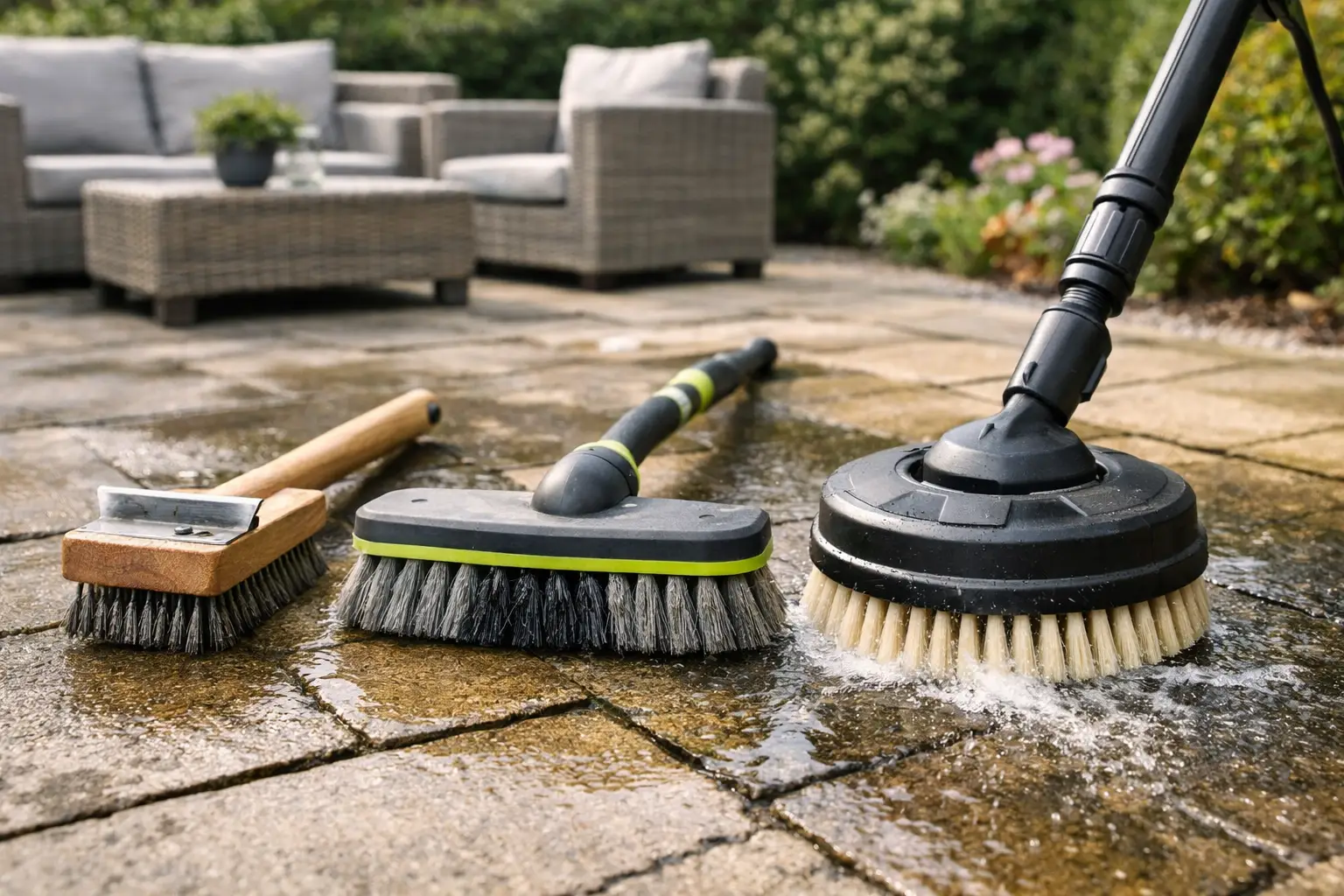
A grubby patio can make the whole garden look harder work than it really is. The good news is that the right patio cleaning brush does most of the heavy lifting, whether you are shifting winter grime, green algae or the dusty build-up that appears after a dry spell.
Not all patios get dirty in the same way, and not all brushes work well on every surface. A brush that is too stiff can be rough on painted decking or softer stone. One that is too soft might glide over moss and mud without actually clearing much at all. If you have ever spent half an hour scrubbing and still felt like the slabs looked patchy, that is usually the problem.
Choosing properly saves time, effort and a fair bit of frustration. It can also help you avoid damage, especially if your outdoor space includes natural stone, block paving with kiln-dried sand between the joints, or timber decking that marks more easily than concrete.
For most households, convenience matters as much as cleaning power. You want a tool that is easy to grab, quick to use and sturdy enough to cope with regular outdoor jobs without falling apart after a couple of weekends.
A useful patio brush is usually built around three things – bristle type, brush head shape and handle comfort. Get those right and the job becomes much more manageable.
Stiff bristles are best for heavy dirt, algae, compacted mud and patio joints. They give you the bite needed to loosen grime from textured paving and rough concrete. This is often the better choice for older patios that collect debris in every little groove.
Medium bristles are more flexible. They still clean well, but they are kinder to surfaces that you do not want to scuff. If your patio area includes a mix of paving and decking, medium bristles can be a sensible middle ground.
Softer bristles are less common for outdoor deep cleaning, but they can suit delicate finishes or light maintenance. They are handy when the aim is regular upkeep rather than tackling built-up dirt.
A wide head covers larger areas quickly, which is useful if you have a broad patio or long garden path. The trade-off is that a wider brush can feel less precise in corners, along edges or around planters.
Narrower heads are slower on open spaces but much easier to control. They work well on steps, awkward gaps and tighter areas where a big sweeping brush feels clumsy.
Some people do best with one main brush for the larger area and a smaller scrubbing brush for edge work. It depends on the layout of your garden and how neat you want the finish.
A long handle helps with posture and makes bigger cleaning sessions far less tiring. If you are bending over a short handheld brush on paving for any length of time, you will feel it in your back and shoulders.
Look for a handle that feels secure rather than flimsy. A decent grip matters too, especially when the brush and your hands are wet. If the handle twists or flexes under pressure, the job becomes annoying very quickly.
This is where a lot of people go wrong. The best patio cleaning brush for one garden might be the wrong one for the next.
Concrete is usually one of the easiest surfaces to clean. It can take a firmer brush, so stiff bristles are often the practical choice. If the slabs are textured, they will hold dirt in the surface pattern, so a stronger scrubbing action helps.
Stone varies a lot. Some types are hard-wearing, while others are more porous or more easily marked. A medium-stiff brush is often the safer option unless the surface is particularly rough and heavily soiled. You want enough scrubbing power to lift dirt without being overly aggressive.
Block paving often gathers weeds, moss and dirt in the joints, so a firmer brush can be useful. The thing to watch is jointing sand. If you scrub too aggressively, especially when the surface is dry, you can disturb the sand between blocks and end up with extra maintenance afterwards.
Decking needs a lighter touch. A medium or softer brush is usually better, especially if the boards are painted, stained or weathered. Stiff bristles can leave visible scuffs, particularly if you are pressing hard to remove algae.
Pressure washers can be handy, but they are not always the easiest answer. They can be noisy, messy and a bit much for smaller spaces. On some surfaces they can also do more harm than good, lifting pointing, stripping finishes or leaving a streaky look if used unevenly.
A patio cleaning brush gives you more control. It is quieter, simpler to store and often all you need for regular upkeep. If the patio just needs a good scrub with water and cleaner, a brush can be the quicker option overall because there is less setup and less clean-up afterwards.
For many homes, the best approach is to use a brush for routine cleaning and save heavier kit for occasional deeper jobs. That keeps the patio looking tidy without turning every clean into a full afternoon project.
If you are buying a new brush, a few practical details can make a real difference day to day.
A replaceable head is useful if you want the handle to last longer than the bristles. Weather-resistant materials matter too, especially if the brush will live in a shed, garage or outdoor storage box. A hanging hole sounds minor, but it makes storage easier and helps the brush dry properly between uses.
An angled head can also help you get better contact with the ground without awkward wrist movement. It is one of those small design points you only really appreciate once you have used a brush that feels uncomfortable.
The brush matters, but technique helps as well. Start by sweeping away loose debris before you scrub. Leaves, grit and twigs just get in the way and can make the job feel heavier than it needs to.
Work in sections rather than trying to soak the whole patio at once. Wet a manageable area, apply your cleaning solution if you are using one, and scrub with steady strokes. Let the bristles do the work. Pressing harder is not always better, especially on decking or stone.
If algae is the main problem, give the cleaner a little time to loosen it before scrubbing. If mud and surface dust are the issue, a straightforward scrub with warm water may be enough. It depends on what has built up and how long it has been left.
Regular light cleaning is usually easier than occasional heavy cleaning. A quick once-over every so often can stop dirt bedding in and keep slippery growth under control, which is especially useful in shady areas that stay damp.
One of the biggest mistakes is choosing the stiffest brush possible and assuming stronger always means better. Sometimes it does, but sometimes it just means more wear on the surface and more effort for you.
Another is ignoring the handle quality. People often focus on the brush head and forget that a weak handle can spoil the whole tool. If it feels awkward, too short or unstable, you are less likely to use it regularly.
It is also worth avoiding the habit of scrubbing dry dirt into the surface. A little water goes a long way in helping the bristles move properly and lift grime rather than just shifting it around.
For plenty of homes, yes. If your patio is mostly one material and you just want a reliable brush for routine cleaning, one solid all-rounder will do the job nicely.
If your garden has mixed surfaces, though, it may be worth thinking more practically. A firmer brush for paving and a gentler one for decking can make cleaning easier and help each area stay in better condition. It is not about buying more for the sake of it. It is about having the right tool ready when the job comes up.
That is very much the EasyPeasyMate way – straightforward products that solve everyday jobs without fuss.
The perfect brush on paper is not much use if it is awkward to store, uncomfortable in the hand or too specialised for your space. For most people, the best patio cleaning brush is one that feels sturdy, suits the surface you have and makes regular maintenance quicker rather than more complicated.
A cleaner patio does not have to mean a big weekend overhaul. Sometimes it is just a matter of picking a brush that works with your garden, not against it, so tidying up feels like a simple job you can get done and move on from.
