Address
86 Amesbury Road
Manchester M9 6JF United Kingdom
DIY car maintenance basics for UK drivers: simple checks for tyres, fluids, lights and more to keep your car safer, cleaner and ready for the road ahead.
A warning light on the dashboard or a flat battery at the supermarket is never convenient. The good news is that DIY car maintenance basics do not mean taking apart an engine on the drive. A few regular, sensible checks can help you spot small problems early, keep your car safer and avoid the hassle of an unexpected breakdown.
For most drivers, the aim is simple: know what you can check yourself, keep a few useful supplies to hand and leave safety-critical repairs to a qualified garage. It is an easier routine than it sounds.
Cars benefit more from short, regular attention than one big inspection once a year. Set aside ten minutes every month to look over the essentials, then do a slightly fuller check before a long journey, a family holiday or the colder months.
Keep the vehicle handbook in the glovebox or save a digital copy on your phone. It tells you the correct tyre pressures, recommended fluids and what dashboard symbols mean for your particular car. This matters because specifications vary, even between different engine sizes in the same model.
It also helps to keep a small car-care kit in the boot. A tyre pressure gauge, screenwash, microfibre cloths, disposable gloves, a torch, de-icer and jump leads cover many everyday jobs without taking up much room.
Tyres are one of the most worthwhile checks you can make. Incorrect pressure affects braking, grip, fuel economy and tyre wear. Check pressures when the tyres are cold, ideally before driving or after the car has been parked for a few hours. Use the figures in the handbook or on the sticker often found inside the driver’s door frame or fuel flap – not the maximum pressure printed on the tyre wall.
Look for cuts, bulges, nails and uneven wear while you are there. UK law requires at least 1.6mm of tread across the central three-quarters of the tyre, around its full circumference. Many drivers choose to replace tyres before they reach that limit, particularly before winter, because more tread generally gives better wet-weather grip.
Do not forget the spare tyre if your car has one. If you have a tyre repair kit instead, check that the sealant has not passed its expiry date. A puncture kit may be useful for a small tread puncture, but it cannot safely fix a damaged sidewall or a badly deflated tyre.
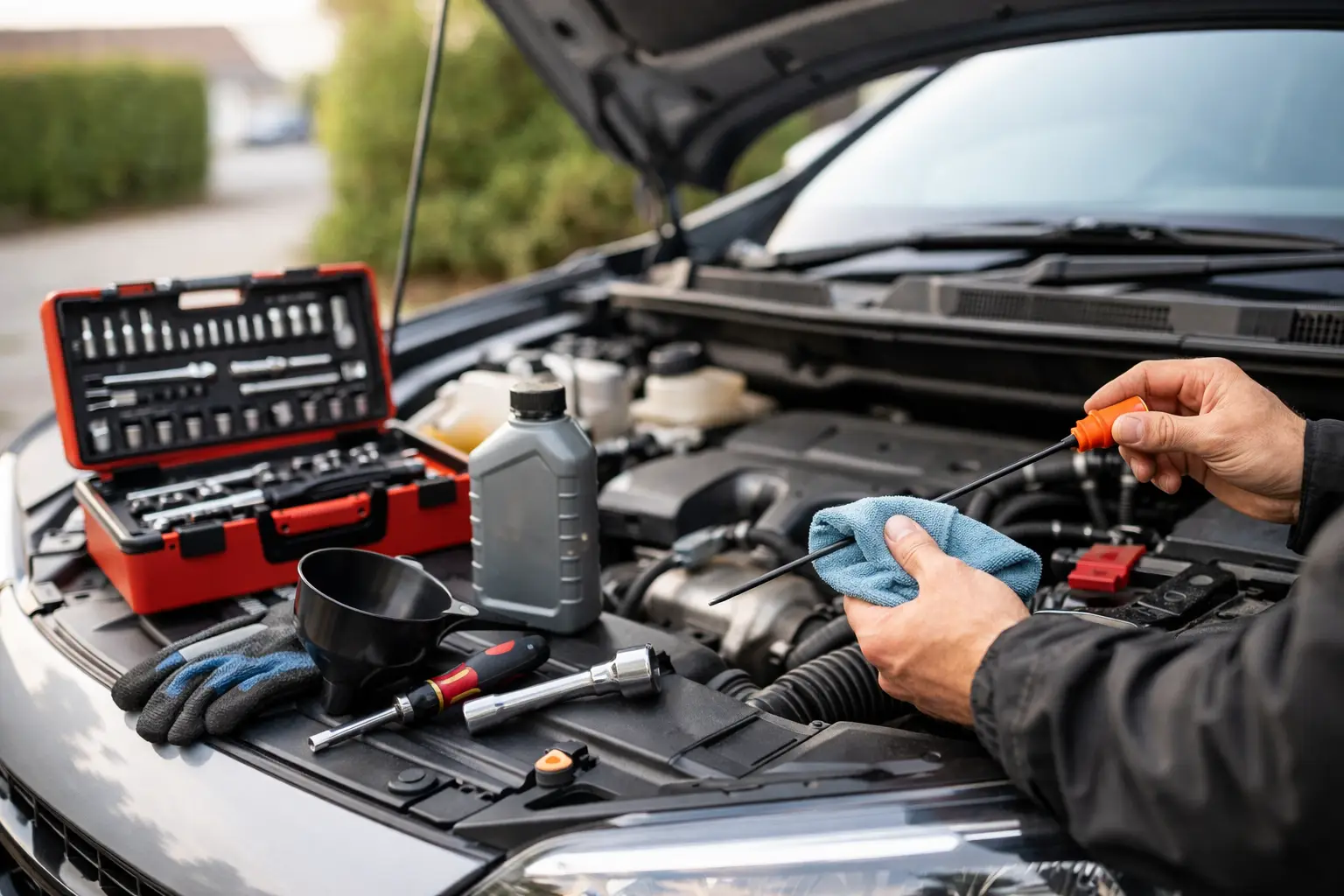
Low oil can cause serious engine damage, while overfilling is not helpful either. Park on level ground, switch off the engine and allow it to cool for a few minutes. Pull out the dipstick, wipe it clean, reinsert it fully, then remove it again to read the level. It should sit between the minimum and maximum marks.
If it is low, add the correct oil in small amounts and recheck rather than pouring in a large amount at once. Your handbook will specify the oil grade and standard. Using the right product matters more than choosing the most expensive bottle on the shelf.
A gradual drop in oil level can be normal, particularly on older cars. A sudden loss, a puddle beneath the vehicle, blue exhaust smoke or an oil warning light needs prompt professional attention. Never continue driving with a red oil-pressure warning light showing.
Check coolant only when the engine is completely cold. The coolant reservoir usually has minimum and maximum markings, making it easy to see whether the level is right. Use the coolant type recommended for your vehicle, as mixing incompatible types can reduce protection and create problems in the cooling system.
Brake fluid should also sit between its marked levels. Unlike screenwash, it is not a routine top-up to make without thought. A low level may indicate worn brake pads or a leak, so arrange a garage inspection rather than simply filling it and carrying on.
Screenwash is the easy win. Keep it topped up all year, using a suitable diluted product rather than plain water. In winter, proper screenwash helps prevent freezing and clears salty road spray far more effectively. If the windscreen smears instead of clearing, clean it inside and out, then inspect the wiper blades for splits or hardened rubber.
Working lights help you see and be seen, especially on dark, wet UK roads. Walk around the car with the lights on and check dipped beams, sidelights, brake lights, indicators, number-plate lamps and rear fog light. Ask someone to press the brake pedal, or use a reflection in a window or garage door if you are checking alone.
Replace failed bulbs with the correct type and take care not to touch a halogen bulb’s glass with bare fingers. Oil from skin can shorten its life. Some modern cars use LED units that are not designed for a simple bulb replacement, so check the handbook before attempting anything.
Windscreen damage deserves attention too. A small chip can sometimes be repaired, but temperature changes and potholes can turn it into a crack. Any damage in the driver’s main viewing area may affect safety and could cause an MOT failure.
Short trips, cold weather and leaving accessories plugged in can all drain a battery. If the engine cranks slowly, interior lights look dim or the start-stop system stops working, the battery may be losing charge or nearing the end of its life.
Check that the terminals are secure and free from excessive white or blue-green corrosion. With the engine off, clean light surface corrosion carefully using gloves and eye protection. If you are unsure, leave it to a professional. Modern cars can have sensitive electrical systems, and incorrect jump-starting can cause expensive damage.
If you carry jump leads, make sure everyone who may use them knows the safe procedure in the handbook. Never use a damaged battery, and never let the clamps touch each other while connected. A portable jump starter can be a handy alternative, but it must be charged and suitable for your engine size.
A clean car is easier to inspect and more pleasant to use. Regularly remove leaves and debris from the area below the windscreen, where drains can become blocked. Blocked drains may allow water into places it should not be, including the cabin.
Wash road salt from wheel arches and underneath the car during winter where practical. Salt speeds up corrosion, particularly on older vehicles. Clean number plates, lights, mirrors and cameras too. A reversing camera covered in mud is not much help when parking.
Inside, shake out mats and clear loose items from the footwells. A bottle rolling beneath a pedal is a small risk that is easily avoided. Check that the spare wheel tools, locking-wheel-nut key and warning triangle, if you carry one, are where they should be.
DIY checks save time, but they are not a substitute for servicing or repairing faults that affect control of the car. Brakes, steering, suspension, fuel systems, airbags, timing belts and high-voltage hybrid or electric vehicle components should be handled by trained technicians.
Book professional help if you notice grinding when braking, steering that pulls or vibrates, repeated warning lights, overheating, fuel smells, major fluid leaks or a new knocking noise. The same applies if your car is due a service, recalls work or an MOT. An MOT is a useful annual safety check, but it does not replace regular maintenance between tests.
Before any longer trip, use this quick four-point check: tyres, fluids, lights and visibility. It takes only a few minutes, yet it can make a wet motorway journey or late-night school run feel far less stressful.
A little practical attention now keeps everyday motoring easier later. Build these checks into your monthly routine, keep the right essentials nearby and let a garage handle the jobs where expertise is the safest option.
