Address
86 Amesbury Road
Manchester M9 6JF United Kingdom
Practical garden drainage solutions for soggy lawns, patios and borders. Learn what causes pooling and how to fix it without wasting time.
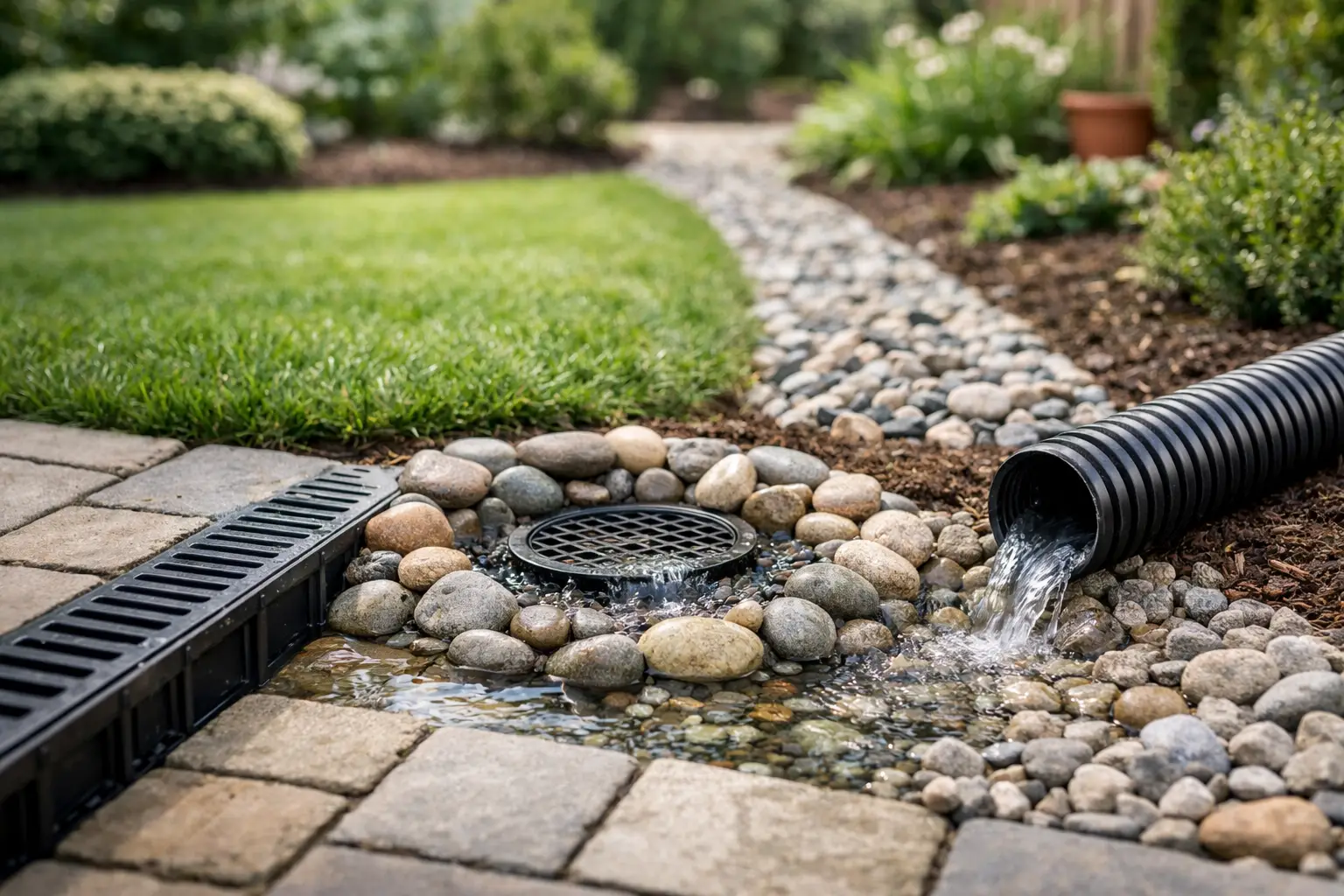
One heavy spell of rain is often all it takes. You step outside expecting a quick tidy-up, and instead you find puddles on the lawn, water sitting against the patio, and borders that feel more like a bog than a garden. Good garden drainage solutions are not about making everything bone dry. They are about helping water move where it should, so your outdoor space stays usable, healthier and far less hassle to manage.
The tricky bit is that poor drainage does not always have one obvious cause. Sometimes the soil is heavy clay. Sometimes the garden slopes the wrong way. Sometimes a patio, shed base or compacted lawn stops water soaking in. If you pick the wrong fix, you can spend time and money and still end up with the same soggy patch every winter.
Most gardens in the UK deal with a mix of rain, shade, compacted ground and seasonal saturation. In newer homes, the issue can be even worse because building work often leaves soil compressed and stripped of structure. Water then sits on the surface instead of draining through naturally.
Clay soil is a common culprit. It holds water well, which can be useful in dry weather, but in wet months it drains slowly and stays cold. That can stress grass, weaken roots and make beds harder to work with. On the other hand, sandy soil drains quickly, but if there is a low spot or a hard layer beneath the surface, even that can pool.
Hard landscaping also changes how water behaves. Patios, paths and drive areas push rainwater elsewhere. If the fall is poor, that “elsewhere” may be straight into your lawn or up against the house. That is when drainage becomes less of a garden nuisance and more of a maintenance issue.
Before you dig trenches across the whole garden, watch what happens when it rains. The best garden drainage solutions usually start with a bit of observation. Look for where water gathers first, how long it lingers, and whether it is flowing from one area into another.
If only a small part of the garden is affected, the fix may be straightforward. A compacted lawn can often improve with aeration. Making small holes in the soil helps water, air and nutrients move down to the roots. If the ground is badly compacted, hollow tine aeration works better than a light surface spike, though it does leave plugs on the lawn for a while.
Borders can benefit from added organic matter. Compost, leaf mould and well-rotted manure improve soil structure over time, especially in clay-heavy ground. This is not an instant fix, but it does make a real difference. Better structure means better drainage, and healthier soil is easier to manage in every season.
Sometimes regrading a small area is enough. If a patio edge or lawn dip is holding water, lifting and relaying a section or topping up low spots can improve runoff. The key is making sure water moves away from buildings and does not simply shift the problem a few feet along.
A soggy lawn is one of the most common complaints because it affects how the whole garden feels. Even if borders look fine, a patchy, muddy lawn makes the space hard to use.
If the grass struggles every winter, start by checking the basics. Heavy foot traffic, kids playing in one area, pet use and repeated mowing on wet ground all compact the soil. In that case, aeration and top dressing with a mix suited to your soil can help. It is a practical first step and usually far cheaper than replacing the lawn.
If water sits for days, you may need a more direct drainage channel beneath the surface. A French drain is a common option. Despite the name, it is simply a gravel-filled trench, often with a perforated pipe, designed to collect and redirect excess water. It works well where water consistently gathers in the same line or low area.
This is where trade-offs matter. French drains can be very effective, but they need somewhere sensible for the water to go. If your whole plot is saturated and there is no outlet, a drain alone will not perform miracles. You also need to get the depth and fall right, or the system can clog or sit uselessly underground.
Standing water on paving is not just annoying. It makes surfaces slippery, encourages algae and can shorten the life of pointing and joints. If the problem is minor, a good clean and some localised levelling may sort it. If the slabs were laid with too little fall, though, the proper fix is usually to relay them.
Permeable surfaces are worth considering if you are updating a patio or path. Gravel, permeable block systems and certain jointing approaches allow more water to pass through rather than run off. They are not right for every garden, especially if you want a very smooth, furniture-friendly finish, but they can reduce pooling and take pressure off the rest of the space.
Channel drains are another practical option where hard surfaces meet the house, garage or a lower garden section. These collect surface water before it spreads. They are especially useful beside thresholds and doorways, where even shallow water can become a bigger problem quickly.
Plants suffer in waterlogged soil for a simple reason – roots need oxygen as well as moisture. If borders stay wet for long periods, some plants will rot, others will become weak, and many will never perform well no matter how much feeding you do.
Raised beds can be a smart answer where the underlying ground is slow-draining. By lifting the planting area, you create a better root zone and improve control over soil quality. This does not remove the drainage issue underneath, but it can make growing far easier.
You can also choose plants that cope better with damp ground. That is not admitting defeat. It is often the most sensible route if one part of the garden naturally stays wetter than the rest. Forcing dry-loving plants into a boggy border usually leads to wasted effort and repeat purchases.
If your garden turns into a swamp after every heavy rain, smaller improvements may not be enough. This is when you look at more structural garden drainage solutions, such as soakaways, land drains or more extensive regrading.
A soakaway is an underground pit or crate system filled or surrounded by material that lets water disperse slowly into the surrounding soil. It can be useful for collecting runoff from gutters or drains, provided the ground conditions suit it. In heavy clay, performance can be limited, so it is not a one-size-fits-all answer.
Land drains are more involved and usually better for larger gardens or persistent low-lying areas. They can be highly effective when planned properly, but they do require careful installation. If levels, outlets or local drainage rules are unclear, this is one of the cases where getting advice is money well spent.
It is easy to go straight for the biggest-looking solution, but that can backfire. Adding gravel on top of muddy ground often looks tidy for a week and solves very little underneath. Likewise, drilling random holes, laying pipes without a proper fall, or directing water towards a neighbour’s boundary can create more problems than it solves.
Another common mistake is treating every wet patch as a disaster. Some gardens are naturally damper in winter and recover perfectly well in spring. If the water disappears within a day or so and plants are thriving, you may not need major work. The goal is not perfection. It is a garden that functions properly and is easier to live with.
The best approach depends on what is getting wet, how often it happens, and how much work you want to take on. For some households, a simple aeration tool, better soil improvement and a slight surface adjustment will do the job. For others, especially where paving, lawn and borders all suffer together, a combined fix makes more sense.
That practical middle ground is often where the best value sits. You do not always need a full garden overhaul, but you do need a solution that matches the problem. If you are sorting out your outdoor space in stages, start with the area causing the most inconvenience – usually the lawn access route, patio or the wettest border. Small changes in the right place can make the whole garden feel easier to use.
At EasyPeasyMate, that is the kind of thinking we like – useful fixes, no unnecessary fuss, and products that help you get the job done properly. A drier garden will not stop the British weather, but it can save you a lot of mess, maintenance and muddy footprints.
