Address
86 Amesbury Road
Manchester M9 6JF United Kingdom
Microfibre cloths vs paper towels - which is better for cleaning, cost and convenience? A practical UK guide for kitchens, cars and daily mess.
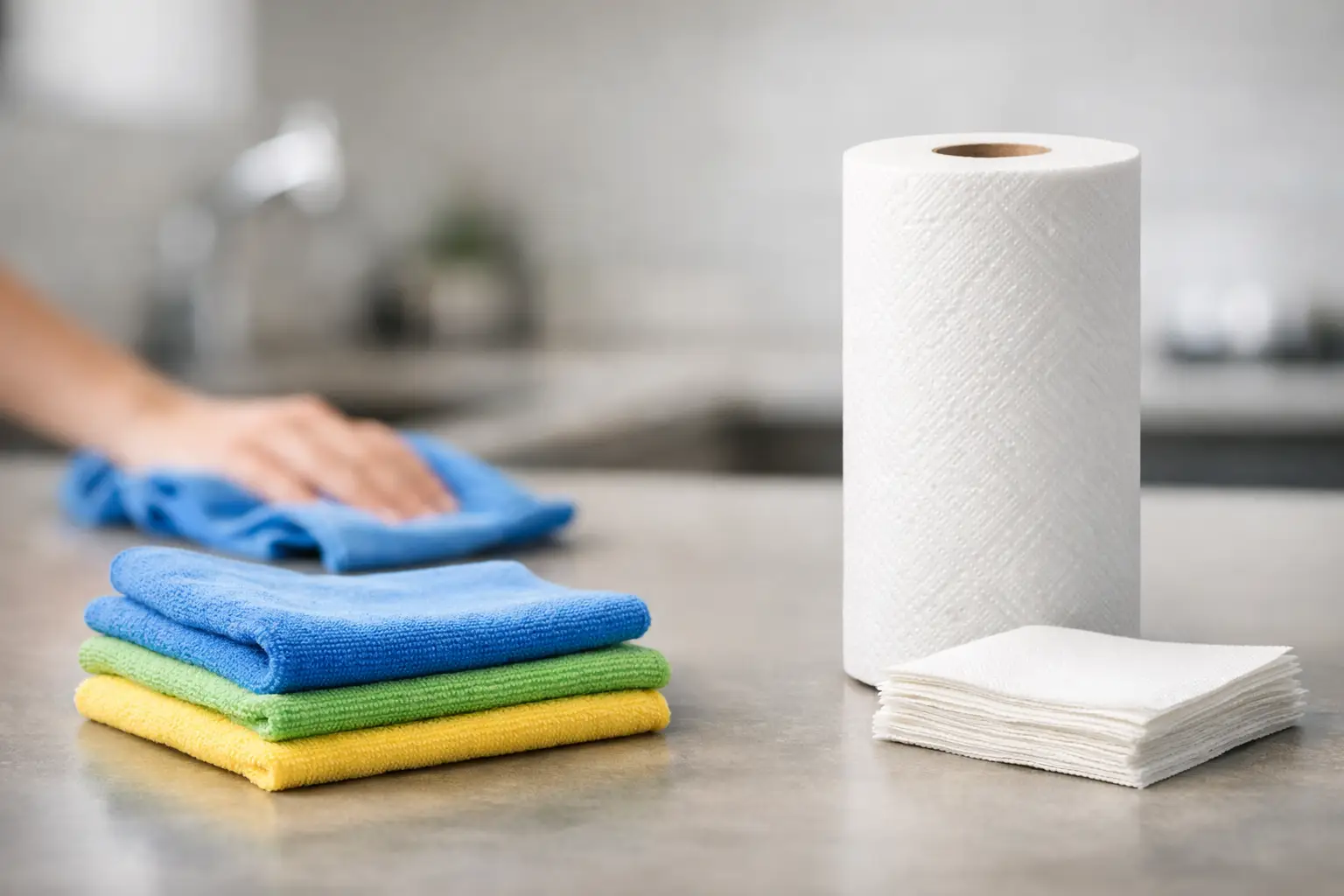
You only notice how much your cleaning routine matters when you run out of the thing you rely on most. One minute you’re wiping a kitchen side, cleaning a mirror or dealing with a tea spill in the car, and the next you’re deciding between microfibre cloths vs paper towels. Both are handy. Both have their place. But they do very different jobs, and choosing the right one can save time, money and a fair bit of faff.
The biggest difference is simple. A paper towel is designed for quick, single-use jobs. A microfibre cloth is made to be used again and again. That one point affects everything else – cost, absorbency, waste, cleaning power and convenience.
Microfibre cloths are made from very fine synthetic fibres that pick up dust, grease and moisture surprisingly well. They are especially useful when you want a proper clean rather than just a quick dab at a spill. Paper towels, on the other hand, are all about speed and disposal. If the mess is unpleasant, greasy or likely to carry germs, being able to wipe and bin it straight away is a real plus.
So this is not really a case of one being good and one being bad. It is more about what sort of mess you are dealing with, how often you clean and whether you value reusability over throwaway convenience.
For everyday household cleaning, microfibre cloths usually come out ahead. They are excellent on kitchen worktops, bathroom sinks, taps, tiles, glass and dusty surfaces. Because the fibres grab dirt rather than just push it around, you often need less cleaning spray too. That can make the whole job quicker and cheaper over time.
They are also strong on streak-free cleaning. If you have ever cleaned a mirror with a paper towel and ended up with lint everywhere, you will know the problem. A decent microfibre cloth leaves fewer fibres behind and usually gives a cleaner finish on shiny surfaces.
In cars and caravans, microfibre cloths are even more useful. They are gentler on dashboards, screens, paintwork and glass, so there is less chance of scratching or leaving bits behind. That makes them a smart pick for anyone who likes to keep their vehicle looking tidy without using specialist gear for every panel.
Another advantage is absorbency. A good microfibre cloth can soak up much more liquid than a standard paper towel, especially on larger spills. If the dog has tipped over the water bowl or the kids have knocked over juice at breakfast, one cloth can often manage what would take several sheets of paper towel.
Paper towels are not old news. They are still one of the easiest ways to deal with certain messes, and that matters in busy homes.
Raw meat juices are the obvious example. If you are patting dry chicken, wiping up a leak from mince packaging or cleaning greasy splashes around the hob, paper towels make life easier because you can use them once and throw them away. The same goes for toilet spills, pet accidents and anything else you would rather not rinse out and keep using.
They are also useful when you need a disposable barrier between you and a mess. Cleaning out the fridge, draining fried food or mopping up excess oil from pans are jobs where convenience wins. You do not need to think about washing the cloth afterwards, and that can be enough reason on a hectic weekday.
For very small jobs, paper towels can simply feel faster. One quick tear, one wipe, done. If that speed is what keeps the house ticking over, there is no point pretending otherwise.
This is where the choice starts to shift. A pack of paper towels is cheap to buy, which is why many people reach for it without much thought. But if you use them every day for cleaning worktops, mirrors, appliances and spills, the cost adds up quietly in the background.
Microfibre cloths cost more upfront, but they tend to work out better value because they can be washed and reused many times. In a home where cleaning happens daily, that difference becomes noticeable fairly quickly. Instead of constantly adding rolls to the shopping list, you rotate through a set of cloths.
Of course, that only works if you are happy to wash them properly. If cloths get used once and then left damp in a heap under the sink, the value disappears fast. Reusable products save money when they are actually reused.
For many households, the best-value approach is not choosing one or the other. It is using microfibre for routine cleaning and keeping paper towels for jobs where disposal is the sensible option.
A lot of the debate around microfibre cloths vs paper towels comes down to hygiene. People often assume disposable means cleaner, full stop. Sometimes it does. Sometimes it just means more waste.
A fresh paper towel is hygienic because it has not touched anything yet. That makes it ideal for unpleasant or high-risk mess. But a clean, freshly washed microfibre cloth is also hygienic. The issue starts when cloths are reused too long, not rinsed properly or left damp after use.
The easy fix is to give cloths different jobs. One set for the kitchen, another for bathrooms, another for dusting or car care. That keeps things straightforward and avoids cross-contamination. Colour-coding helps if you want an even easier system.
Paper towels avoid that problem because each sheet is single use. Still, they are not automatically better at cleaning. If you are scrubbing at grease or trying to remove grime from a surface, a paper towel may tear or smear before the mess is properly lifted.
There is no need to turn a simple cleaning choice into a guilt trip, but it is worth being realistic. Paper towels create more regular waste because they are thrown away after one use. If you get through a lot of them each week, that is a steady stream of rubbish.
Microfibre cloths reduce that single-use waste, but they are synthetic, so they come with their own environmental trade-offs. They need washing, they do not last forever, and they are not the same as using a natural fibre cloth. That said, if you use them for a long time and look after them properly, they are usually the lower-waste option in day-to-day cleaning.
For most people, the practical middle ground works best. Use reusable cloths for standard cleaning. Save paper towels for the messes where hygiene or convenience matters more than reusability.
In the kitchen, microfibre cloths are generally the workhorse. They handle crumbs, splashes, fingerprints and wipe-downs with less waste and better cleaning power. Paper towels are best kept for greasy food prep, oil and anything you do not want lingering in the laundry basket.
In the bathroom, microfibre cloths are strong on taps, mirrors and sink areas because they leave a cleaner finish. Paper towels can help with toilet-area spot cleaning or any mess you would prefer to bin immediately.
For windows and glass, microfibre usually wins with less lint and fewer streaks. For dusting shelves, skirting boards and electronics, it also tends to do the better job because it traps dust rather than scattering it.
In the car, microfibre cloths are the clear favourite for dashboards, windows and general valeting. Paper towels can be too rough for delicate finishes and often leave bits behind.
If you want one simple answer, buy both – but do not use them for the same jobs.
Keep microfibre cloths as your main cleaning staple for surfaces, glass, dusting, bathroom jobs and car care. They are practical, reusable and usually better value in the long run. Keep paper towels on hand for food-related mess, unpleasant spills and quick clean-ups where throwing the mess straight in the bin is the easiest option.
That sort of setup suits real life. It is convenient, affordable and does not overcomplicate a basic household job. If your aim is an easier cleaning routine rather than a perfect one, that balance makes the most sense.
A good cleaning kit should save effort, not create more of it. Choose the option that fits the mess in front of you, keep a small stash of both, and your next spill will feel a lot less annoying.
