Address
86 Amesbury Road
Manchester M9 6JF United Kingdom
This pet grooming tools guide helps UK owners choose brushes, combs, clippers and care essentials for a cleaner coat and an easier home routine at home.
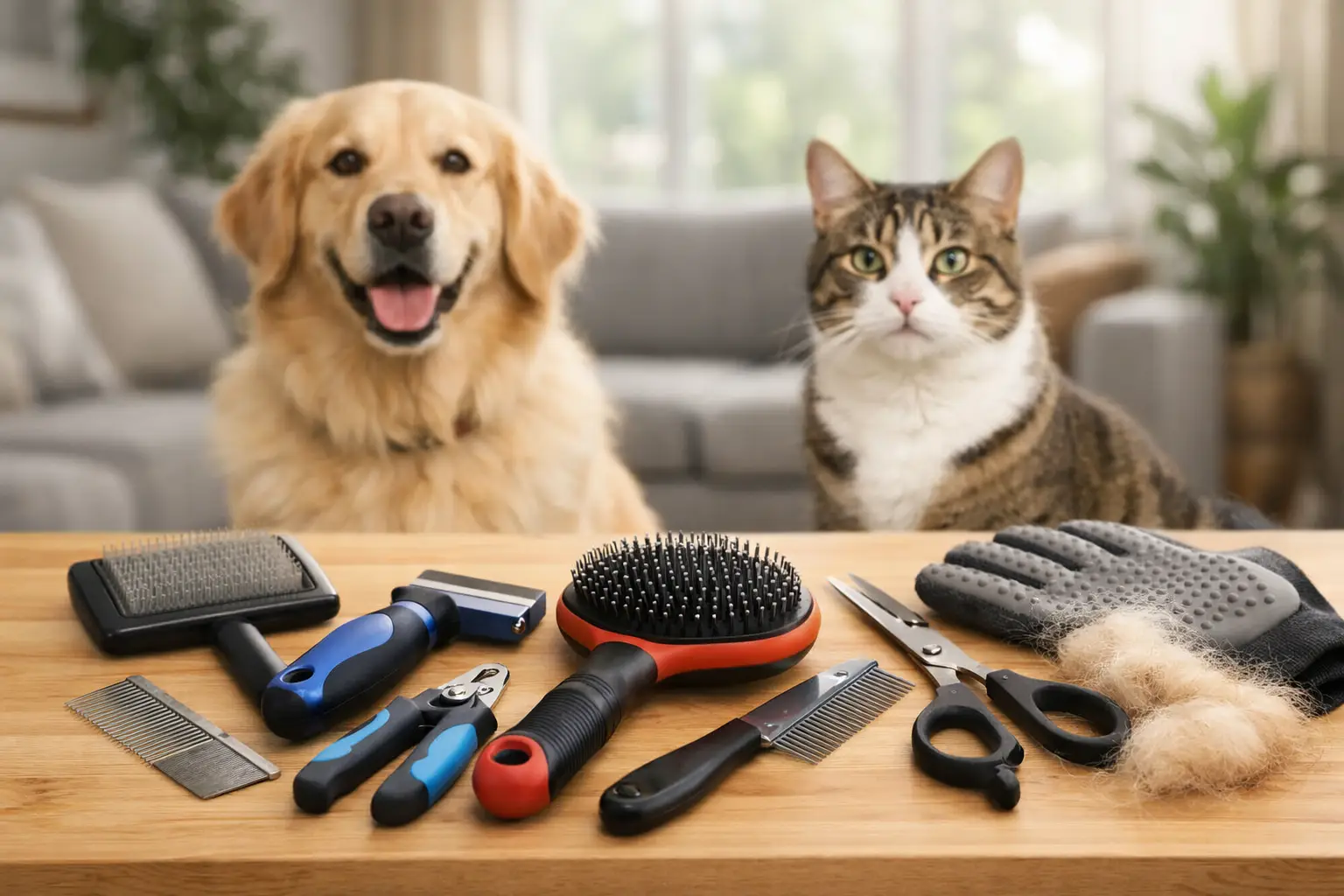
A muddy spaniel shaking itself dry in the hallway or a cat leaving fur across the sofa can turn a peaceful home into a cleaning job in seconds. The right pet grooming tools guide is not about filling a cupboard with gadgets. It is about choosing a few useful essentials that suit your pet’s coat, comfort and everyday routine.
Good grooming keeps loose hair, dirt and tangles under control before they become a bigger job. It also gives you a regular chance to check paws, ears, skin and claws. For busy households, a simple kit can mean less fur on clothes, fewer knots to deal with and a cleaner place for everyone to relax.
The most useful grooming tool depends on the coat in front of you. A brush that works brilliantly on a short-haired Labrador may be uncomfortable or ineffective on a curly Cockapoo. Before choosing, think about coat length, thickness, whether your pet sheds heavily and how tolerant they are of being handled.
Short, smooth coats usually need light, regular brushing to lift loose hair and spread natural oils through the fur. A soft bristle brush, grooming mitt or rubber curry brush is often enough. These options are gentle, quick to use and particularly handy for pets who dislike the feel of pins pulling through their coat.
Medium and double coats need more attention, especially during spring and autumn shedding. A combination of a slicker brush for surface tangles and an undercoat rake or de-shedding tool for loose underfur can make a real difference. Use these carefully, though. Overdoing a de-shedding tool can irritate the skin or remove too much coat, so short sessions are better than enthusiastic daily scraping.
Long-haired, curly or woolly coats are more prone to knots. A pin brush and a wide-tooth comb are practical starting points. The brush helps separate and lift the coat, while the comb confirms whether you have reached the skin rather than simply smoothing the top layer. If the comb catches, there is probably a tangle still hiding underneath.
A well-chosen kit does not need to be complicated. For most dogs and cats, a brush suited to their coat, a comb, nail clippers and a gentle cleaning cloth will cover the routine basics. Add other tools only where they solve a genuine problem.
A rubber grooming mitt is a fuss-free choice for short-haired pets and nervous first-timers. It feels more like stroking than brushing, which can help make grooming less of a battle. It is also useful after walks, when you want to remove dry mud and loose hair before your pet settles on the rug.
Bristle brushes suit short or fine coats and leave a neat finish. Slicker brushes have fine, angled wires that work well for lifting loose fur and teasing apart small tangles in thicker coats. Choose a brush with rounded or coated tips where possible, and use a light hand. Grooming should not leave your pet flinching or with red skin.
Pin brushes are often a better fit for longer, silkier hair. They are useful for daily maintenance, but they are not always enough for dense undercoats. In that case, pair one with a comb so hidden knots do not get missed.
A metal comb is one of the most practical tools in the kit. Wide-spaced teeth help work through longer fur, while closer teeth are useful around the face, legs and behind the ears. These are common trouble spots where collars, harnesses and everyday movement cause tangles.
For small knots, hold the fur close to the skin with one hand and gently work from the end of the tangle inwards. Never pull at a mat or try to cut it out with household scissors. Skin can be drawn into a knot far more easily than it looks, particularly on cats and long-coated dogs.
A de-matting comb can be useful for stubborn tangles, but it has blades and needs careful handling. If a mat is tight, close to the skin or causing discomfort, a professional groomer or vet is the safer choice. There is no prize for sorting every problem at home.
Long nails can make walking uncomfortable and can catch on carpets or throws. Dogs that regularly walk on pavements may naturally wear their nails down, but dewclaws and indoor pets often still need attention. Cats may also benefit from occasional trims, especially if their claws snag furniture or fabrics.
Scissor-style clippers offer control for many dogs, while guillotine clippers can suit smaller nails. A nail file or grinder smooths sharp edges and is useful for pets who only need a little taken off at a time. The trade-off is noise and vibration, which some animals dislike.
Trim tiny amounts and look for the quick, the blood vessel inside the nail. It is easier to spot in pale nails than dark ones. With dark nails, take very small trims, check the cut surface as you go and stop if you are unsure. Keep pet-safe styptic powder nearby in case of a nick, and ask a groomer or vet to demonstrate if nail trimming feels daunting.
Home clippers can help keep hair tidy around paws, sanitary areas and between paw pads. They are best used for maintenance rather than a full haircut, particularly if your dog has a complicated coat type. Cheap clippers may struggle with thick fur, tug at hair or overheat, so check the blade temperature regularly and keep sessions short.
Rounded-tip grooming scissors are safer than ordinary household scissors for small finishing jobs, but caution still matters. Never cut close to the skin, eyes or ears, and do not attempt to chop through mats. If your pet wriggles, pause rather than trying to rush.
Paw wipes, a soft towel and a paw balm can earn their place in homes with active dogs. Wiping paws after wet or salty walks keeps grit and mud from travelling through the house. In winter, check for road salt and ice between toes. In summer, inspect pads for dryness after hot pavements and long outings.
The best tool is only useful if your pet will tolerate it. Start with one or two minutes when your pet is calm, perhaps after a walk or evening meal. Let them sniff the brush, give calm praise and stop before they become fed up. A treat can help build a positive routine, particularly with puppies and rescue pets still learning to be handled.
Work in the direction of hair growth and use steady, gentle strokes. For long coats, part the fur into sections and start at the legs and underside before moving upwards. This line-brushing approach takes a little longer, but it prevents knots from building unseen near the skin.
Frequency depends on the pet. A short-haired cat may need a quick brush once a week, while a long-coated dog could need several short sessions across the week. Heavy shedders may benefit from extra brushing during seasonal coat changes. Regular, brief grooming is usually easier on your pet and your schedule than a long session once the coat is already tangled.
Keep your tools clean too. Remove fur after each use, wash rubber mitts and wipe handles, then allow everything to dry fully before storing. Dull blades, bent pins and cracked handles are signs that a tool needs replacing. A tidy basket or small storage box near the back door makes the routine easier to keep up with.
Home grooming works well for routine coat care, but it has limits. Persistent scratching, sore skin, bad smells from the ears, sudden hair loss, fleas, lumps or changes in the coat deserve veterinary advice. Likewise, a severely matted coat, overgrown nails or a pet that becomes distressed during handling may be better managed by a professional groomer.
This is not a failure of your home routine. Some coats need professional clipping, and some pets need a calmer, more controlled setting. A groomer can also advise on the brush type and schedule that best fits your dog’s coat between appointments.
A few sensible tools, used little and often, can make pet care far less of a chore. Keep the kit handy, keep sessions kind and let your pet’s comfort set the pace. That is the easy route to a fresher coat, cleaner floors and more contented time at home together.
