Address
86 Amesbury Road
Manchester M9 6JF United Kingdom
Pressure sprayer vs watering can: compare speed, control, water use and garden jobs to choose the simple tool that makes watering easier at home daily.
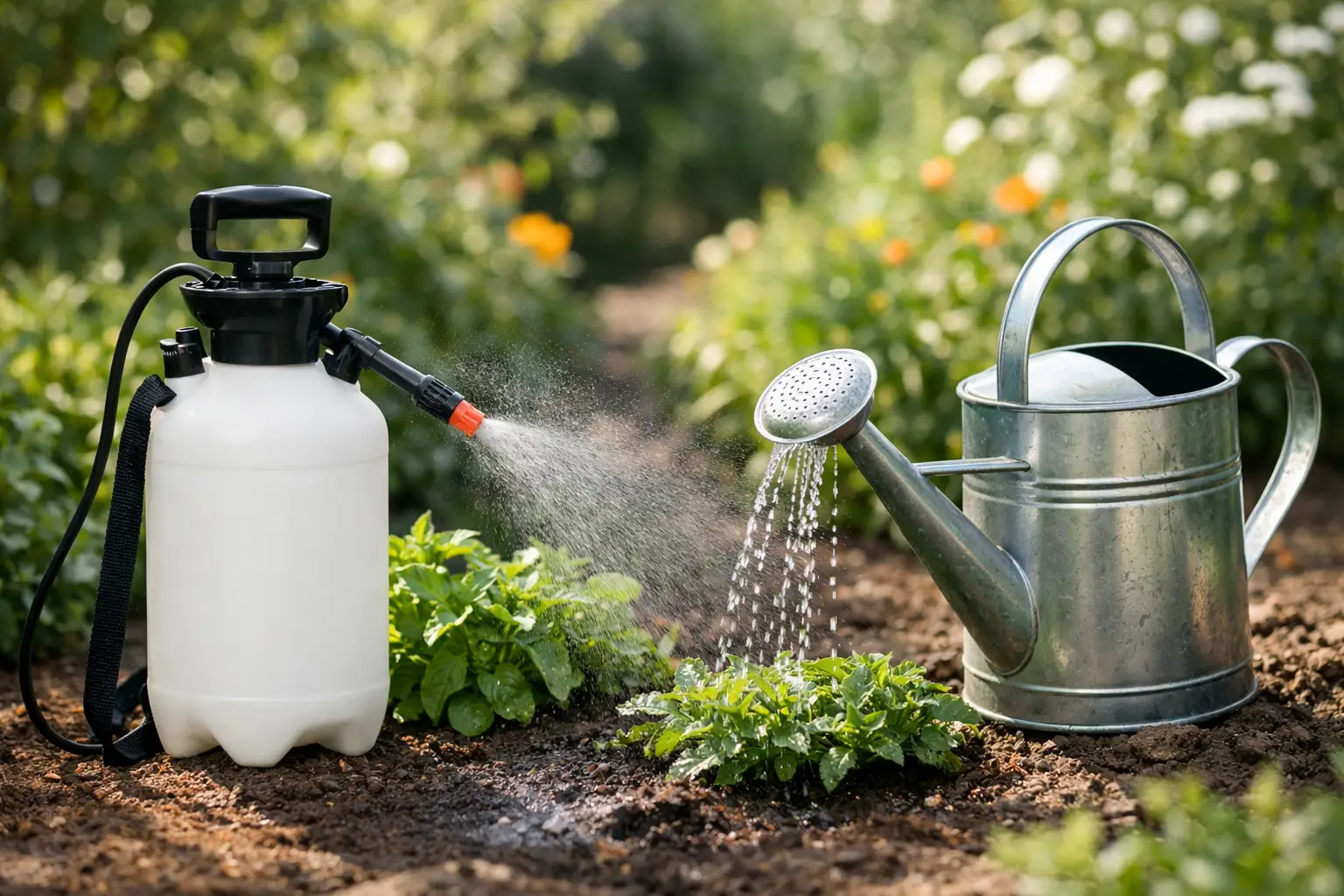
A thirsty row of pots on a warm July evening soon shows the difference between a pressure sprayer vs watering can. One gets water around the garden quickly with very little carrying; the other gives you the gentle, precise soak that new plants and delicate seedlings often need. Neither is automatically better. The right choice comes down to what you are watering, how much of it there is, and whether you want speed or control most.
For many UK gardens, the easiest answer is to keep both. A watering can handles everyday care near the patio, greenhouse or back door, while a pressure sprayer takes the effort out of larger jobs. Here is how to choose without filling the shed with kit you will not use.
A watering can delivers a steady flow of water by hand. Fit a rose to the spout and it becomes soft enough for seedlings, herbs and freshly planted bedding. Remove the rose and you have a more direct flow for filling pots, watering at the base of shrubs or rinsing soil from a tray.
A pressure sprayer has a sealed tank that you pump to build pressure. Squeezing the trigger releases water as a fine mist, spray or more focused stream, depending on the nozzle and its setting. Garden sprayers come in small hand-held sizes and larger shoulder-strap versions, making them useful when there are lots of containers, borders or outdoor surfaces to cover.
The practical difference is simple: a can is made for placing water exactly where it is needed; a sprayer is made for applying liquid efficiently across a wider area. That distinction matters more than the price tag.
A watering can is hard to beat for gentle watering. Young vegetable plants, salad leaves, seedlings and newly sown patches need care, not force. A fine rose spreads water softly, helping prevent seeds being washed into a corner of the tray or compost being dug out around fragile roots.
It is also the more straightforward option for houseplants, hanging baskets and a few patio pots. You can see exactly how much each plant receives, stop as soon as water reaches the compost, and avoid soaking paths, fences or nearby furniture. For anyone with a compact garden, balcony or windowsill collection, this control is often all that is required.
There is no pumping, nozzle adjustment or pressure release to think about. Fill it, carry it, water the plants, and tip out any leftover water. That makes a can especially handy for quick morning checks when one pot looks dry or a greenhouse tray needs attention.
The downside is weight and repetition. One litre of water weighs roughly one kilogram, before the can itself is included. A full 10-litre can is a fair lift, particularly when you are walking up and down steps or carrying it through a narrow side passage. Watering several large planters can soon mean repeated trips to the tap or water butt.
The rose is not just an accessory. A fine rose is best for seedlings and tender growth, while a coarser rose gives a faster flow for established plants. Keep it clear of debris, as blocked holes turn a gentle shower into an uneven squirt. If your can has a removable rose, taking it off also makes it easier to water directly onto the compost around larger plants.
A pressure sprayer earns its place when the job covers more ground. It can be a useful tool for misting a greenhouse, dampening the compost surface in seed trays, watering a collection of outdoor pots or applying a suitable plant feed that is labelled for foliar use. The trigger and adjustable nozzle reduce the stop-start effort of repeatedly lifting and tipping a can.
It is particularly convenient for tall or awkward spots. With the right spray pattern, you can reach the back of a deep border, overhead baskets or plants tucked behind garden furniture without stretching as much. A shoulder-strap model spreads the load better than carrying a full can in one hand.
A sprayer can also be useful beyond watering. Many households use one for applying patio cleaner, moss treatment, weedkiller or insect control products. This is where keeping equipment separate becomes essential. Never use a sprayer for watering edible crops or houseplants if it has previously contained weedkiller, pesticide, patio chemicals or any other treatment. Even careful rinsing may not remove every trace.
For water alone, label the sprayer clearly and reserve it for that purpose. If you use feeds or treatments, keep a second, clearly marked sprayer for each type of product. It is a small bit of organisation that avoids a costly mistake in the vegetable patch.
A sprayer can look efficient because it covers leaves quickly, but fine mist has limits. In a breeze, droplets drift away from the target and can land on paving, windows or neighbouring plants. On a hot, sunny day, water on foliage may evaporate before it does much good, while some plants dislike having wet leaves for long periods.
Most established plants are better watered slowly at soil level so moisture reaches the roots. Use a sprayer for surface misting, carefully directed applications or the specific job its product instructions allow, rather than assuming it replaces deep watering.
A larger tank does not always make a sprayer the more convenient choice. It means fewer refills, but it also means more weight. A five-litre sprayer can be manageable for many people, while bigger models are better suited to sizeable gardens and jobs that justify the carrying. Check that the handle, trigger and shoulder strap feel comfortable, especially if gardening is likely to take more than a few minutes.
With watering cans, a smaller capacity is often kinder on the back and wrists. Two lighter trips may be easier than one heavy lift. A can with a well-positioned top handle and rear handle is easier to tip steadily, and a wide opening makes filling from a water butt less fiddly.
Neither tool automatically saves water. Water saving comes from using the right setting and applying water where it will be used. A watering can encourages measured amounts, while an adjustable sprayer can prevent over-application on larger areas. Whichever you choose, water the soil rather than paving, avoid spraying in wind, and check the compost before topping it up. A wet surface does not always mean the root zone has enough moisture.
For seed trays and very young plants, choose a watering can with a fine rose. It gives the gentlest result and lets you avoid disturbing compost. For a handful of patio pots, either option works, although a can is usually quicker to pick up and use.
For a greenhouse full of plants, a pressure sprayer can be handy for light misting and hard-to-reach corners, but keep a can nearby for a proper root soak. For established borders, a can is fine in a small space, while a hose or irrigation system may make more sense in a larger garden than either tool.
For applying diluted feeds, follow the product label exactly. Some feeds are designed to go into the soil with a watering can; others are suitable for leaf application through a clean sprayer. Do not improvise concentrations, and do not use a plant feed sprayer for household cleaning chemicals later on.
For washing garden furniture, rinsing muddy tools or dampening a dry compost heap, a pressure sprayer offers useful reach and speed. A watering can can do the task, but it is less convenient when you need an even spray over a broad surface.
A watering can needs little more than an occasional rinse and a check for algae around the rose. Store it upside down or under cover where possible, especially over winter, so rainwater does not sit inside and freeze.
Pressure sprayers need a little more attention. Empty them after use, rinse the tank and nozzle with clean water, and release pressure before storage. Check seals, the hose and trigger for leaks before filling. If the nozzle starts sputtering, clean it rather than forcing the trigger, as dried residue can affect the spray pattern.
If you mainly care for pots, seedlings and a modest garden, start with a comfortable watering can and a good rose. It is affordable, dependable and gives you the control plants need. Add a pressure sprayer when watering becomes repetitive, you need a fine mist for particular tasks, or you want a practical tool for separate garden-cleaning and treatment jobs.
The best garden tools are the ones you will reach for without a sigh. Keep the can close to the tap or water butt, store the sprayer clean and labelled, and match the tool to the task. Your plants get better care, and the evening watering round feels a good deal less like a chore.
