Address
86 Amesbury Road
Manchester M9 6JF United Kingdom
Smart shoe storage ideas for hallways, bedrooms and small homes. Keep pairs tidy, easy to find and off the floor without wasting space.
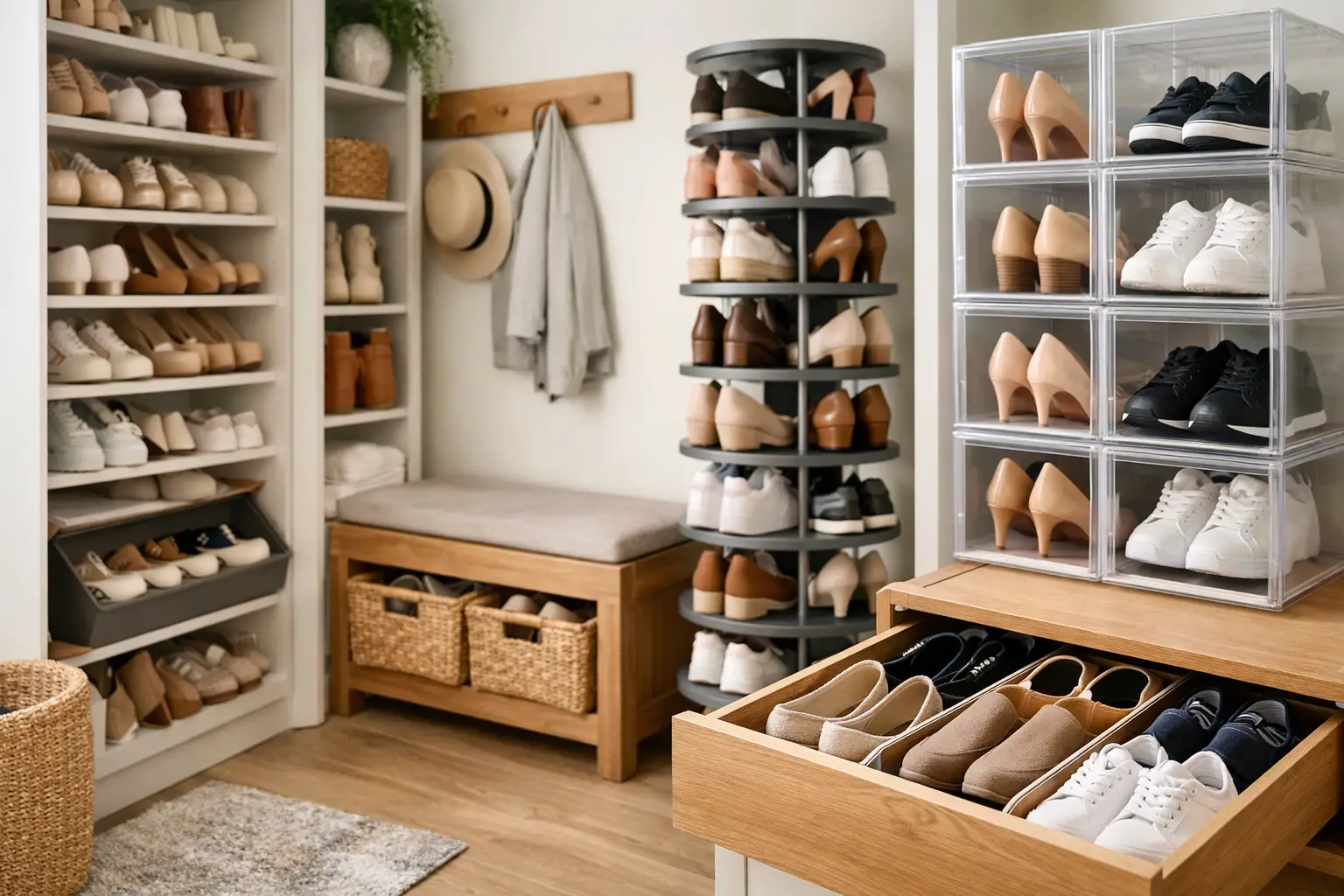
If shoes are piling up by the front door, hiding under beds, or turning the bottom of the wardrobe into a jumble, you do not need a bigger house. You need better shoe storage ideas. The right setup makes daily routines quicker, keeps floors clearer, and stops good pairs getting scuffed, squashed or forgotten.
The trick is not to copy a picture-perfect hallway and hope for the best. Good storage depends on how many pairs you own, where you usually take them off, and how much space you can realistically give up. A family with school shoes, trainers, boots and muddy garden footwear needs a different solution from someone in a one-bed flat with six carefully chosen pairs.
The best shoe storage ideas solve the problem where it happens. For most households, that means one of three places – the hallway, the bedroom, or a utility area. If shoes are dropped at the door, storing them upstairs will not magically create tidier habits. If your hallway is narrow, a chunky bench may make the space more awkward rather than more useful.
Start by noticing the pinch points. Are shoes blocking the entrance? Are seasonal pairs taking over everyday space? Are children unable to reach their own shoes? Once you know the problem, the right type of storage becomes much easier to choose.
A shallow shoe cabinet is one of the easiest wins for smaller homes. It keeps pairs tucked away, looks neater than open shelving, and usually takes up less floor space than a standard unit. This works especially well in terraces, flats and busy family hallways where every centimetre matters.
The trade-off is capacity. Slim cabinets are brilliant for everyday shoes, but not always ideal for bulky boots or large trainers. If your household wears bigger sizes or sturdier footwear, check the internal depth before buying.
A bench with built-in storage does two jobs at once. It gives you somewhere to sit while putting shoes on, and it stops pairs being kicked into random corners. For family homes, this is especially handy near the front door, in a porch, or even in a boot room.
Open bench storage is quicker for daily use, but closed storage looks tidier. If you want the space to appear calm, go for lidded compartments or baskets underneath. If speed matters more, open cubbies are usually the more practical choice.
Stackable shoe shelves are a sensible option when your storage needs may change. You can start small and add more as needed, which suits growing families, shared homes, or anyone who tends to buy trainers in pairs rather than edit their collection.
They are not the prettiest solution, but they are flexible and affordable. In wardrobes, utility rooms and under stairs cupboards, function often matters more than style anyway.
Under-bed shoe storage is ideal for pairs you do not wear every day. Think occasion shoes, holiday sandals, formal footwear, or out-of-season boots. It frees up more convenient space for the pairs you actually reach for during the week.
This works best with low-profile storage boxes or zip cases that keep dust off. The only catch is access. If you are dragging everything out every morning to find one pair, it is the wrong place for everyday footwear.
When several people live in one home, shoe clutter multiplies fast. A tidy system is less about fitting in every pair and more about making sure everyone knows where their own shoes go.
Shared storage works better when it is clearly divided. One shelf per person, one basket each, or labelled cubbies can save a surprising amount of morning hassle. Children are also far more likely to put shoes away if the space is easy to reach and simple to understand.
This does not need to look overly organised or fussy. Even a basic rack can work harder when each household member has a set spot. It cuts down the daily hunt for school shoes and mismatched trainers.
Not every pair should go straight into enclosed storage. In British weather, wet shoes and muddy boots need somewhere to dry without making a mess of the floor or ruining the cabinet. A simple tray near the door or in a utility area helps contain the damage.
This is one of those small ideas that makes everyday life easier. It is not glamorous, but it keeps dirt in one place and protects the rest of your storage from damp and grime.
If all shoes are stored in one place all year round, useful space disappears quickly. Rotating by season makes daily storage feel manageable. In summer, wellies and heavy boots can move to a less accessible cupboard. In winter, sandals and lightweight pumps can be packed away.
This is especially helpful in smaller homes where storage has to work hard. You do not need every pair within arm’s reach in every month of the year.
Bedrooms often become the backup location for overflow shoes. That is fine, but only if the setup is deliberate. Otherwise, the wardrobe floor becomes a graveyard for lone heels, old boxes and pairs you forgot you owned.
Clear shoe boxes are useful if you like things tidy and want to protect better footwear from dust, sunlight and accidental damage. Because you can see what is inside, they are far more practical than a stack of old cardboard boxes.
They do take up visual space, though. In a small or already busy bedroom, too many boxes can still feel cluttered even when everything is technically organised. They suit wardrobes and cupboards better than open display in most homes.
A hanging organiser can make use of vertical space that often goes wasted. It is handy for flats, smaller bedrooms and homes without much floor room. Lighter shoes such as pumps, sandals, children’s shoes and slippers fit well here.
Heavier footwear is another matter. Large boots or chunky trainers can make hanging organisers sag or become awkward to use. Think of them as a smart top-up solution, not the answer to every type of shoe.
The bottom of a wardrobe often becomes a catch-all, but a few simple dividers or a low rack can turn it into proper storage. This keeps pairs visible, helps air circulate, and stops shoes being crushed under clothing or shopping bags.
It is a basic idea, but often the most effective ones are. You do not always need a full furniture upgrade to make a space work better.
Some of the best storage opportunities are the ones people overlook. If your home feels short on room, look again at the gaps and corners that are not doing much.
The cupboard under the stairs is often ideal for shoe storage, especially in busy family homes. It can handle larger quantities, keep clutter out of sight, and work for less attractive but highly useful pairs like work boots, football boots or gardening shoes.
The key is not to turn it into a heap. Add shelves, baskets or stackable units so the space stays usable. Hidden storage is only helpful if you can still find what you need.
An unused corner in a porch, utility room or bedroom can become a compact shoe zone with a narrow rack, small bench or vertical organiser. This is a good option when there is no obvious built-in storage and you need a practical fix without rearranging the whole house.
Corners work best for everyday pairs, not full collections. Keep the setup focused and realistic, and it will stay useful rather than becoming another dumping ground.
Before buying anything, count how many pairs need daily access and how many can be stored elsewhere. That one step stops people from choosing storage that looks neat for a week but cannot cope with real life. If your household uses twelve pairs regularly, a cute little rack for six is not a solution.
Think about cleaning, too. Open storage is easy to grab from but shows dust and clutter more quickly. Closed storage looks calmer but needs dry, fairly clean shoes going in. If you have children, pets, or lots of outdoor footwear, a mix of both usually works best.
It also helps to match the storage to your routine, not just your décor. If convenience is the goal, keep frequently worn shoes close to the door, protect special pairs in the bedroom, and move occasional shoes out of prime space. That is the sort of practical setup that lasts.
A tidy shoe area will never change your life overnight, but it can make mornings smoother, hallways safer, and the whole house feel a bit more under control. Start with one trouble spot, keep the system simple, and choose storage that makes everyday use easy – that is usually the difference between a good idea and one that actually sticks.
