Address
86 Amesbury Road
Manchester M9 6JF United Kingdom
Storage baskets vs plastic boxes - compare cost, looks, durability and best uses to choose the right storage for every room in your home.
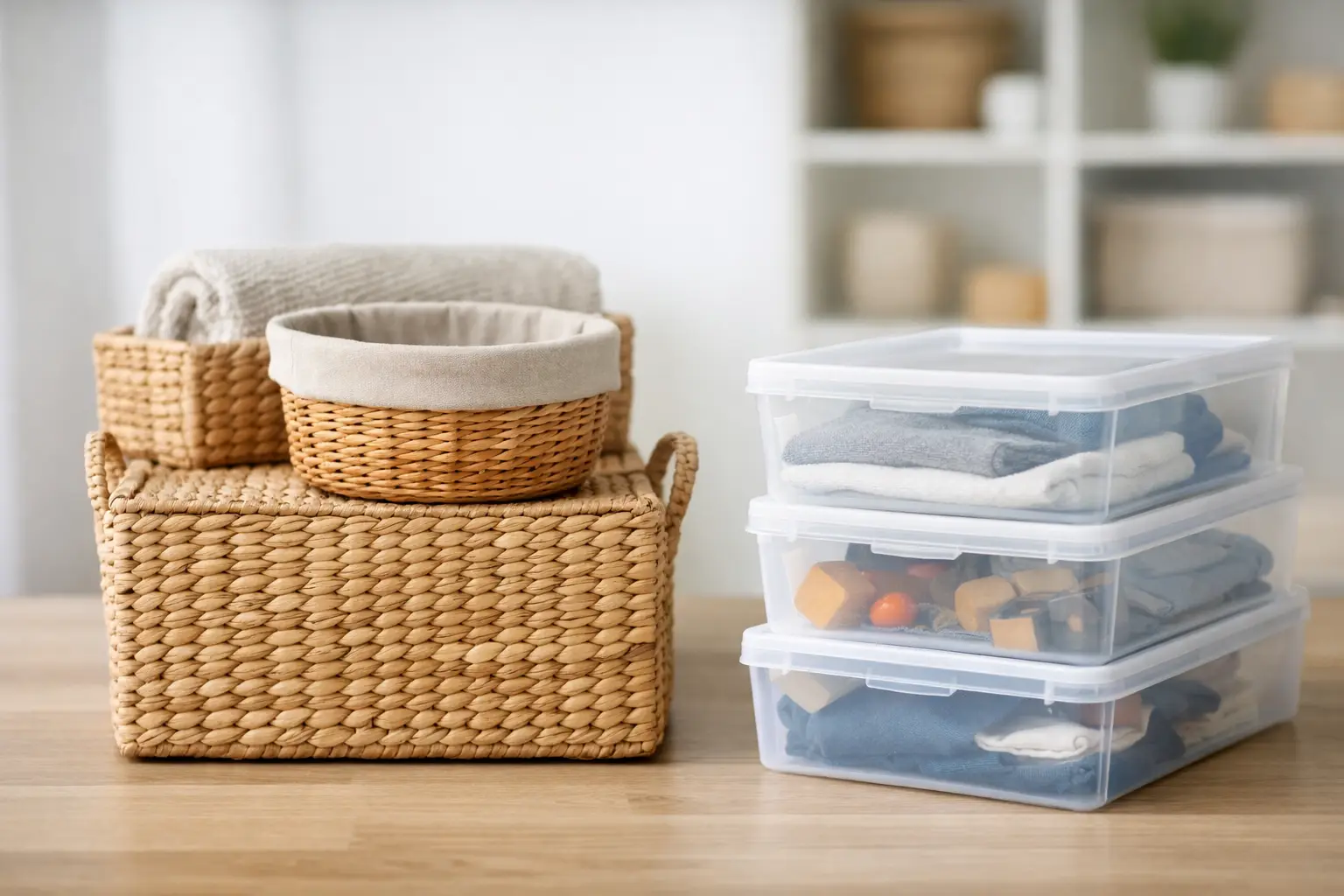
One look at an overstuffed utility room or messy toy corner usually brings up the same question: storage baskets vs plastic boxes – which one actually makes life easier? The short answer is that both can be brilliant, but they do different jobs. If you pick based on the room, what you are storing and how often you need to get to it, you will end up with a home that feels tidier without making everyday tasks harder.
At a glance, the choice can seem simple. Baskets tend to look better. Plastic boxes tend to feel more practical. But that only tells part of the story.
Storage baskets are usually better when the contents need to stay easy to reach and the storage itself is part of the room. Think blankets in the lounge, toiletries in the bathroom, shoes by the front door or odds and ends on open shelving. They soften a space and stop storage from looking too harsh or cluttered.
Plastic boxes are usually the stronger choice when protection matters more than appearance. They work well in lofts, garages, sheds, cupboards, caravans and under beds, especially when you want to keep out dust, damp or spills. If you are storing seasonal decorations, tools, craft supplies or spare household bits, a plastic box often gives you more security and less faff.
The real difference is not just material. It is visibility, durability, ventilation and how the item fits into your daily routine.
Baskets are often the easiest way to make a room look sorted quickly. They are handy for the things you use all the time but do not want spread across surfaces. In family homes, that can mean throws, toys, magazines, chargers, hair products or pet accessories.
They also work well where you want a softer, more lived-in look. A woven basket in a bedroom or lounge can feel tidy without looking clinical. That matters if your storage is staying on show rather than tucked away in a cupboard.
Another point in favour of baskets is access. Most are open at the top or simple to reach into, so they suit items you are grabbing daily. You are less likely to avoid putting things away if the storage is quick and obvious to use.
That said, baskets are not always the neat answer people expect. Open designs can make clutter visible, especially if you overfill them. Some woven styles catch dust, and certain materials can snag delicate fabrics. In damp rooms, natural fibres may also wear faster than you would like.
So baskets are a smart pick when appearance matters, access needs to be easy and the contents do not need full protection.
Baskets shine in the rooms where convenience and style overlap. In the lounge, they are ideal for blankets, remotes and children’s bits that need clearing away fast. In bedrooms, they suit accessories, socks, spare bedding and laundry. In bathrooms, they can hold loo rolls, cleaning cloths or grooming essentials, as long as the space is not too damp.
They are also useful in hallways, where quick-drop storage helps with the daily rush. Shoes, hats, scarves and dog leads are much easier to keep together when they have a dedicated basket.
Plastic boxes are all about protection and control. If your main aim is to keep things clean, dry, stackable and easy to sort, they are hard to beat.
Lidded plastic boxes are especially good for long-term storage. They help protect items from dust, moisture and accidental knocks. That makes them a practical option for loft storage, garage shelving, under-stair cupboards and garden outbuildings where conditions are less predictable.
They are also useful if you like a more system-led approach. Because many plastic boxes come in uniform sizes, they stack neatly and make better use of vertical space. If you are trying to organise a cupboard properly rather than just hide the mess, this can make a big difference.
Clear plastic boxes have another advantage: you can usually see what is inside without opening each one. That saves time, especially with seasonal items or hobby supplies. Opaque boxes can still work well, but you may need labels if you want to avoid rummaging.
The trade-off is that plastic boxes can feel more functional than attractive. In a living space, they may look too stark or utilitarian. Cheaper boxes can also crack under weight, and ill-fitting lids can be more annoying than useful.
Plastic boxes are a strong choice in garages, lofts, sheds, utility rooms and under beds. They are useful for tools, spare cables, paperwork, cleaning products, Christmas decorations, DIY materials and children’s keepsakes. They are also handy in caravans and cars, where you want items contained and less likely to shift about.
In kitchens, smaller plastic boxes can help corral packets, baking bits or cleaning supplies inside cupboards. In children’s rooms, they are good for toy rotation if you want categories that stack and store neatly.
If you are choosing between the two, it helps to think less about the product and more about the job.
For everyday tidying, baskets are often the winner. You can toss items in quickly, carry them from room to room and keep the space looking relaxed but under control. This is useful in busy households where storage needs to fit around real life rather than a showroom finish.
For archiving, seasonal storage or anything stored out of sight, plastic boxes tend to do better. They protect contents, stack more reliably and make awkward spaces like lofts and garages easier to manage.
For children’s toys, it depends on the type of toy and the age of the child. Baskets are easier for soft toys, dress-up bits and quick clear-ups. Plastic boxes are better for building sets, craft materials and small pieces that need proper sorting.
For laundry, baskets usually feel more natural because of airflow and ease of use. For cleaning products, pet food accessories or car care supplies, plastic is often the safer and tidier route.
Price matters, especially when you need several storage pieces at once. Plastic boxes are often better value if you are organising utility spaces or buying in multiples. You usually get durability, stackability and protection for a reasonable price.
Baskets can range from budget-friendly to surprisingly pricey, depending on the material and finish. Fabric and lightweight woven options are often affordable, while sturdier or more decorative styles can cost more.
In terms of upkeep, plastic boxes are usually easier to wipe clean. That makes them practical for messier spaces or anything involving mud, cleaning products or garage dust. Baskets can need a bit more care, particularly if they are made from natural fibres or have fabric linings.
Durability depends on quality as much as material. A well-made basket can last for years indoors, while a flimsy plastic box can split if overloaded. It is worth checking handles, base strength and lid fit before you decide.
For most homes, this is not really an either-or decision. The easiest setup usually combines baskets and plastic boxes, with each used where it performs best.
Use baskets in visible rooms where you want things close to hand and easy on the eye. Use plastic boxes behind the scenes where protection, stacking and long-term storage matter more. That gives you a home that feels tidy in the places people see and works properly in the places that do the heavy lifting.
At EasyPeasyMate, that kind of practical mix is what makes organising stick. You do not need every container to match. You just need each one to make the job simpler.
If you are stuck, start with one question: do you want this storage to look good, or work hard? Once you answer that, the right option usually becomes clear – and your next clear-out gets a lot easier.
