Address
86 Amesbury Road
Manchester M9 6JF United Kingdom
Wondering what household items need replacing? Here’s a practical guide to everyday essentials, warning signs and when to swap them out.
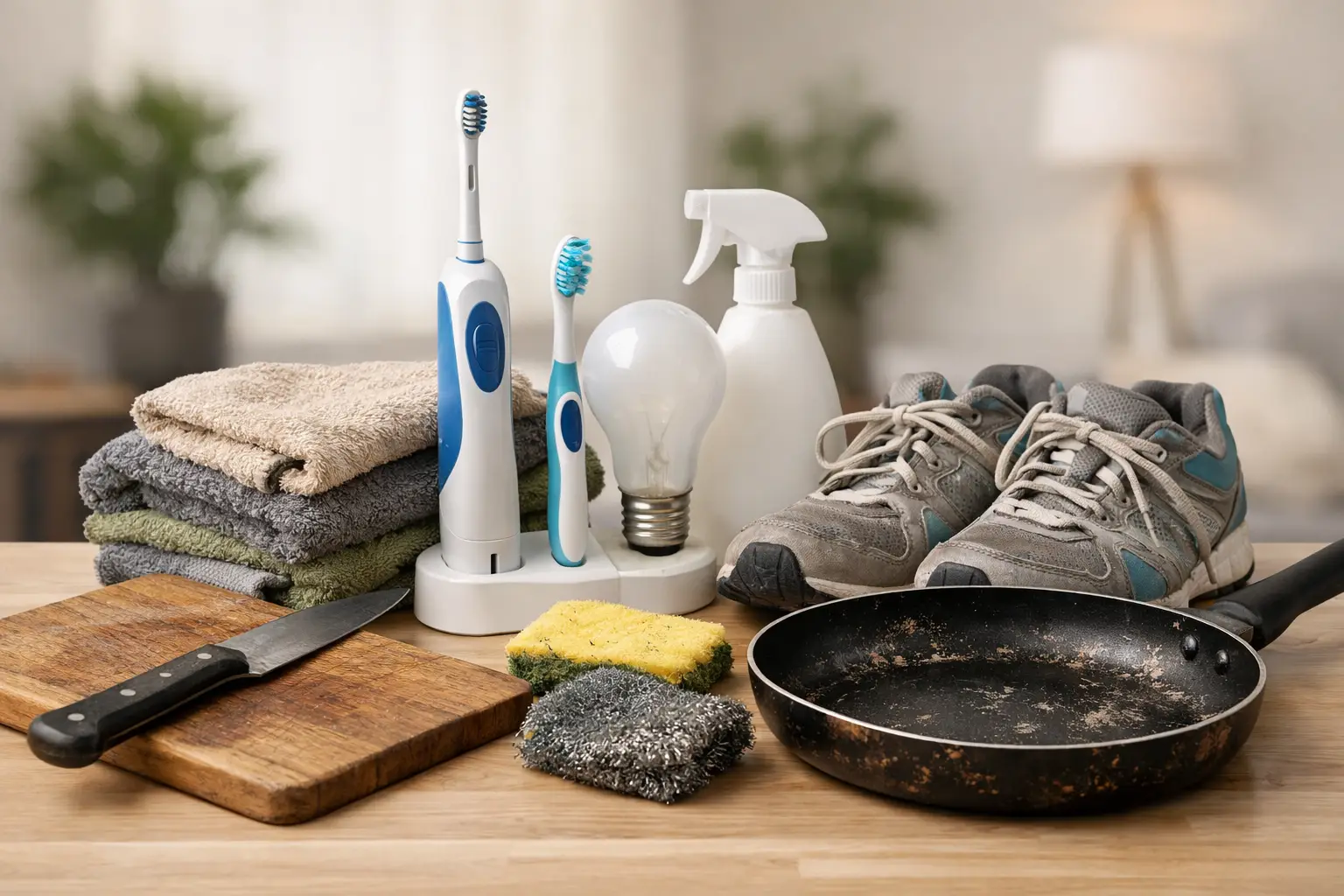
You usually notice it after something goes wrong – the frying pan starts sticking, the pillow feels lumpy, the smoke alarm chirps at 2am, or the mop smells worse than the floor. If you have ever wondered what household items need replacing, the short answer is more than most of us realise. A lot of everyday essentials wear out slowly, which makes them easy to ignore until they stop doing their job properly.
Keeping on top of replacements is not about being wasteful or constantly buying new things. It is about hygiene, safety, comfort and saving yourself hassle later. Some items need swapping regularly because they collect bacteria. Others need replacing because they become less effective over time. And a few are worth checking simply because when they fail, the consequences are bigger than a minor inconvenience.
If you want to start with the things that matter most, focus on the items that affect safety and cleanliness. Smoke alarm batteries, washing-up sponges, chopping boards, pillows, toilet brushes and worn extension leads all deserve a closer look. These are the bits of household kit that often keep going long past their best.
It helps to think in three groups. First, there are hygiene items that get dirty faster than they can be cleaned properly. Second, there are safety items that can become risky with age. Third, there are practical tools that simply stop performing well, which means everyday jobs take longer and feel more frustrating than they should.
The kitchen is full of things we use daily, so it is no surprise that many of them need replacing more often than expected. Sponges and scourers are top of the list. Even if you rinse them after use, they can hold onto grease, food bits and bacteria. If they smell odd or start falling apart, they are done. In a busy household, that can happen in just a week or two.
Tea towels and dish cloths also deserve regular rotation. A proper hot wash helps, but if the fabric stays stained, feels stiff or smells musty straight from the wash, it is probably time for fresh ones. The same goes for oven gloves once the padding thins out. Heat protection is not something to guess.
Chopping boards are another one people keep for too long. A few surface marks are normal, especially on wooden boards, but deep grooves can trap moisture and food residue. If a board is cracked, warped or impossible to clean fully, replacing it makes sense. It is a simple upgrade that helps with food hygiene straight away.
Non-stick pans often hang on because they still look usable from a distance. But if the coating is scratched, peeling or patchy, they stop cooking evenly and become harder to clean. You do not need to replace every pan on a fixed timetable, but once performance drops off, it is usually more hassle to keep it than to swap it.
Bathrooms are another spot where household items wear out fast. Toothbrushes are the obvious example. Once the bristles splay out, they stop cleaning properly. For most people, every three months is a sensible rule, and sooner after illness.
Toilet brushes are less glamorous but just as worth checking. If the bristles are bent, discoloured or permanently grimy, no amount of rinsing will bring them back. The holder matters too. If there is built-up residue at the bottom that never quite comes clean, replace the set and move on.
Shower curtains and bath mats can also overstay their welcome. Mould stains, frayed edges and lingering damp smells are good signs they need replacing. You can wash many of them, but repeated damp, poor ventilation and hard water build-up eventually take their toll. Fresh bathroom textiles make the whole room feel cleaner with very little effort.
Some of the most overlooked household replacements are the ones linked to sleep and comfort. Pillows are a big one. They flatten slowly, so you adapt without noticing. If you wake up with a sore neck, fold your pillow in half and it stays folded, or it has gone uneven and lumpy, it is probably past its best.
Duvets can last a good while if cared for properly, but they do not last forever. Once filling starts clumping or the duvet no longer feels warm and even, it stops doing its job. Mattress protectors and pillow protectors should also be checked regularly, especially in family homes where spills, sweat and general wear are part of life.
Mattresses are a bigger purchase, so understandably people delay replacing them. There is no perfect timeline for every home because usage, build quality and body weight all make a difference. Still, if a mattress sags, creaks, feels uneven or leaves you waking up stiff every morning, replacement is worth considering sooner rather than later.
Cleaning is hard enough without tools that make it harder. Mops, broom heads, dustpans, brushes and vacuum filters all wear down with use. If a mop head stays grubby after washing, starts to smell or leaves more streaks than clean floor behind, it is not doing you any favours.
Broom bristles that bend sideways will not sweep properly, and vacuum filters clogged beyond recovery reduce suction and push dust back into the air. These are not dramatic failures, but they chip away at the results you get. Replacing tired cleaning tools often makes more difference than changing your cleaning routine.
This is where practical shopping helps. Having a few reliable basics tucked away means you can swap things out when needed rather than waiting until a weekend job becomes a nuisance.
When thinking about what household items need replacing, safety should get top billing. Smoke alarms themselves do not last forever, even if you change the batteries. Many units need replacing after around ten years, though it is always worth checking the manufacturer guidance on the casing.
Extension leads and plugs deserve a look as well. If a lead is frayed, warm to the touch, cracked or loose around the socket, stop using it. The same goes for chargers with exposed wires. These can seem harmless right up until they are not.
Torches, step ladders, hot water bottles and rubber door stops also fall into the practical-safety category. A hot water bottle should be checked carefully for wear, brittleness or tiny cracks, especially before winter. Step ladders with wobble or damaged feet are another easy one to overlook. They are fine until they really are not.
Outdoor items tend to age faster because they face weather, dirt and heavier use. Hoses can split, watering cans crack, gloves wear through and brushes lose their stiffness. It is tempting to make do for another season, but weak gear usually turns small jobs into bigger ones.
Storage boxes, pegs and doormats are worth checking too. Sun, rain and frost can all shorten their life. If a doormat no longer traps mud or a garden brush barely shifts debris, replacing it is less about appearance and more about making daily upkeep easier.
Not every worn item needs binning the moment it looks used. Some things can be cleaned, repaired or repurposed. Glass storage containers, solid wood items and sturdy hand tools often have a much longer life than cheaper fabric or plastic bits. The trick is knowing when wear is cosmetic and when it affects hygiene, safety or performance.
A good rule is simple. If an item can no longer be cleaned properly, no longer works as it should, or could become unsafe, it is time to replace it. If it still does the job well and can be maintained without fuss, keep using it.
For busy households, a seasonal check can save time. Have a quick look through the kitchen, bathroom, utility cupboard and garden shed every few months. You do not need a complicated spreadsheet. Just notice what smells off, looks worn, feels flimsy or has become annoying to use.
EasyPeasyMate.Shop is built around exactly that kind of everyday practicality – the small household fixes and replacements that keep life ticking along without extra faff.
A home rarely falls apart all at once. More often, it gets gradually less efficient because too many little essentials are overdue for replacement. Stay ahead of those small swaps, and daily life feels cleaner, safer and a lot easier.
