Address
86 Amesbury Road
Manchester M9 6JF United Kingdom
Wondering what household tools do I need? Build a practical home toolkit with the basics for repairs, decorating, furniture and emergencies.
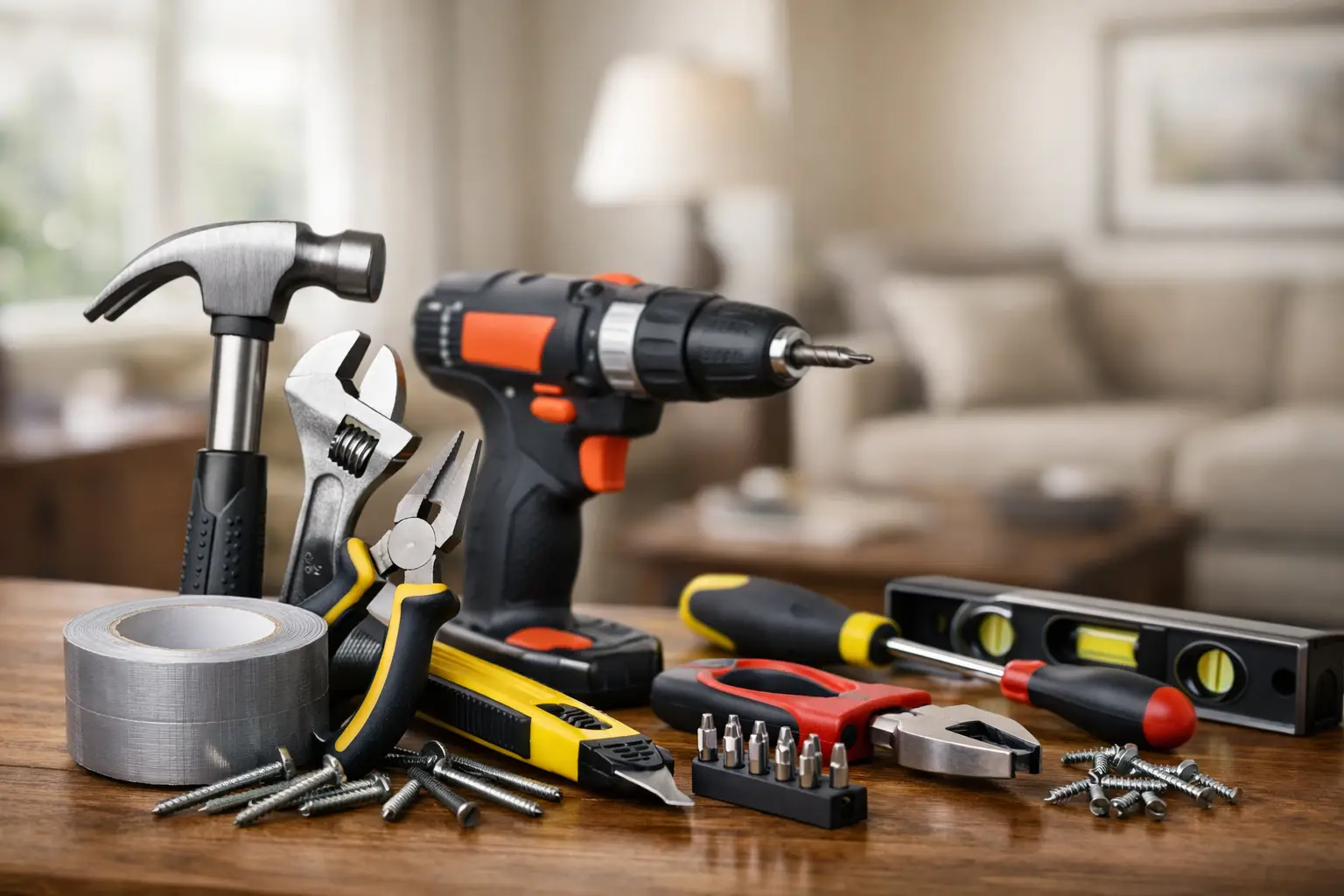
A wobbly chair, a loose cupboard handle and a picture frame still leaning against the wall all have one thing in common – they usually stay that way when you do not have the right kit close by. If you have ever asked yourself, what household tools do I need, the good news is you do not need a packed workshop or a garage full of gear. For most homes, a small, sensible toolkit covers the jobs that crop up every month.
The trick is buying tools you will actually use. That means reliable basics for quick fixes, flat-pack furniture, simple decorating and everyday maintenance. Start with the essentials, then add extras when a specific job comes up.
If you are building your first toolkit, think in terms of grip, measuring, fastening, cutting and safety. Those five jobs cover most of what happens around the house.
A claw hammer earns its place straight away. It helps with tapping nails in, pulling old nails out and dealing with all those small repair jobs that somehow appear out of nowhere. You do not need a huge one either. A medium-weight hammer feels easier to control and is usually more useful indoors.
Next comes a screwdriver set. This is one of those purchases that saves time from day one. A mix of flat-head and cross-head screwdrivers is the practical starting point, and if you want to keep things even simpler, a multi-bit screwdriver can do a lot of the heavy lifting without taking up much space. That said, dedicated screwdrivers often feel sturdier in the hand, especially if you are tightening stubborn screws.
A tape measure is another must. Whether you are checking if a shelf will fit, measuring for curtains or spacing out wall hooks, guessing nearly always leads to extra hassle. A 5-metre tape measure suits most households and is easier to store than a larger one.
Then there are pliers. Combination pliers are brilliant for gripping, twisting and pulling, and long-nose pliers help in awkward spots like behind appliances or inside cupboards. Adjustable spanners also deserve a place in the box, especially for tightening bolts, assembling furniture or sorting minor plumbing jobs such as a loose tap fitting.
Once you have the basics, a few extra items make home life much easier. A spirit level, for example, stops shelves, mirrors and frames from ending up slightly off. It sounds like a small thing until you sit down and notice a crooked picture every single day.
A utility knife is another handy one to keep around. It is useful for opening boxes, trimming carpet edges, cutting packaging and tackling lots of fiddly jobs where scissors are not quite enough. Just make sure it has a retractable blade and keep spare blades stored safely.
You will also want a set of Allen keys. Many flat-pack items come with one tiny key in the box, but having your own proper set is far more convenient and usually more comfortable to use. If you buy furniture, storage units or home office equipment with any regularity, they will not sit unused for long.
A cordless drill can be worth buying earlier than people expect. Strictly speaking, it is not essential for every home from day one, especially if you rent and rarely put anything up. But if you assemble furniture, hang shelves, fit curtain poles or do simple DIY, it quickly becomes one of the most time-saving tools you own. The trade-off is cost and storage. If you only tackle one or two light jobs a year, a manual toolkit may be enough for now.
The answer to what household tools do I need changes a bit depending on how you live.
If you rent, focus on tools that help with furniture assembly, minor fixes and temporary jobs. Screwdrivers, pliers, a hammer, tape measure, a level and a utility knife will usually cover the basics. You may not need a full power tool setup if your tenancy limits drilling or wall mounting.
If you own your home, it makes sense to go one step further. A cordless drill, drill bit set, adjustable spanner, sealant tool and stud finder can all be useful over time. Homeowners tend to deal with more decorating, fixture changes and maintenance, so the toolkit often grows naturally.
If you have children, it helps to be ready for constant low-level wear and tear. That means loose stair gates, toy storage that needs assembling, cupboard catches, wall hooks, bikes, garden toys and all the little things that need tightening or adjusting. In family homes, a basic toolkit gets used far more often than people expect.
Not always. Plenty of households get by perfectly well with hand tools, especially in smaller flats or homes where DIY jobs are occasional. But one or two power tools can save a lot of effort.
The best first power tool is usually a cordless drill driver. It covers drilling holes and driving screws, which are two of the most common household tasks. Look for something straightforward rather than overcomplicated. If it is light, comfortable and easy to charge, you are more likely to use it.
Beyond that, it depends on your space and habits. A sander can help with decorating prep and furniture upcycling, but it is not essential for everyone. A jigsaw is useful if you make custom cuts in wood, but many people can go years without needing one. There is no prize for owning tools that sit untouched in a cupboard.
A useful home toolkit is not just about the main tools. The smaller extras often save the day.
Keep a supply of picture hooks, wall plugs, assorted screws, nails and cable clips. Add insulating tape, masking tape and a small tube of strong adhesive. A torch with fresh batteries is worth having too, especially for power cuts, checking behind appliances or sorting a fuse box area. Work gloves and safety glasses are sensible additions if you do even light DIY.
A step stool also deserves a mention. It is not a tool in the strict sense, but it makes changing bulbs, reaching top cupboards and cleaning awkward spots much safer than balancing on a dining chair and hoping for the best.
It is easy to overspend when you are starting out, especially if kits are packed with items you may never touch. A cheaper set can be perfectly fine for light household use, but very flimsy tools usually end up being frustrating and short-lived. The sweet spot is decent quality without paying for professional-grade gear you do not need.
Try to avoid novelty bundles with dozens of duplicate pieces. A smaller set with a hammer, tape measure, screwdrivers, pliers and a few useful accessories is often better value than a giant box filled with extras that rarely leave the case.
Storage matters as well. If your tools are scattered across kitchen drawers, they become harder to find and easier to lose. A compact toolbox or organiser keeps everything together and makes quick jobs feel much less like a chore.
If your goal is to handle common DIY jobs without calling in help every time, build your kit around likely tasks. Hanging a mirror needs a tape measure, level, drill, screwdriver and suitable fixings. Tightening a loose tap might need an adjustable spanner and pliers. Assembling a chest of drawers could call for screwdrivers, Allen keys and a hammer.
That is why the best toolkit is practical rather than impressive. You are not trying to prepare for every possible repair. You are aiming to deal with the jobs that show up in real life, in real homes, on ordinary weekdays when you just want to get things sorted.
For many households, that means starting with these essentials:
If your budget allows, add a cordless drill driver and a small bit set. That one extra step can make a big difference.
A sensible toolkit does not need to be huge, expensive or complicated. It just needs to be ready when a drawer handle comes loose, a shelf needs putting up or the latest flat-pack arrives at the door. Start with the basics, choose tools you will genuinely use, and build from there. That is usually the easiest way to make home jobs feel a lot more manageable.
