Address
86 Amesbury Road
Manchester M9 6JF United Kingdom
What removes limescale from taps? Find the best easy methods for chrome, stainless steel and plated finishes without causing damage.
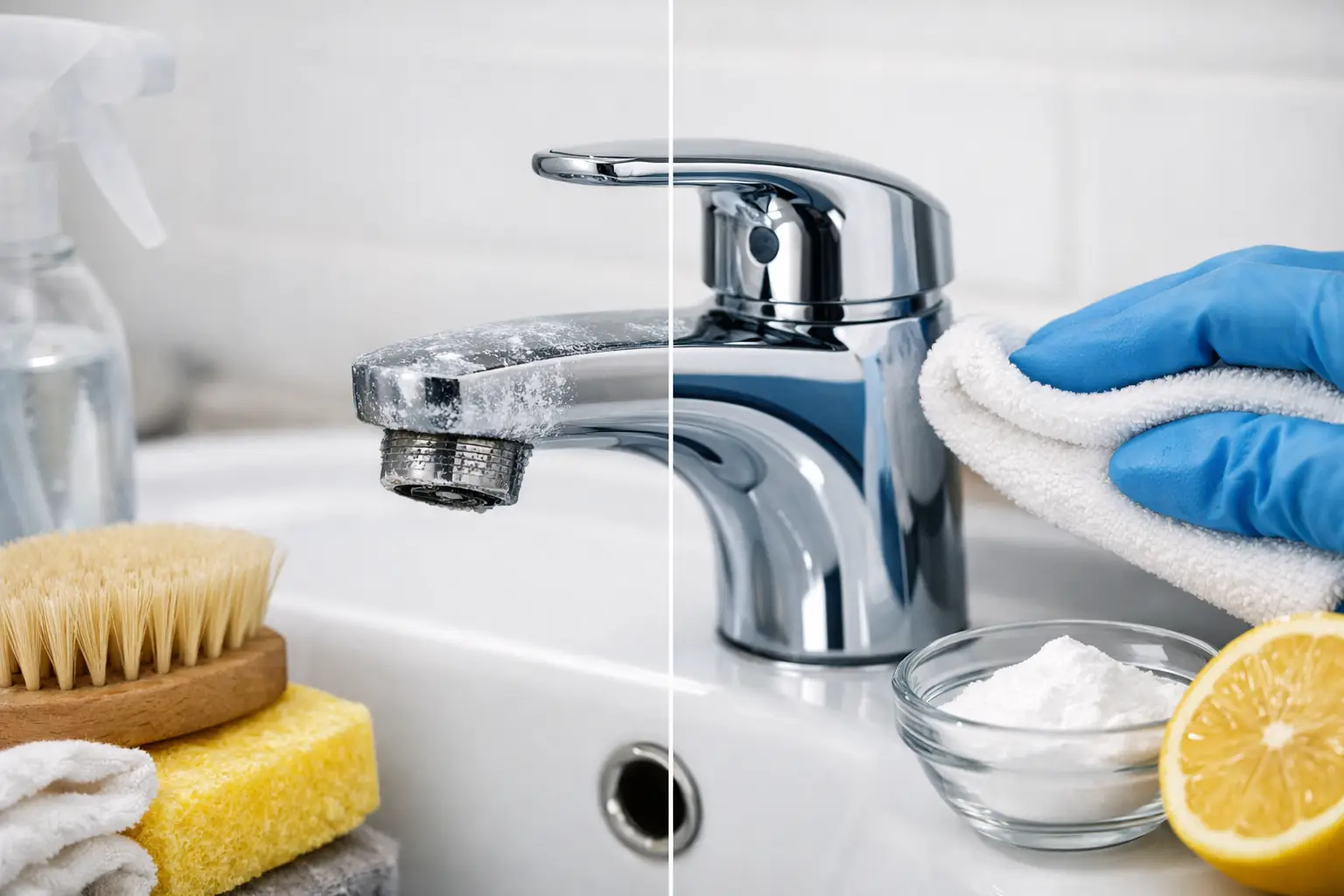
That chalky white crust around the base of your tap never looks like much at first. Then one day the shine has gone, the water marks will not shift, and you are standing there wondering what removes limescale from taps without wrecking the finish. The good news is that most tap scale comes off quite easily if you use the right cleaner, the right timing and a bit of patience.
In most homes, mild acids do the hard work. White vinegar, lemon juice and purpose-made limescale removers are usually the most effective options because they break down the calcium deposits sitting on the surface. For light build-up, a simple soak with vinegar or lemon juice is often enough. For heavier crusting, a dedicated descaler tends to work faster and with less scrubbing.
That said, the best answer depends on your tap finish. Chrome, stainless steel and many modern plated taps can all react differently, especially if the limescale has been left in place for weeks or months. If you go too strong too quickly, you can remove the scale and dull the tap at the same time, which is hardly a win.
If you live in a hard water area, taps are one of the first places you will notice it. Every splash and drip leaves behind tiny mineral deposits. As the water evaporates, those minerals stay put. Around the spout, at the tap base and near joints, the deposits build layer by layer until they turn into a visible crust.
Bathrooms usually show it first because taps there are used often and wiped down less. Kitchen taps can build up more slowly, but they tend to get a mix of limescale, grease and soap residue, which makes cleaning a bit more fiddly.
For everyday household cleaning, start gentle. A cloth soaked in white vinegar wrapped around the affected area is the classic fix for a reason. Leave it on for 15 to 30 minutes, then wipe and rinse. If the scale is light, that may be all it takes.
Lemon juice works in much the same way and smells fresher, which some people prefer. It is especially handy for fresh marks rather than thick deposits. You can soak a cloth or kitchen paper, press it onto the limescale and let the acid loosen it before wiping away.
If you need a little extra help, an old toothbrush is useful for working around the base of the tap or into awkward seams. Keep the pressure light. Limescale needs dissolving more than attacking.
Bicarbonate of soda can help too, but more as a support act than the main event. On its own, it is better for lifting grime and polishing away residue than dissolving solid scale. Used after vinegar or lemon juice, it can help remove the last dull patches.
The easiest method is to soak a cloth or paper towel in white vinegar, wrap it around the affected part of the tap and leave it in place briefly. For the spout end, you can hold the cloth in place with a rubber band. Once the scale softens, wipe with a soft sponge, rinse well and buff dry with a microfibre cloth.
Do not leave vinegar sitting for hours unless the tap manufacturer specifically says acidic cleaners are safe. Prolonged contact can damage some plated finishes and rubber seals.
If you have thick, stubborn deposits that keep coming back, a dedicated limescale remover is often the quicker route. These products are made to dissolve mineral build-up efficiently and many are designed for bathroom and kitchen fittings, kettles, shower heads and tiles.
The main advantage is consistency. You get a cleaner with a known formula, clear instructions and less guesswork. That matters if your taps are expensive, decorative or already showing signs of wear. A good descaler can save time, but only if it is suitable for the surface.
Always check the label for compatibility with chrome, stainless steel, nickel or brushed finishes. Some descalers are too harsh for delicate plating, enamel or natural stone nearby. If your tap sits on a marble or limestone surface, be extra careful. Acid-based cleaners can mark the surrounding area as well as the tap.
It is tempting to reach for anything abrasive when the build-up looks thick, but that is where people usually make things worse. Scourers, wire wool and harsh scrubbing pads can scratch the finish, leaving taps looking older even after the scale is gone.
Bleach is not a limescale remover. It may disinfect the area, but it does not dissolve mineral deposits properly. In some cases it can even react badly with other cleaning products if people start mixing things in frustration.
Strong acidic products meant for toilets or industrial cleaning are also risky on taps. They may strip scale very quickly, but they can also damage coatings, discolour metal and shorten the life of the fitting.
One mistake is scraping at scale with a knife or metal tool. Another is leaving cleaner on far too long because you assume longer means better. Usually it just means more chance of staining or dulling. The safest approach is short contact time, gentle wiping and repeating if needed.
Chrome taps are common in UK homes and usually clean up well with vinegar, lemon juice or a mild descaler made for bathroom fittings. The key is not to use rough pads or leave acid sitting on the surface for too long.
Stainless steel taps are generally durable, but they still prefer non-abrasive cleaners and soft cloths. Always rinse thoroughly, because cleaner residue can leave streaks.
Brushed or matt finishes need a bit more care. Harsh products can leave patchy areas that are hard to reverse. If you are unsure, test your cleaner on a small hidden spot first.
Gold, black or speciality coated taps are where caution matters most. These finishes can be far less forgiving than standard chrome. A mild soap solution and a soft cloth may be safer for regular upkeep, with only manufacturer-approved descaling products used for mineral build-up.
Sometimes the problem is not just what you can see. If the water flow has gone uneven or started spraying sideways, limescale may be blocking the aerator at the end of the tap. Unscrew it carefully, soak it in white vinegar or descaler for a short time, then rinse and brush out the loosened debris.
This is often one of the quickest wins in the kitchen. A blocked aerator can make a tap seem faulty when it really just needs a proper clean.
Once you know what removes limescale from taps, the next step is making sure you do not have to tackle heavy build-up again next weekend. The simplest fix is wiping taps dry after use, especially in bathrooms. It sounds basic, but it works because you are removing the water before the minerals have a chance to settle.
A quick wipe with a dry microfibre cloth every day or two makes a noticeable difference. Weekly cleaning with a mild bathroom spray or diluted vinegar can also stop fresh deposits hardening into a crust.
If your whole home struggles with hard water, you may want to think bigger. Water softening solutions and anti-scale devices can reduce the problem across taps, shower screens, kettles and appliances. That is more of an investment, of course, so it depends how severe your water hardness is and how much maintenance you want to avoid.
For most homes, the sweet spot is a mild acidic cleaner used carefully. White vinegar and lemon juice are reliable for light to moderate scale, while a dedicated limescale remover is often best for heavier deposits or repeat problems. The trick is matching the cleaner to the finish, avoiding anything abrasive and not leaving products on longer than needed.
If you keep it simple and deal with scale early, taps usually clean up faster than expected. A few sensible products, a soft cloth and ten minutes of attention can save a lot of scrubbing later – which is exactly the kind of easier life most of us are after.
