Address
86 Amesbury Road
Manchester M9 6JF United Kingdom
Wondering why is my lawn patchy? Find the likely causes, from compacted soil to grubs, and make a practical plan for thicker, greener grass this season.
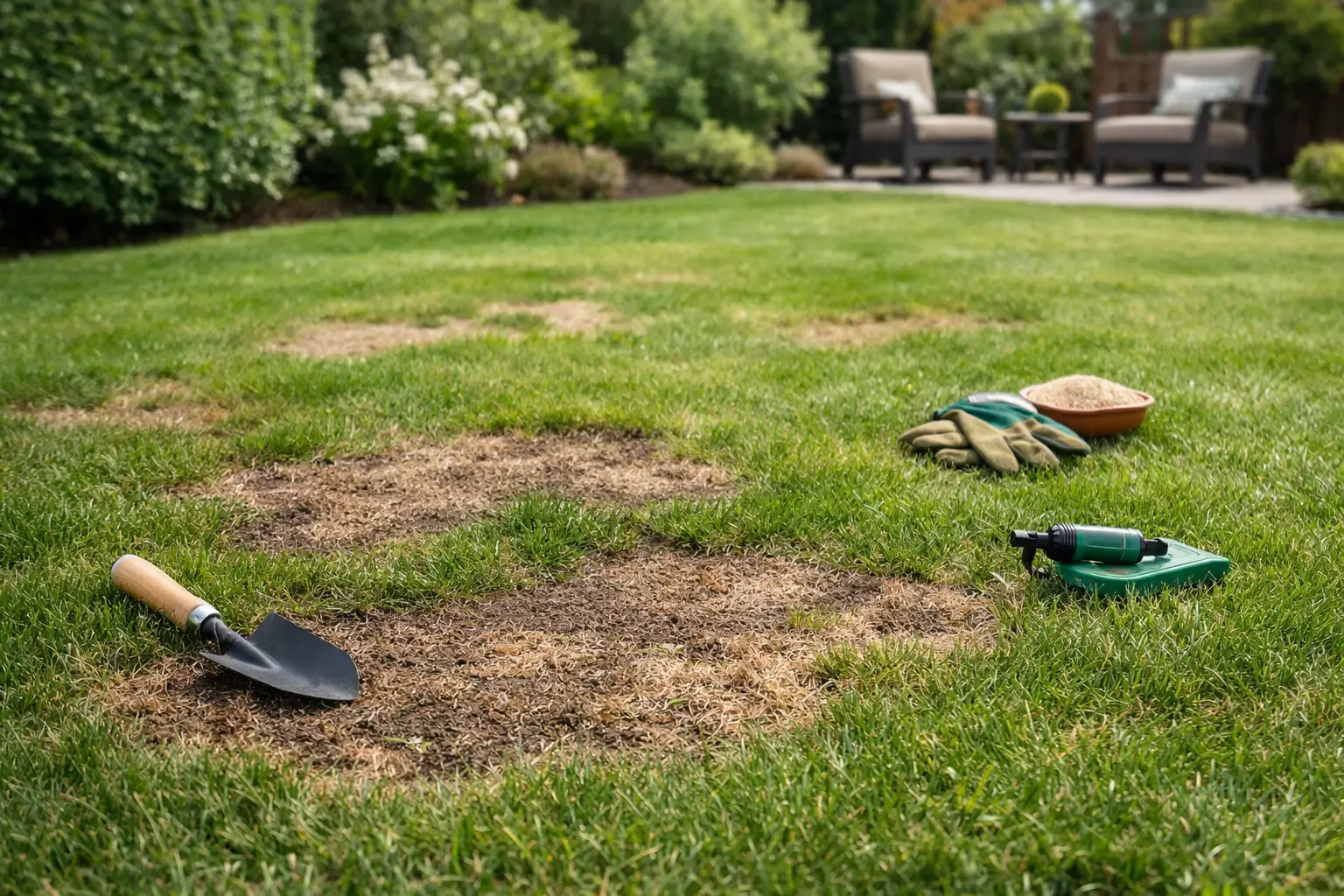
A lawn can look perfectly fine from the kitchen window, then reveal bald circles, thin strips and yellowing patches the moment you step outside. If you are asking, “why is my lawn patchy?”, the answer is usually not one dramatic problem. It is often a mix of soil conditions, weather, mowing habits and a bit of everyday garden wear.
The good news is that most patchy lawns can be improved without turning the garden into a major project. The key is to work out what is causing the thin areas first, then give the grass the right fix rather than simply scattering more seed and hoping for the best.
Before buying lawn feed or grass seed, take a close look at where the patches are appearing. Their position is a useful clue. Bare grass by the gate, washing line or patio is often caused by foot traffic. A thin lawn under trees may be dealing with shade, thirsty roots and fallen leaves. Random yellow or brown spots can point to poor drainage, dog urine, pests or disease.
Also check whether the grass is truly dead or simply dormant. During a dry British summer, lawns often turn brown and sparse to conserve water. In many cases, grass recovers once regular rain returns. Seeding heavily into dry, hard ground can waste time and seed, so test the soil first. If it is dusty, cracked and difficult to push a fork into, moisture and aeration are the priority.
Compaction is one of the most common reasons for a lawn that looks thin in busy areas. Repeated walking, children playing, pets running the same route and even sitting water all press soil particles together. That leaves less room for air, water and roots.
Try pushing a garden fork a few centimetres into the affected area. If it is a struggle, the soil is likely compacted. In spring or early autumn, aerate the lawn by making holes across the patchy sections with a fork or lawn aerator. On small lawns, a simple fork does the job well. Work when the soil is moist, not muddy, so you do not create a mess.
For particularly heavy or clay-rich ground, brushing a light top dressing of lawn soil or a suitable sandy mix into the holes can improve drainage over time. Do not add a thick layer all at once, as this can smother the remaining grass.
If a patch stays soft, mossy or muddy after rain, the issue may be drainage rather than a lack of water. Grass roots sitting in wet soil struggle to get oxygen and can rot, leaving bare sections behind. Clay soil, low spots in the garden and blocked drainage routes all make the problem worse.
Aeration helps here too, but it may not solve a persistently waterlogged area on its own. Raising a low patch with several thin applications of topsoil, improving nearby drainage or choosing a tougher grass mix can be more realistic. Avoid mowing soggy grass, as wheels and footsteps compact it further.
A close-cut lawn may look neat for a day, but scalping grass is a quick route to patchiness. When the blades are cut too low, the plant has less leaf area to make energy. The soil also dries out faster and weeds get more light.
As a simple rule, never remove more than a third of the grass height in one mow. Raise the mower setting during hot, dry weather and in shaded areas. A slightly longer lawn is better able to shade its own roots, cope with family use and crowd out weeds.
Check the mower blade as well. A blunt blade tears grass instead of cutting it cleanly, leaving ragged tips that can turn pale or brown. Sharpen or replace it regularly, especially if you have caught stones, twigs or edging on the last few cuts.
Grass needs more sunlight than many people realise. Under dense trees, beside tall fences or along the north-facing side of the house, the lawn may never get enough light to grow thickly. Trees also compete for water and nutrients, particularly in late spring and summer.
You can improve matters by pruning low or overcrowded branches where appropriate, clearing leaves quickly and using a grass seed mix intended for shade. But there is a trade-off: even shade-tolerant lawn seed has limits. If an area receives very little daylight and stays dry beneath a mature tree, a barked bed, ground-cover planting or stepping stones may be a lower-maintenance choice than repeatedly reseeding grass.
Some lawn damage is more localised. If you can pull up sections of turf easily and see grubs in the soil, leatherjackets or chafer grubs may be feeding on the roots. Birds, foxes and badgers may then dig up the lawn while searching for them. The best approach depends on the pest and the time of year, so identify the culprit before treating the whole garden.
Dog urine can also cause small brown patches, sometimes with a dark green ring around the outside. The concentrated salts and nitrogen scorch the centre while fertilising the edge. Watering the spot soon after your dog has been can dilute it, although this is not always practical. Training them to use one less visible part of the garden can save the main lawn from repeated damage.
Fungal lawn diseases are more likely when conditions are damp, the grass is overfed with nitrogen, or clippings and thatch are left to build up. You may see discoloured circles, orange-brown marks or a cottony growth in humid weather. Improve airflow, avoid late-night watering and remove heavy layers of dead material before reaching for a treatment.
Thatch is a layer of dead stems, roots and organic debris sitting between the green grass and the soil. A little is normal, but a thick layer prevents water and feed reaching the roots. It can make a lawn feel springy underfoot and leave grass shallow-rooted.
Scarifying, or raking out thatch, is usually best done in early autumn or mid-spring when grass has time to recover. Use a lawn rake for a small space, or a scarifier for a larger garden. It can look alarming immediately afterwards, but it gives healthy grass room to grow. Follow with overseeding and a light application of suitable lawn feed if the weather is mild and the soil is moist.
Moss thrives where grass is already struggling, especially in shade, compacted ground or poorly drained soil. Removing moss without correcting those conditions means it will usually return. Treat the cause first, then reseed thin areas with a mix suited to the location.
Early autumn is often the easiest time to repair a patchy UK lawn. The ground is still warm, rainfall is more reliable and weeds are less aggressive than in spring. Spring works too, but newly sown areas may need more watering if the weather turns dry.
Start by raking out dead grass, moss and loose debris. Loosen the top few centimetres of soil with a hand fork, level the surface and mix in a small amount of fresh lawn soil if the ground is poor. Scatter grass seed evenly, lightly rake it in, then firm it down with the back of a rake or gentle foot pressure. The seed needs contact with soil, not a deep burial.
Keep the area consistently damp until seedlings establish. A fine-rose watering can or hose attachment is useful because a heavy jet can wash seed into clumps. Protect the patch from pets, footballs and regular foot traffic while it fills in. When the new grass reaches roughly 5 to 7 centimetres, give it a light first mow on a high setting.
For quick visual improvement, turf patches can be useful for larger bare areas. They cost more than seed and need careful watering, but they provide an instant green finish. Seed is usually the better-value choice when several areas need attention or when you are improving the whole lawn gradually.
A healthier lawn comes from small, timely jobs rather than constant fussing. Mow at the right height, clear leaves in autumn, water deeply during prolonged dry spells and aerate compacted spots before they become bare. Feed only when the grass is actively growing and choose a seasonal lawn feed rather than applying the same product all year.
If the lawn is used hard, make that easier on yourself. Add a path where everyone naturally walks, place a doormat at the back door to reduce muddy traffic, and keep a few basic garden tools ready for quick repairs. A lawn does not need to be flawless to look good. With the right attention in the problem areas, it can become thicker, greener and far more forgiving of everyday life.
