Address
86 Amesbury Road
Manchester M9 6JF United Kingdom
Are slow feeder bowls better for your dog? Find out when they help, how to choose one, and when a standard bowl is the better choice for everyday feeding.
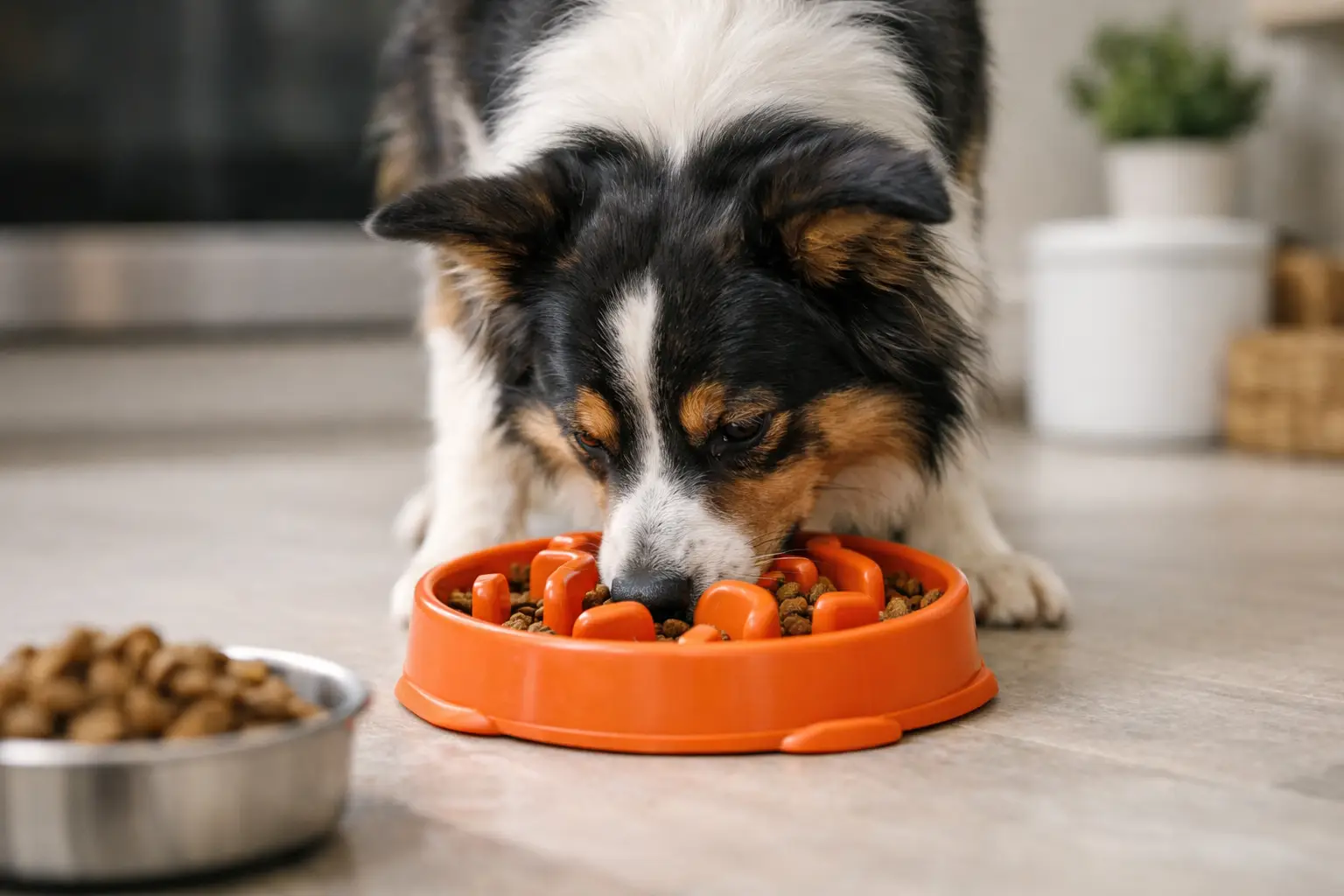
A dog that finishes breakfast before the kettle has boiled may look impressively efficient, but gulping food is not always a good thing. So, are slow feeder bowls better? For many dogs that eat too quickly, they can be a simple, useful change that makes mealtimes calmer, more engaging and easier to manage. They are not essential for every pet, though, and the best choice depends on your dog’s size, eating habits and food type.
A slow feeder bowl has raised ridges, channels or shaped sections that make a dog work around the food rather than scooping up a large mouthful at once. Instead of inhaling a whole meal in seconds, your dog has to lick, nudge and pick out smaller pieces.
That slower pace can make a noticeable difference to a food-focused dog. It turns a routine bowl of kibble into a short activity, which can be especially handy on wet days when a long walk or garden play session is less appealing. For busy households, it is one small way to add a little more enrichment without creating extra fuss.
Most slow feeders are made from plastic, silicone or stainless steel. The pattern matters more than the marketing. Wide, low channels are usually easier for dogs new to slow feeding, while deeper, tighter mazes offer more of a challenge for determined gobblers.
Usually, yes. If your dog rushes through meals, a slow feeder can help stretch eating time from a few frantic seconds to several minutes. That may reduce the amount of air they take in while eating and can help prevent the immediate post-meal discomfort some fast eaters seem to experience.
It is worth keeping expectations sensible. A slow feeder is not a cure for every tummy issue, nor does it replace veterinary advice if your dog regularly vomits, retches, has a swollen abdomen, seems distressed after meals or suddenly changes their appetite. Those signs deserve a call to your vet, particularly because serious digestive problems need prompt attention.
For an otherwise well dog, the practical benefit is often behavioural. Slower eating can reduce the excitement around the bowl, discourage food from scattering across the kitchen and give owners a little more control over a dog that treats every meal like a race.
A good slow feeder does more than put obstacles in the way. It gives dogs a chance to use their nose, tongue and problem-solving instincts. That matters for dogs that are bored easily, spend parts of the day indoors or become overexcited around food.
For some dogs, the bowl becomes a welcome part of their routine. Rather than pacing while dinner is prepared, they have a focused task once it arrives. This can be useful for lively young dogs and food-motivated breeds, but older dogs can enjoy it too if the design is not too fiddly.
Portion control is another useful bonus. A slow feeder will not change how much food you serve, but its sections make it easier to see a measured portion spread out across the bowl. That can be helpful when everyone in the household takes turns feeding the dog and you want a consistent routine.
Slow feeders are not automatically better for every dog. A relaxed eater who takes their time with a normal bowl may gain very little from a maze-style design. There is no need to make a straightforward meal difficult simply because slow feeders are popular.
Dogs with very short muzzles, dental pain, missing teeth or reduced mobility may struggle with narrow grooves and high ridges. A senior dog with arthritis may also find it uncomfortable to work at a bowl that slides about the floor. In these cases, a wide, shallow bowl, a raised feeding position if advised by your vet, or an easier slow-feeder pattern may be more suitable.
Dogs that guard food can be another exception. Adding a challenging bowl may increase frustration for some pets rather than settling them. Feed them in a quiet, separate space and avoid putting hands near the bowl while they eat. If guarding is a regular issue, a qualified behaviourist or vet can help you make a safer plan.
Start with your dog’s nose, not just their body size. A broad-faced dog needs open channels they can reach comfortably, while a smaller dog may do well with a more detailed pattern. The bowl should hold their usual meal without being packed to the top, as overfilling can defeat the point and make food tumble out.
For dry food, most rigid slow feeder bowls work well. For wet, raw or softened food, look for a design with rounded grooves that you can clean properly. Silicone lick mats can also slow down softer meals, although they are better for supervised use if your dog is likely to chew them.
A non-slip base is well worth having, particularly on kitchen tiles or laminate. If the bowl skates around the room, your dog may become frustrated and you will be wiping up dinner. Check that it is easy to wash too. Food can collect in awkward corners, so a dishwasher-safe design or one with smooth, rounded channels makes everyday cleaning much easier.
Avoid choosing the most complicated option straight away. A bowl that is too difficult can leave a hungry dog frustrated, especially if they are used to finishing in under a minute. Begin with an easier pattern, watch how they cope and only move to a more challenging design if they still eat at top speed.
Use part of your dog’s normal meal for the first few attempts, rather than filling every gap to the brim. Let them explore it in a calm spot and stay nearby to make sure they are not chewing the bowl or becoming upset.
If your dog is struggling, choose a design with wider spaces or scatter a little food across a snuffle mat instead. If they master it immediately, that is fine – the aim is to slow them down a little, not turn dinner into an exam. Keep fresh water available as usual and wash the bowl after each meal.
The easiest approach is to keep the rest of the routine the same. Measure your dog’s usual portion, place it in the slow feeder and feed at their normal time in a quiet area. Changing food, bowl, location and schedule all at once can make it harder to tell what is helping.
If you feed twice a day, you do not have to use a slow feeder for both meals. Some owners use one at breakfast when the house is busy, then serve dinner in a regular bowl. Others save it for the meal when their dog is most likely to gulp. There is no prize for using it every time.
For households with more than one dog, separate feeding is still the sensible option. A slow feeder can slow one dog down, but it will not stop another pet from hovering nearby or trying to steal food. Giving each dog their own calm space makes mealtimes safer and more relaxed.
A slow feeder bowl is a practical buy when your dog eats too quickly, needs a little indoor enrichment or would benefit from a calmer meal routine. It is a modest change, but the right design can make breakfast and dinner feel far less frantic.
Choose a bowl that suits your dog’s face, food and ability, keep it clean, and do not force a difficult pattern on a dog that is clearly not enjoying it. The best feeding set-up is the one that lets your dog eat comfortably while making your day that bit easier – easy peasy, mate.
