Address
86 Amesbury Road
Manchester M9 6JF United Kingdom
Find the best horse hoof picks for daily care, from simple metal tools to brush combos, plus tips on grip, safety and cleaning for UK horse owners alike.
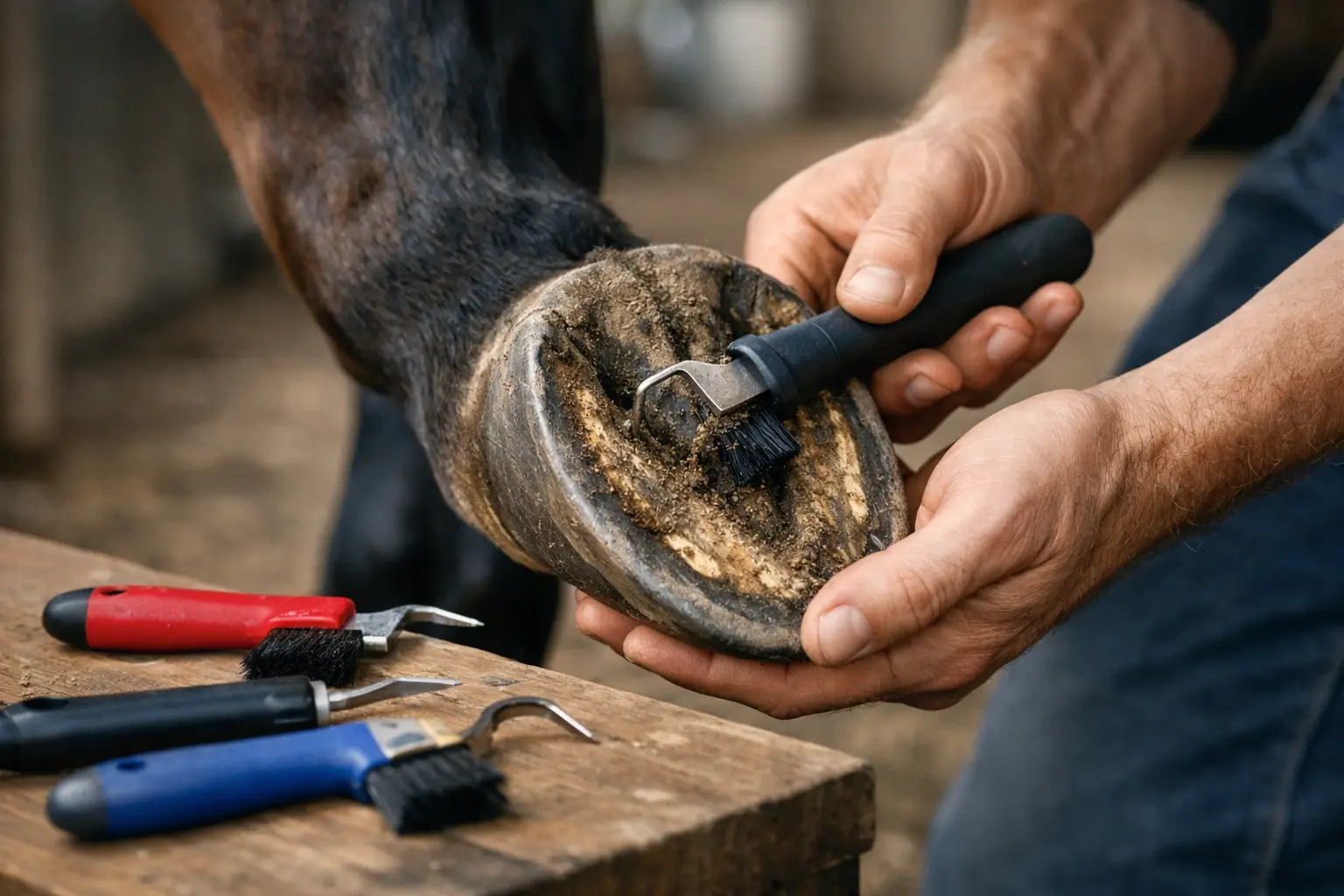
A hoof pick is small enough to disappear into a grooming bag, yet it earns its place every time your horse comes in from a muddy field, stony track or freshly bedded stable. The best horse hoof picks make this routine job quicker, more comfortable and less likely to leave packed dirt behind. A good pick is not about fancy extras. It is about a strong point, a handle you can hold onto with cold fingers and a design that suits the way you and your horse get on with daily hoof care.
For most owners, a dependable hoof pick is one of those simple essentials worth keeping in more than one place: the grooming kit, the lorry or trailer, and perhaps the stable. Here is what to look for before choosing one.
Cleaning feet lets you spot changes before they become bigger problems. You may notice a lodged stone, a loose shoe, an unpleasant smell, a puncture, a thrush-prone frog or a section of sole that looks different from the day before. It also removes mud, bedding and manure that can trap moisture against the hoof.
How often depends on turnout, weather, footing and your horse’s individual needs, but checking feet before and after riding is a sensible habit. Horses standing in wet, dirty bedding may need attention more often. On dry days, the job can be quick. After a muddy winter turnout, it may take a little patience.
A hoof pick does not replace regular farrier care. If your horse is lame, has heat in the foot, a strong digital pulse, a deep puncture, discharge or a suddenly foul smell, stop and seek advice from your farrier or vet. The aim is to clean and check, not to dig aggressively into the hoof.
The right option depends less on price than on construction and comfort. A well-made basic pick can be better than a bulky multi-tool that is awkward to use.
The working end should be firm enough to loosen compacted mud and small stones without bending. Stainless steel is a practical choice because it is resistant to rust, especially useful in the UK where grooming tools often meet rain, wet grass and damp stable yards. Coated metal can work well too, provided the coating does not chip or become slippery.
Avoid very thin, flimsy picks if your horse regularly brings in heavy clay. They may flex when you need steady pressure, making the task harder on your hand and less effective around the grooves beside the frog.
The handle makes a bigger difference than many people expect. Rubberised, textured or moulded grips are easier to hold when wet or when you are wearing gloves. A rounded handle suits many hands, while a slightly shaped grip can feel more secure if you clean several horses each day.
Wooden handles have a traditional look and can feel pleasant in the hand, but they need to be kept dry and checked for splinters or cracks. Plastic handles are lightweight and easy to wipe clean. The best choice is the one that feels controlled rather than oversized or flimsy.
A hoof pick with an attached brush is useful for everyday grooming. Once the main mud is removed, the bristles can sweep away smaller bits of grit and dry bedding so you can see the sole and frog clearly. This is especially handy before applying a hoof dressing, although the hoof should be clean and dry first.
There is a trade-off. Brush combinations are convenient, but the brush can get clogged with wet mud and may wear sooner than the pick itself. If your horse has particularly muddy feet, a separate stiff brush and a plain metal pick can be easier to clean and replace.
A narrow, gently curved point reaches into the collateral grooves beside the frog without needing force. A very sharp point is not automatically better. You want enough precision to lift debris, not something that encourages you to scrape at live tissue.
Compact picks fit neatly in a pocket or grooming bag, while larger handles can suit people who prefer a fuller grip. If you have children helping with grooming, choose a simple tool they can hold safely and supervise the job closely.
For a horse kept at home, a basic stainless-steel pick with a rubber grip is often the sensible everyday answer. It is durable, affordable and quick to rinse off after use. Keep a second one in your riding kit so you are not caught out when travelling to a lesson, show or hack.
If you are grooming on the go, a pick with a brush is handy because it reduces the number of loose tools in your bag. It is also useful for a pony club kit, provided the handle is comfortable for smaller hands. Just give the bristles a proper rinse after muddy days rather than leaving them packed with dirt.
For owners with stiff hands, arthritis or reduced grip strength, prioritise a thicker, soft-touch handle. A lighter tool is not always easiest if it twists in the hand, so try to choose one with a secure shape and a grip that does not become slick when wet.
In very stony areas, remember that a hoof pick is for removing loose material, not levering out anything firmly embedded. If a stone appears wedged deeply or your horse reacts when you touch the area, do not force it. Keep the horse still, note what you can see and get professional advice.
Start with your horse standing on level, non-slip ground. Stand close to the shoulder when asking for a front foot, or beside the hip for a hind foot, rather than directly in front of or behind the leg. Run your hand down the leg and use the usual cue your horse understands. Keep your body balanced and do not pull the hoof uncomfortably high.
With the sole facing you, work from the heel towards the toe. Use the pick to ease out debris from either side of the frog, following the natural grooves. Work steadily in short movements instead of stabbing or digging. The frog is a living, sensitive structure, so clean around it carefully rather than trying to hollow it out.
Once the packed material is gone, use the brush if you have one. Look at the whole foot: the frog, sole, white line, nail heads and shoe if your horse is shod. A quick, consistent check helps you learn what is normal for your own horse.
If your horse snatches a foot away, stay calm and reset. Repeatedly hanging onto a struggling leg can put both of you at risk. Some horses need more handling practice, while others may be uncomfortable. If a normally cooperative horse suddenly will not pick up a foot, treat that as useful information rather than bad behaviour.
Rinse the pick after use, especially after wet or manure-filled feet, then dry it before putting it away. A quick wipe reduces rust and stops the grooming bag becoming a source of hardened mud. If the tool has a brush, wash through the bristles and leave it somewhere airy to dry.
Check the metal end from time to time. Replace the pick if it is bent, loose in the handle, cracked or heavily rusted. It is a low-cost piece of kit, and a damaged one is more frustrating than useful.
It also helps to keep your hoof-care essentials together: hoof pick, stiff brush, clean cloth and any products recommended for your horse’s particular needs. A small, organised kit means you are more likely to check feet properly rather than putting it off when time is tight.
A dependable hoof pick will not make a muddy winter yard disappear, but it can make one of the most useful daily checks feel easy-peasy. Choose one that sits comfortably in your hand, clean it after use and let those few quiet minutes with each hoof become part of knowing your horse well.
