Address
86 Amesbury Road
Manchester M9 6JF United Kingdom
A small kitchen organiser example that saves space: practical ways to tidy cupboards, drawers and worktops for faster, calmer everyday cooking at home.
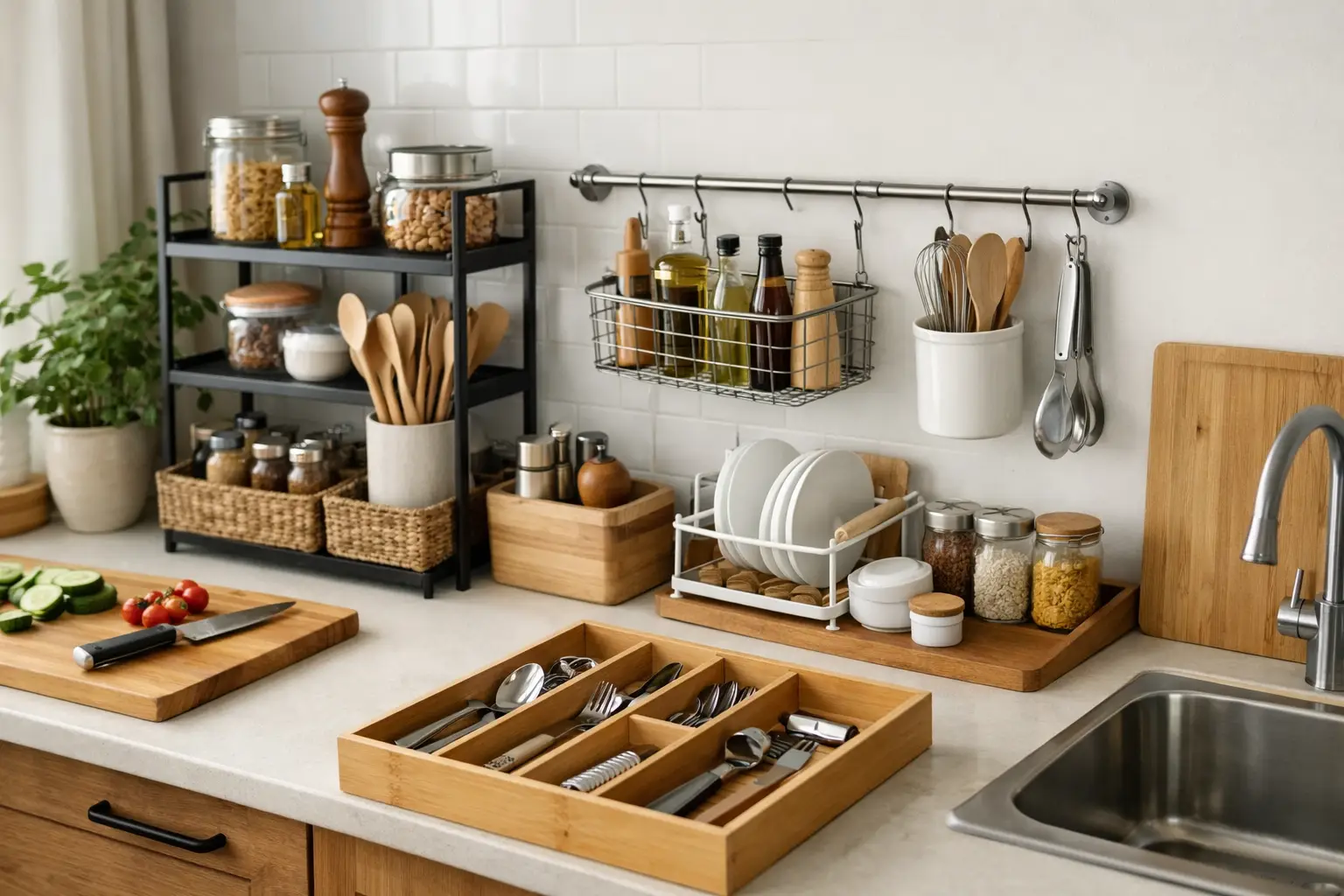
A small kitchen organiser example should do more than make a cupboard look neat for a photograph. It should help you find the tea bags before the kettle boils, put the right pan to hand on a busy weeknight and stop tins disappearing behind packets of pasta. In a compact kitchen, every shelf, drawer and bit of worktop needs a clear job.
The good news is that you do not need a full refit or matching containers for everything. A few sensible organisers, placed where you actually use things, can make a galley kitchen, studio flat kitchen or smaller family kitchen feel far easier to manage.
Before buying storage, notice where the daily hold-ups happen. Is the cutlery drawer jammed? Does the under-sink cupboard become a pile of cleaning bottles? Are spices taking over the worktop because the cupboard is too awkward to use? Solve the frustrating areas first, rather than buying organisers for cupboards that already work well enough.
A useful rule is to keep everyday items between waist and eye level. Mugs, plates, breakfast food and cooking oils belong where they can be reached without moving three other things. Less-used baking tins, serving dishes and seasonal equipment can take the higher shelves.
It also helps to organise by task instead of product type alone. Keep tea, coffee, sugar and mugs near one another for a simple drinks station. Put cooking utensils, pans and oils close to the hob. Group food containers with foil, cling film and sandwich bags near the food-prep area. The shorter the journey around the kitchen, the less clutter tends to build up.
Picture a typical small UK kitchen with a sink, a hob, one bank of lower cupboards, two wall cupboards and a narrow section of worktop. Rather than cramming each cupboard, give every area one purpose.
Use the top wall cupboard for occasional pieces: a large serving bowl, spare mugs, baking equipment and food containers that are not in regular use. On the middle shelf, add a shelf riser so plates or bowls can be stacked on two levels without creating a wobbly tower. A riser is especially handy when the shelf is tall but not deep.
Reserve the lower wall cupboard for daily dry goods. Clear, lidded containers are useful for flour, cereal, rice and pasta when packets spill or slump, but they are not essential for every item. Keep unopened packets and tins in simple handled baskets instead. Pulling out one basket is far easier than reaching into a deep cupboard and knocking items over.
In the drawer nearest the hob, use a cutlery tray with separate sections. A second shallow drawer can hold wooden spoons, spatulas, peelers and measuring spoons, with a small expandable divider to stop them sliding together. If drawers are limited, a countertop utensil pot can be the better choice, but only keep the tools you use often. A pot packed with five ladles and three whisks creates another rummaging job.
Below the hob, store saucepans and frying pans upright with a pan rack or divider. This makes the pan you need visible straight away and saves lifting a heavy stack. Lids can sit in a separate lid organiser inside the cupboard door or alongside the pans, provided there is enough clearance for the door to close properly.
The under-sink cupboard is best for cleaning products, cloths and bin bags. A pull-out caddy or handled basket lets you take supplies to the room that needs cleaning, then return them in one go. Check for pipework before choosing a rack, as a large organiser can waste space if it does not fit around the plumbing.
Deep cupboards are useful, but only when the back remains accessible. Most kitchen clutter is not caused by owning too much. It happens because useful things are hidden behind less useful things.
Turntables work well for oils, vinegars, sauces and cleaning sprays. A quick spin brings the bottle at the back forward, which is helpful in a corner cupboard or narrow pantry. Choose one with a raised edge so bottles stay in place.
For packets, tins and snacks, baskets are often more practical than loose shelving. Label the front with broad categories such as “breakfast”, “cooking sauces” or “lunchbox”. Avoid overly detailed labels unless your household will maintain them. A basket marked “baking” is easy to follow; separate tubs for every kind of sprinkle may be more effort than it is worth.
Shelf risers are another straightforward win. They create a second level for mugs, bowls or tins, but measure the cupboard height first. A tall riser can make the shelf below too cramped for the items you need to store.
Cupboard doors can hold slim racks for spices, wraps, chopping boards or cleaning cloths. They are valuable in a small kitchen, although they are not suitable for heavy glass jars or large bottles. Always allow room for the rack when the door closes, particularly if shelves are close to the front edge.
Adhesive hooks can hold oven gloves, tea towels or lightweight utensils. They are a quick fix for rented homes, but check the surface first and avoid sticking them to peeling paint or textured cupboard doors. A simple over-door hook may be the safer option.
An entirely clear worktop is not the only sign of an organised kitchen. If you make tea several times a day, a neat tray with the kettle, tea, coffee and sugar can be more useful than putting every item away after each use. The aim is a worktop that supports your routine without becoming a permanent dumping ground.
Choose a small number of countertop essentials: perhaps a utensil holder beside the hob, a compact bread bin, and a tray for drinks supplies. Keep appliances based on frequency. A toaster used daily earns its place; a bulky smoothie maker used twice a month may be better stored in a cupboard.
Vertical storage makes a noticeable difference in tight spaces. Store chopping boards, baking trays and frying pan lids upright rather than flat. A vertical rack uses the height of a cupboard and lets you remove one item without disturbing the rest.
Matching jars and labelled baskets can look brilliant, but organisation only lasts when it is easy to put things back. For a busy family kitchen, wipe-clean plastic caddies, sturdy baskets and drawer dividers are often the most forgiving choice. For a single-person flat or a careful home cook, glass jars may be worth the extra effort and cost.
Think about cleaning, too. Open wire racks allow crumbs through and are simple to see into, while solid trays catch spills but need emptying and wiping. Clear containers make stock levels obvious, but decanting food takes time and some packaging contains cooking instructions or allergy information you may want to keep.
Measure every cupboard, drawer and shelf before ordering. Note the usable depth, not just the width, and remember hinges, handles, pipes and door clearance. This small step prevents the classic problem of a handy organiser that cannot fit where it is needed.
EasyPeasyMate.Shop is built around the sort of practical household essentials that make these small changes easier to put in place, whether you are sorting one awkward drawer or giving a whole kitchen a sensible reset.
Once the kitchen is organised, keep it manageable with a five-minute check each week. Return stray items, wipe the caddies, recycle empty packets and move anything that has migrated to the worktop. Before a larger food shop, take a quick look through dry goods so duplicates do not fill valuable cupboard space.
The best small kitchen setup is not the one with the most containers. It is the one that makes making breakfast, packing lunches and cooking tea feel that bit less fiddly. Start with the place that annoys you most, give it a clear purpose, and let that one useful change make the next job easier.
