Address
86 Amesbury Road
Manchester M9 6JF United Kingdom
Find the best washing line accessories for a neater, faster laundry day, from pegs and line props to covers and storage that stand up to UK weather well.
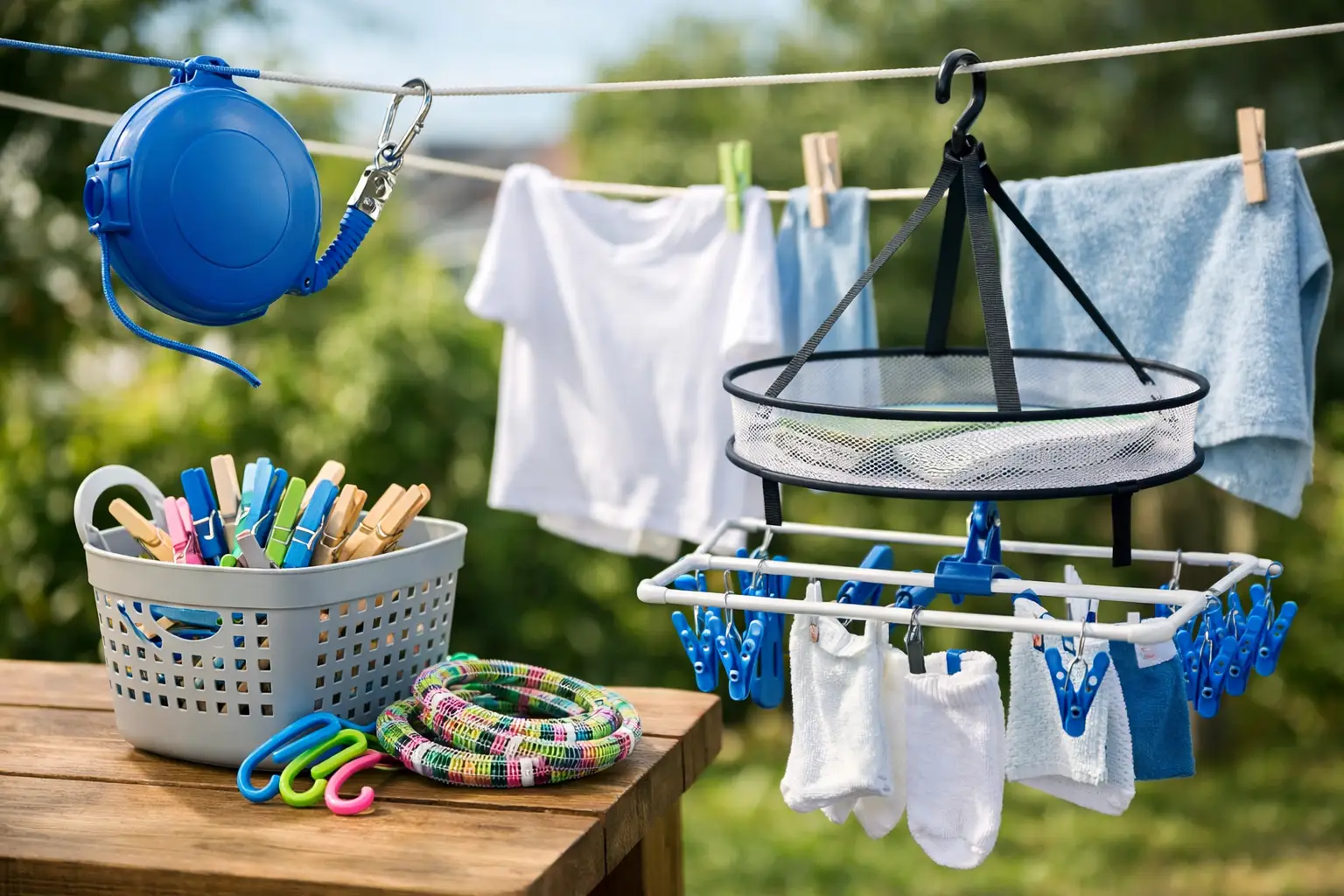
A washing line is one of the cheapest ways to dry clothes, but a few missing essentials can turn a fresh-air laundry day into a battle with sagging sheets, snapped pegs and clothes on the grass. The best washing line accessories make the whole job quicker, tidier and far less dependent on a perfectly still British afternoon.
Whether you use a rotary airer, a traditional line between posts or a compact retractable line by the back door, the useful extras are usually simple ones. The trick is choosing accessories that suit your space, the amount of washing you do and the weather you regularly face.
You do not need every gadget going. Start with the items that solve the problems you actually have, whether that is too little hanging space, poor storage or a line that needs constant adjustment.
These are the core accessories for most homes. If you regularly dry small items, a sock hanger or clip hanger can also earn its place. It holds dozens of socks, trousers, baby clothes or washable cloths in one compact spot, freeing the main line for larger pieces.
Not every accessory works in exactly the same way on every setup. Buying for the line you have is the easiest way to avoid clutter and make every purchase useful.
Rotary airers are ideal for family loads because they provide plenty of line in a small patch of garden. A weatherproof cover, a sturdy ground socket and a peg bag are the most useful additions here. If your airer tends to sway, check that the ground socket is secure and appropriate for the pole diameter before blaming the airer itself.
A rotary line can become crowded quickly. Hang longer items around the outside, where they get more airflow, and use inner lines for smaller garments. A clip hanger is especially useful on a rotary airer because it makes good use of the centre space.
For a line stretched between two posts or walls, tension matters most. A quality line, suitable hooks or cleats, and a line prop can make a big difference. Heavy wet towels put more strain on the line than people expect, so avoid lightweight fittings if you wash bedding often.
If the line runs across a path or patio, consider a retractable option or a simple method of taking it down when not in use. That keeps the garden easier to use and avoids an accidental clothesline-height encounter when carrying out the shopping.
Retractable washing lines are practical for terraces, courtyards and smaller gardens. Their biggest advantage is that they disappear when not needed, but they need careful tensioning. Do not overload them with soaking-heavy items, particularly if the fixing wall is not solid masonry.
A small peg bag, a compact clip hanger and dependable pegs are often all you need. In a limited space, it is better to wash smaller loads more often than pack every inch of the line and slow drying down.
The cheapest option is not always the best value when an accessory lives outdoors. Sunlight, wind, frost and rain gradually weaken plastic, metal and fabric alike.
For pegs, choose UV-resistant plastic or stainless steel if they are likely to be left outside. Wooden pegs have a traditional look and a firm grip, though they can weather over time and may need replacing sooner if kept damp. Whichever type you prefer, bring them in or store them in a covered bag after use. It takes seconds and keeps them cleaner.
For washing line itself, plastic-coated steel line is strong and easy to wipe clean, while polypropylene line is lightweight and flexible. Cotton lines may appeal for a traditional feel, but they can absorb moisture and are not usually the most convenient choice for year-round outdoor drying. A proper line tensioner helps any material perform better.
Covers should be water-resistant rather than simply thin plastic. A fitted cover with a drawstring or fastening is less likely to blow away when the weather turns. Make sure a rotary airer is dry before covering it for long periods, as trapping moisture can encourage mildew.
Accessories work best alongside a few straightforward habits. Give your line a quick wipe if it has been exposed to rain or garden dust, especially before hanging pale bedding or school shirts. Keep pegs in a bag rather than scattered in a basket outdoors, where they gather dirt and moisture.
Shake each item before pegging it out. This simple step smooths creases, speeds up drying and can reduce ironing. Hang shirts from the hem rather than the shoulders to avoid obvious peg marks, and peg trousers by the waistband so the heavier fabric hangs straight.
For bulky items, use more pegs than you think you need. A bath sheet secured at two corners can fold over in the breeze; four pegs spread across the top edge will keep it flatter and give it better airflow. On very windy days, leave a little space between items rather than filling every line.
It also pays to think about timing. A bright but breezy day often dries washing faster than a hot, still one. If rain is likely, put smaller, quicker-drying items outside first and keep thicker hoodies, towels and jeans for an indoor airer or a later load.
Some washing accessories sound useful but add little to a normal routine. Novelty peg designs, very thin mesh holders and poorly fitting covers can create more hassle than they solve. A cheap cover that rips in the first gust, for example, is not a bargain.
Likewise, do not buy a large rotary cover for a compact airer without checking measurements. Too much loose fabric catches wind, while a cover that is too tight can strain seams and be awkward to remove. Measure the folded airer, not just the diameter when it is open.
If you dry washing only occasionally, focus on quality pegs, a simple peg bag and enough line support. Busy family homes that wash daily will get more value from a cover, a clip hanger and a reliable tensioning setup. The best choice depends on how much washing you handle, rather than how many accessories you can fit in the shed.
A few well-chosen extras can make outdoor drying feel like the easy option again. Keep the setup clean, taut and ready to use, and your next load can spend less time in the basket and more time drying in the fresh air.
