Address
86 Amesbury Road
Manchester M9 6JF United Kingdom
Our guide to caravan awnings helps UK tourers choose the right size, style and fabric, then pitch, secure and care for it in changeable UK weather too.
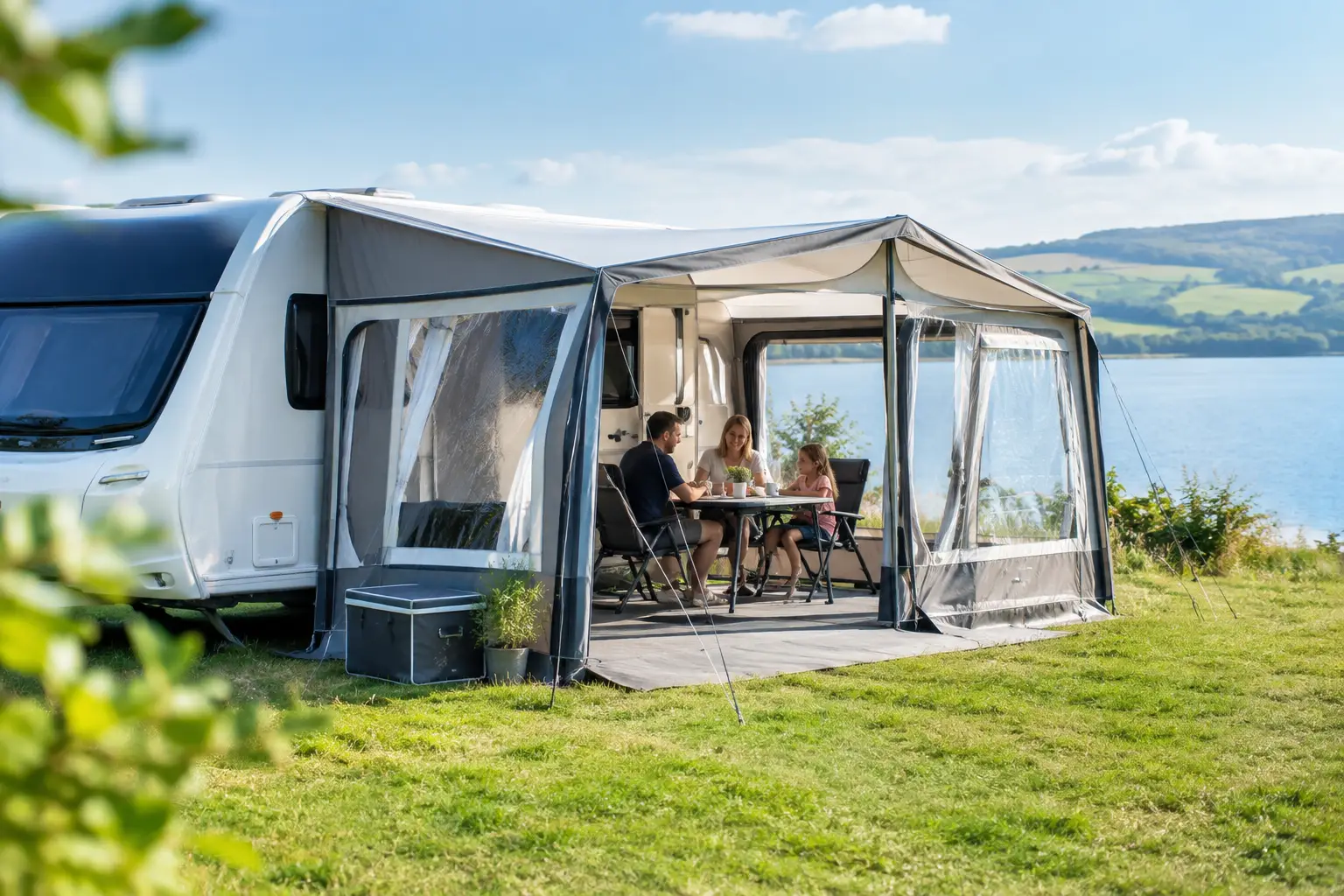
A caravan awning can turn a cramped tourer into a far more useful holiday base. It gives you somewhere to leave muddy boots, eat when the weather turns, dry towels or simply sit without everyone squeezing around the fixed table. This guide to caravan awnings cuts through the jargon, so you can choose one that suits your caravan, touring style and budget.
The best awning is not necessarily the biggest one. A couple heading away for short weekends may only need a compact porch awning for coats, shoes and a small chair. A family spending two weeks on a seaside site may value a full awning with room for a table, storage and the children’s bits and bobs.
Think about how you use the caravan once you arrive. If you mostly eat out and explore, a porch awning keeps pitching quick and leaves less kit to pack. If the awning will be your main daytime living area, extra depth and windows make a real difference. Bigger awnings also need more pegs, more time and more storage space in the caravan or car.
Do not forget campsite rules. Some pitches are tight, and a deep awning can make access awkward or leave little room for parking. Check the pitch size when booking if you are taking a larger model.
Most caravan awnings fall into three straightforward categories: porch awnings, full awnings and air awnings.
A porch awning attaches to only part of the awning rail. It is lighter, quicker to put up and usually easier to manage alone. It is a sensible all-round choice for touring couples, weekend breaks and anyone who does not want the car full of poles.
A full awning runs along the caravan’s complete awning rail. It creates the largest living space and can feel almost like an extra room. The trade-off is weight, bulk and a longer pitching job. It is often most worthwhile for longer stays, seasonal pitches or family holidays where indoor-outdoor space is at a premium.
Air awnings use inflatable beams rather than traditional metal or fibreglass poles. Many people find them quicker and less fiddly to pitch, particularly after a long drive. They still need pegging properly and they are not always lighter than a comparable poled design, so check the packed weight rather than assuming. A traditional poled awning can be a good value option and, once you know the routine, remains very dependable.
There are also drive-away awnings, but these are mainly designed for campervans rather than caravans. For a caravan, focus on models that attach securely to the awning rail and match its height.
Getting the size right is the part that saves the most hassle. For a full awning, you normally need the caravan’s A-measurement. This is the distance from the ground, around the awning rail, and back down to the ground at the other end. Your caravan handbook may list it, but measuring yourself is wise if you are buying second-hand or are unsure of the model year.
For a porch awning, check the rail length it requires and the fitting height range. Measure the clear, usable section of rail rather than guessing from the caravan length. Look out for roof lights, grab handles, windows or rails with bends that could affect where the awning sits.
Also check the rail itself. Dirt, old sealant and sharp edges make threading an awning frustrating and can damage the beading. A quick clean with a soft brush and mild cleaner before a trip makes set-up easier. If the channel feels rough or damaged, deal with that before forcing fabric through it.
Fabric affects price, packed size, breathability and how comfortable the awning feels in mixed weather. Lightweight polyester awnings are popular with frequent movers because they dry relatively quickly and are easy to handle. They can be an excellent choice for touring holidays, especially when every kilogram matters.
Acrylic fabric is generally more breathable and can feel cooler in warm conditions, which suits longer stays. It is often heavier and costs more, but many regular caravanners appreciate the more substantial feel. Seasonal awnings use tougher materials intended to stay up for extended periods, yet they are not a shortcut around checking site rules or maintaining the awning through bad weather.
Look beyond the headline material. Good zips, strong pegging points, covered seams, curtains or privacy panels, and useful ventilation all matter. Large clear windows bring in light, but blinds or curtains are handy when you are parked close to neighbouring units. If you tour in shoulder seasons, a draught skirt and wheel arch cover can make the space noticeably cosier.
Choose a dry, reasonably level pitch and clear away stones, twigs and anything that could rub through the groundsheet. Lay the awning out first, with the beading facing the caravan, and zip removable panels in place if the manufacturer recommends it. This is usually easier than wrestling with them after the frame is standing.
Feed the beading through the awning rail steadily, with one person guiding it and another supporting the fabric where possible. Avoid pulling hard from one end. A little awning rail lubricant made for the job can help, but never use an oily household product that may mark fabric or attract grime.
For a poled awning, assemble the frame according to the instructions, then tension it gradually and evenly. For an air awning, close the valves, inflate to the stated pressure and fit storm straps if supplied. In either case, peg the corners first, square the awning to the caravan, then work around it. Pegging in a hurry is how doors end up misaligned and rain channels fail to drain properly.
Use suitable pegs for the ground. Standard pegs may be fine on firm grass, while softer or stony ground can need stronger screw-in or rock pegs. Carry a mallet, peg puller and a few spare pegs. They are small items until one bends on the first night.
Awnings are designed for outdoor use, but they are not fit-and-forget shelters. Rain can collect in a sagging roof, so keep the fabric correctly tensioned and clear pooled water promptly. Open vents and a window slightly where conditions allow to reduce condensation, especially when cooking or drying clothes.
Wind deserves extra attention. Fit storm straps securely, check pegs after the first hour and recheck them after heavy rain. If a strong wind warning is forecast, follow the manufacturer’s advice and use your judgement. Sometimes taking the awning down is the sensible option, especially on an exposed coastal or hillside pitch.
Never use a barbecue, portable gas heater or charcoal burner inside an awning. The fire and carbon monoxide risk is serious, even with doors open. Keep cooking appliances outside in a clear, stable area, and make sure your caravan’s smoke and carbon monoxide alarms are working before every trip.
When it is time to leave, brush off loose dirt before removing the awning from the rail. Pack the poles or deflated air beams separately and avoid dragging fabric over gravel. If you must pack it wet, unpack and dry it fully as soon as you get home. Storing a damp awning is a fast route to mildew, unpleasant smells and weakened fabric.
At home, inspect the beading, zips, seams and pegging points. Small repairs are far simpler before the next holiday. Wash only as the care instructions allow, and avoid harsh household cleaners that can affect waterproof coatings. Store the awning somewhere dry, off a cold garage floor and away from rodents.
A breathable groundsheet helps protect the awning floor while allowing the pitch beneath to breathe, which many campsites require. Door mats keep grit out of the caravan, while a compact folding storage unit stops shoes, torches and charging leads taking over the table. A simple LED lantern makes late-night trips to the toilet block easier without needing to leave the main lights on.
You do not need to buy every accessory at once. Start with the essentials for safe pitching and comfortable use, then add items after a couple of trips when you know what would genuinely make life easier.
The right caravan awning should feel like a useful extension of your holiday, not another complicated job on arrival. Choose the size you will use, practise pitching once before setting off, and you will have more time for the kettle, the view and a properly relaxed break.
