Address
86 Amesbury Road
Manchester M9 6JF United Kingdom
Corded vs cordless vacuums: compare power, run time, weight and cost to choose the right cleaner for your home, pets, stairs and daily messes with ease.
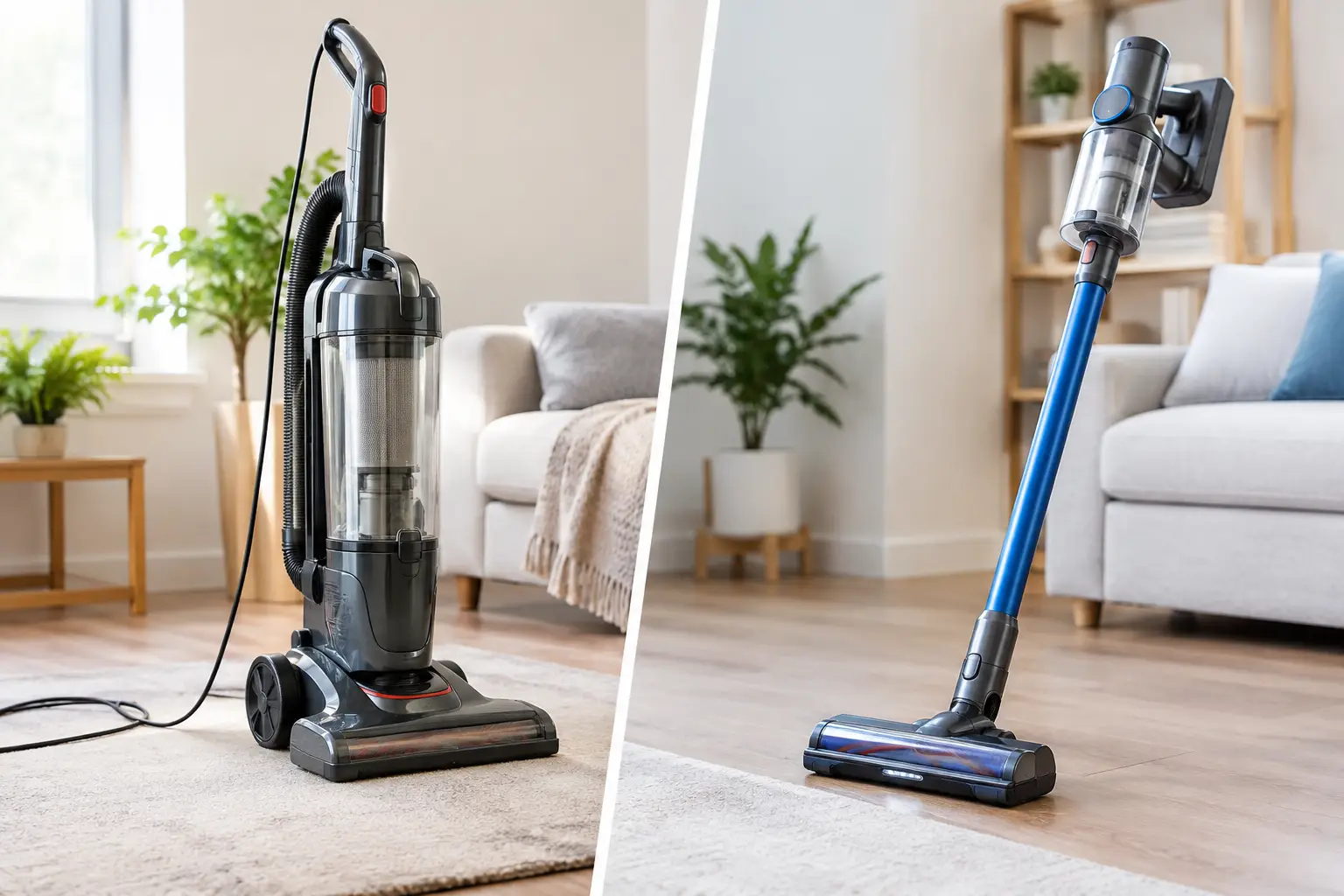
A vacuum that runs out of charge halfway through the stairs is frustrating. So is dragging a heavy cleaner from socket to socket when you only need to tackle biscuit crumbs under the kitchen table. The choice between corded vs cordless vacuums comes down to how your household gets messy, how much space you have and how you prefer to clean.
For some homes, a corded model remains the sensible workhorse: dependable power, no charging and a generous bin for a proper weekly clean. For others, a cordless vacuum makes everyday jobs much quicker, which can mean floors get cleaned more often. Here is how to choose without overcomplicating it.
| Feature | Corded vacuum | Cordless vacuum | |—|—|—| | Power supply | Mains electricity | Rechargeable battery | | Cleaning time | As long as it is plugged in | Limited by battery run time | | Suction consistency | Usually steady throughout | Can vary by power mode and battery level | | Weight and handling | Often heavier, with a cable | Usually lighter and easier to carry | | Best for | Larger homes and deep cleans | Quick cleans, stairs and everyday spills | | Storage | May need more cupboard space | Often wall-mounted or compact | | Upfront cost | Often better value | Can cost more, especially with spare batteries |
These are broad patterns rather than hard rules. A well-made cordless vacuum can be very capable, while a compact corded model may be easier to use than an older, bulky machine. The right fit is about real household habits, not just the specification on the box.
A corded vacuum is built for uninterrupted cleaning. Plug it in, work through the rooms and keep going until the job is done. That is particularly useful in larger homes, busy family houses and properties with lots of carpet.
Corded vacuums draw power from the mains, so there is no battery to manage. This matters if you like to vacuum the whole house in one session, including bedrooms, landings, upholstery and the car. You will not need to pause while a battery recharges or reduce the power setting to stretch the run time.
They are often a strong option for thick carpets, pet hair and ground-in dirt. Suction alone is not the whole story – the floorhead, brush bar and filter design also matter – but consistent mains power gives a corded cleaner a practical edge when the job is demanding.
For a three-bedroom house, a large flat or a home with several carpeted rooms, a corded vacuum can make better sense. Look at the cable length before buying. A longer lead means fewer socket changes and less backtracking through the house.
A larger dust container is another advantage. If you have children, pets or a household that seems to produce crumbs the moment you tidy up, fewer trips to the bin are welcome.
Corded models often offer solid cleaning performance for the price. They also avoid one long-term issue with rechargeable products: batteries lose capacity over time. Many cordless cleaners still last well with regular care, but a corded vacuum removes that consideration altogether.
The trade-off is obvious. You need a socket nearby, and the cable can catch on furniture or feel awkward on stairs. Cable management matters too, especially in a smaller home where storage is tight.
A cordless vacuum is at its best when speed and convenience change your cleaning routine. Instead of getting out a full-size cleaner for a small mess, you can pick it up, clean the area and put it back on charge in a few minutes.
Cordless models are ideal for the everyday jobs that can otherwise build up: hallway grit, pet hair on the sofa, cereal around the breakfast table or soil brought in from the garden. They are also handy for a quick pass before visitors arrive.
This is their real strength. A cordless vacuum may not always replace a powerful mains machine for a full deep clean, but it removes the faff that makes people put off small jobs. In a busy home, that convenience has real value.
Without a cable to trail behind you, stairs are simpler to tackle. Lightweight stick vacuums are easier to carry between floors, and many convert into handheld cleaners for upholstery, cupboards and tight corners.
That flexibility is useful beyond the living room. If you regularly clean a car, caravan, porch or utility room, a cordless model can be a practical grab-and-go tool. Check the included attachments, though. A crevice tool and motorised mini brush can make far more difference than a long list of features you will never use.
Many cordless vacuums are designed to stand in a charging dock or hang on a wall mount. For a flat, compact house or utility cupboard with limited room, that can be much easier than storing a larger upright cleaner and its hose.
Just make sure the charging position is genuinely convenient. If the dock is hidden behind boxes in the garage, the vacuum is less likely to be returned to charge after use. A clear spot near the kitchen, hallway or utility area usually works best.
Battery run time is one of the biggest considerations with cordless vacuums, but the headline figure can be misleading. Brands commonly quote the longest possible time in an eco setting with a non-motorised tool. Use a powered floorhead or boost mode and the available time will be much shorter.
Think about the cleaning session you actually do. For a quick daily tidy, even 15 to 20 minutes of effective run time may be plenty. For a whole-house clean with carpets and pet hair, you may want a model with a removable battery, a spare battery or enough capacity to finish in one go.
Charging time matters as well. A vacuum that needs several hours to recharge is perfectly manageable when it lives on its dock, but not if you expect to use it repeatedly throughout the day. Keeping filters clean and emptying the bin before it is packed full can also help a cordless vacuum perform at its best.
Do not choose by wattage alone. It is tempting to treat a larger number as proof of better cleaning, but vacuum performance depends on airflow, floorhead design, brush action, seals and filtration as well as motor power.
For hard floors, a soft roller or suitable hard-floor setting can pick up fine dust without scattering it. For carpets, especially medium or deep pile, a good motorised brush bar helps lift hair and debris from the fibres. If your home has a mix of both, choose a cleaner that switches between surfaces easily.
Pet owners should pay close attention to the brush bar. Long hair and fur can wrap around it, reducing performance and adding another job to the week. An anti-tangle design is helpful, but it is still worth checking the brush regularly. A mini motorised tool is useful for fabric sofas, pet beds and car seats.
If allergies are a concern, look for a sealed filtration system and a filter that is straightforward to wash or replace. Empty the bin carefully too. A larger bin can be less messy to deal with, especially after a heavy shed from a dog or cat.
The purchase price is only part of the decision. Cordless vacuums may cost more upfront, particularly those with stronger motors, longer battery life or extra tools. Corded models can represent excellent value, but may be less convenient for frequent small cleans.
Both types need basic care. Empty the dust bin before airflow drops, clean filters as directed and remove hair from the brush bar. Cordless owners should follow the charging guidance in the manual and buy replacement batteries only when needed and available for their model.
There is also a practical middle ground. Some households keep a corded vacuum for the weekly full-house clean and use a cordless stick or handheld cleaner for crumbs, stairs and the car. That is not essential, of course, but it can be a smart setup for larger homes with children or pets.
Choose a corded vacuum if you want dependable cleaning time, have plenty of carpet, own pets that shed heavily or prefer to do one thorough clean each week. It is the no-nonsense choice when performance and capacity matter more than portability.
Choose a cordless vacuum if you value speed, have limited storage, clean in short bursts or want something easy to use on stairs and in the car. It is especially handy when a cleaner within reach means the mess is dealt with straight away.
Before you decide, picture the last time you vacuumed: where did you start, what was hardest to reach and did you finish the job in one go? Choose the cleaner that makes that familiar routine feel lighter. A practical vacuum is not the one with the most features – it is the one you will happily use when life gets messy.
