Address
86 Amesbury Road
Manchester M9 6JF United Kingdom
Our robot vacuum review explains the features that matter in UK homes, from pet hair and carpets to mapping, mopping and everyday upkeep before you buy.
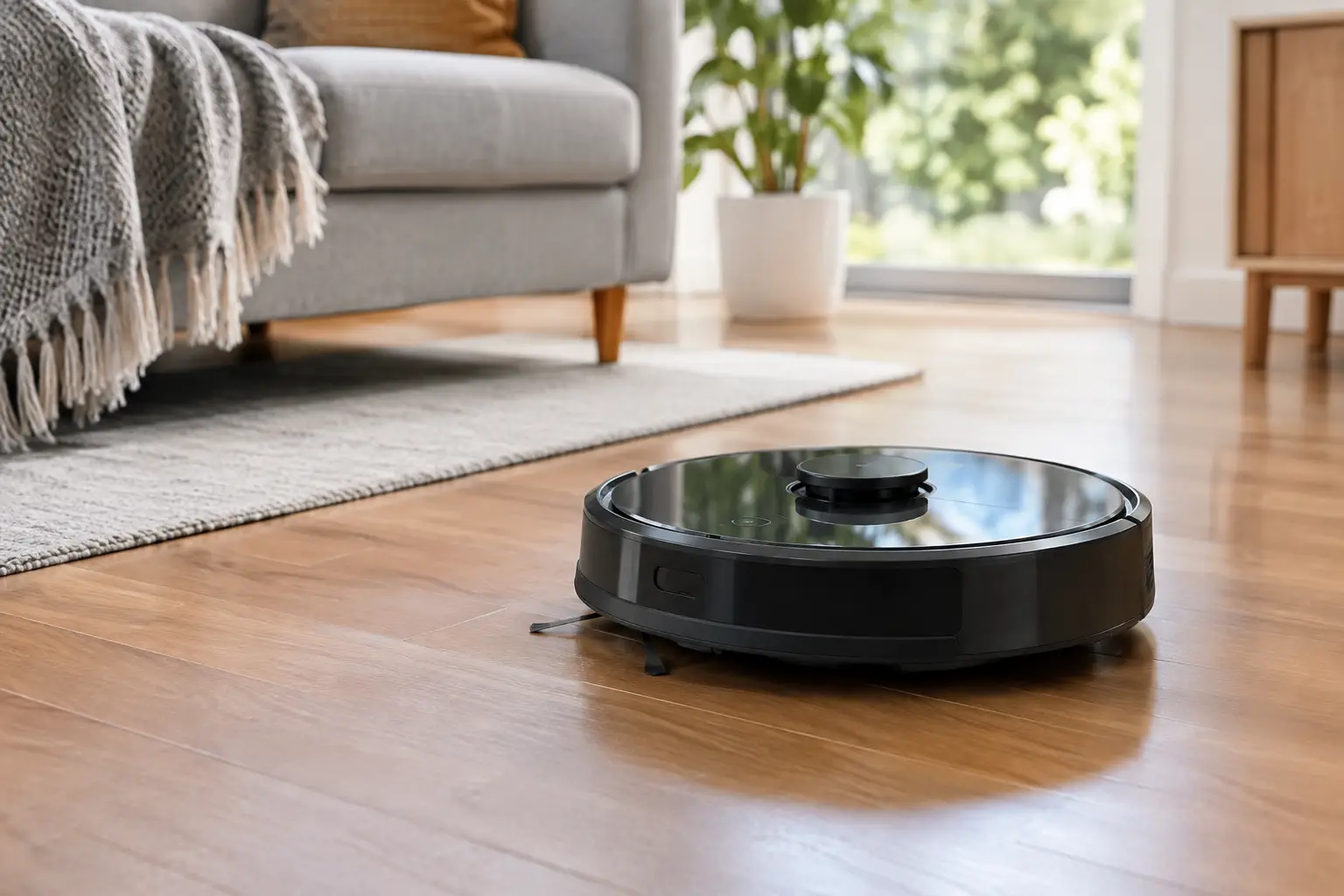
A robot vacuum can take one of the most repetitive jobs off your weekly list, but only if it suits the way your home actually works. This robot vacuum review looks beyond impressive claims and focuses on what makes a real difference: floors, pets, room layouts, cleaning time and the level of hands-on effort you are happy to keep.
For many households, the appeal is simple. Set it running while you work, collect the children from school or make tea, and come back to clearer floors. That is genuinely useful. But a robot vacuum is not a replacement for every deep clean, and the cheapest option is not always the best value if it gets stuck under a chair twice a day.
Your floor type should guide almost every buying decision. Homes with mainly hard flooring tend to get the most consistent results. Robot vacuums are very good at lifting day-to-day dust, crumbs, hair and grit from laminate, vinyl, tiles and sealed wood. Regular runs also stop debris building up along skirting boards and in busy areas such as hallways and kitchens.
Carpets are more variable. A capable model with strong suction and a brush designed for carpet can keep short-pile carpet looking tidy between proper vacuuming sessions. It may struggle more with thick pile, shaggy rugs or carpet that traps pet hair deeply. If you have a mix of hard floors and rugs, look for automatic carpet detection or an option to increase suction on carpet. It saves you from constantly changing settings yourself.
Thresholds matter too. Many UK homes have raised door bars between rooms, and not every robot can cross them reliably. Check the maximum height it can climb before buying. A machine that cleans only half the downstairs floor is not much of a time-saver.
Basic robot vacuums move around in a fairly random pattern. They can still collect dust, especially in a small flat or an open-plan space, but they may miss areas or spend too long circling the same table legs. They are best for simple rooms and light maintenance rather than a structured household cleaning routine.
Mapped models use sensors, cameras or laser navigation to learn the layout of your home. Once a map is created, you can usually send the vacuum to a particular room, set no-go zones and schedule cleaning by area. That is a practical upgrade, not just a clever extra. You can tell it to clean the kitchen after breakfast without asking it to roam through the whole house.
For homes with several rooms, pets or regular family traffic, mapping is usually worth paying for. It also makes the machine less likely to miss a corner or become confused when furniture is moved slightly. Bear in mind that camera-based navigation may need reasonable light, while laser-guided models generally work well in darker rooms too.
Mapping tells a robot where rooms are. Obstacle avoidance helps it deal with the unexpected things left within them. Think charging leads, slippers, toys, pet bowls and the odd sock that has escaped the laundry basket.
No robot vacuum can make a cluttered floor disappear. You will still get better results if you do a quick sweep for cables and small objects before a scheduled clean. Better obstacle detection simply means fewer rescue missions and less risk of a brush getting tangled. For busy family homes, this feature can be more useful than an extra cleaning mode you may never use.
It is easy to focus on the biggest suction figure, but performance comes from a combination of suction, brush design, airflow, navigation and how closely the machine reaches edges. A well-designed main brush can be especially important for homes with long hair or shedding pets.
Look for a brush that is easy to remove and clean. Hair wrap happens, even with anti-tangle designs, and a brush you can clear in a minute is far better than one that needs tools and patience. Side brushes help gather debris from edges, though they can occasionally flick light crumbs away before the vacuum picks them up. This is normal, not necessarily a fault.
If pet hair is your main concern, choose a model with a larger dust bin, a strong carpet setting and filters that are straightforward to replace. Running it little and often is usually more effective than expecting one weekly run to deal with a whole dog’s worth of fur.
A vacuum-and-mop combination is appealing for kitchens, utility rooms and hard-floored living spaces. For light, frequent cleaning, it can be very handy. It picks up dry debris first, then uses a damp pad to freshen the floor. This is useful after muddy shoes, mealtimes or everyday splashes.
The trade-off is that most robot mops are designed for maintenance, not scrubbing a neglected floor. Dried-on marks, greasy spots and grout lines will still need attention with a proper mop. You also need to fill the water tank, wash the pads and avoid sending a damp mop over carpets.
More advanced models can lift their mopping pads when they reach carpet, while simpler machines need no-mop zones or a little manual planning. If your home is mostly carpeted, a mopping function may not add much value. If you have large areas of tile, laminate or vinyl, it can be a worthwhile convenience.
Every robot vacuum needs a charging dock, and where you place it matters. It should sit on a flat, clear section of wall with enough space around it for the robot to return easily. A tucked-away corner behind furniture may look neater, but it can cause failed docking and interrupted cleaning.
Standard docks are perfectly fine if you do not mind emptying the dust bin after a few runs. A self-emptying dock collects debris into a larger bag or container, which is especially useful with pets, children or high-traffic rooms. It adds cost, takes up more room and can be noisy for a short time, but it greatly reduces day-to-day maintenance.
Some premium stations also wash and dry mop pads. These are convenient, but they need regular cleaning themselves. Check the space needed before ordering, particularly in a compact kitchen, utility room or flat. The smartest dock is not helpful if there is nowhere sensible to put it.
Before choosing, measure your practical needs rather than shopping by headline features alone. The right robot vacuum should fit your home and routine.
Also think about noise. Robot vacuums are quieter than many upright vacuums on their normal setting, but they are not silent. A schedule during working hours is ideal for some homes; for others, early evening while dinner is cooking makes more sense. If you live in a flat, avoid running a self-emptying dock late at night.
A robot vacuum is worth it when you want cleaner floors more often without adding another chore to the week. It is particularly useful in homes with hard flooring, pets, children, busy kitchens and regular footfall. The best results come from treating it like a maintenance tool: let it handle daily dust and hair, then use your usual vacuum for stairs, upholstery, corners and occasional deep cleans.
Spend more on dependable navigation, sensible obstacle avoidance and a cleaning system that matches your floor type before paying for flashy extras. A model you can schedule, empty and maintain without fuss will earn its place far more quickly than one with a long list of modes.
Choose the machine that removes the most friction from your own routine. A clear floor, a sensible schedule and a few minutes of care each week can turn a robot vacuum from a novelty into one of those small household helpers that genuinely makes life easier.
