Address
86 Amesbury Road
Manchester M9 6JF United Kingdom
Household storage trends are favouring flexible, tidy and hard-working solutions. See what suits your rooms, routine and available space at home each day.
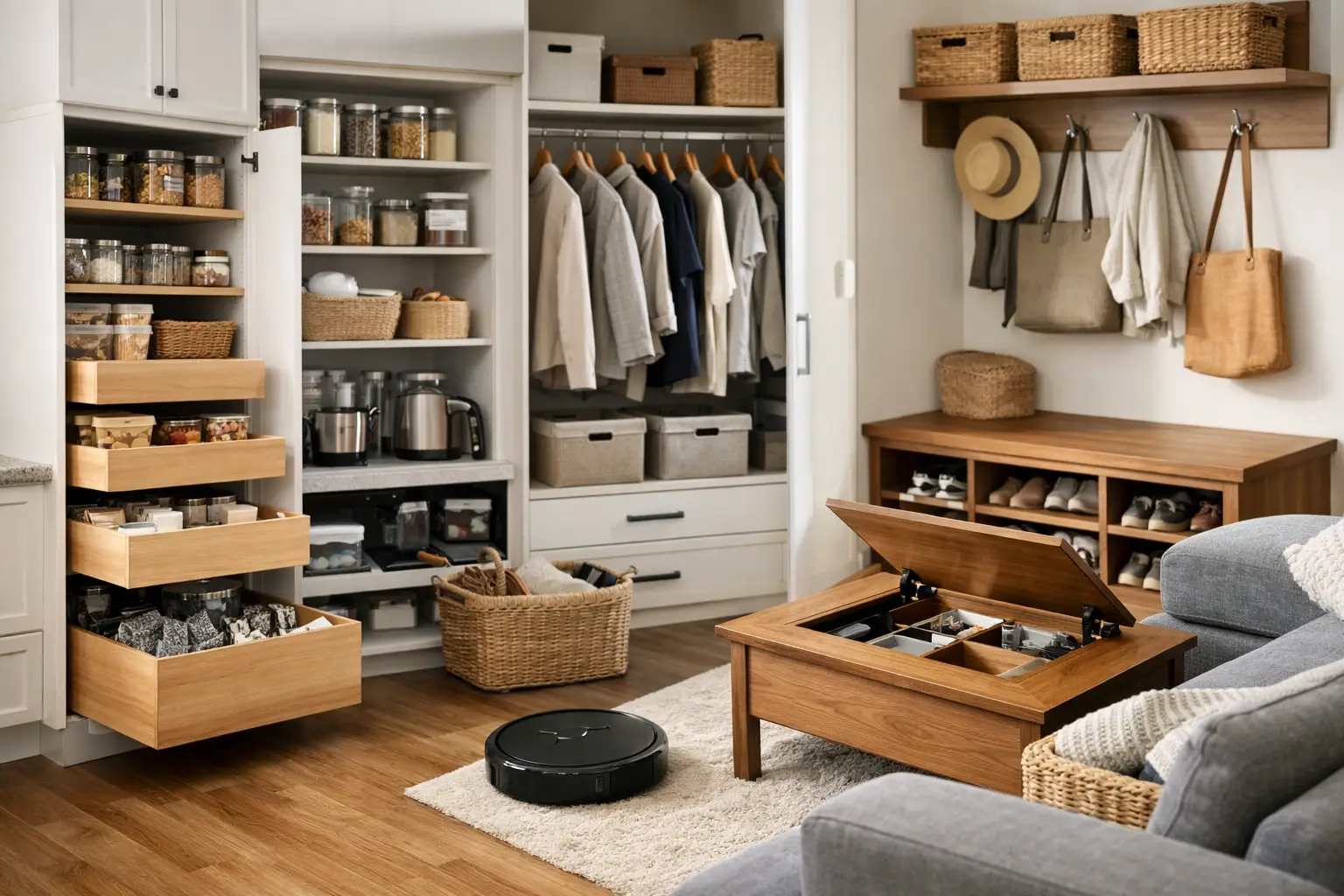
The overflowing kitchen drawer is having its moment of truth. If batteries, takeaway menus, tape measures and spare light bulbs all live together, finding one small thing can turn into a five-minute hunt. The best household storage trends are not about making every shelf look like a showroom. They are about giving everyday items a sensible home, so busy mornings, cleaning days and last-minute guests feel that bit easier.
For UK homes, where cupboard space is often limited and rooms need to work hard, the strongest trend is simple: choose storage that earns its place. That could mean a slim basket beside the sofa, stackable tubs in a utility cupboard or an under-bed box for seasonal bedding. The goal is less clutter in sight and less time spent looking for what you already own.
Storage has moved away from buying matching boxes first and hoping they solve the problem. More households are starting with the task, the room and the items they actually use. A neat-looking container is useful, but only if it is easy to open, fits where it needs to go and does not make a daily job more fiddly.
The most useful ideas share three qualities: flexibility, visibility and easy access. Flexible storage can move with changing needs, particularly in family homes. Visible storage helps prevent duplicate purchases and forgotten supplies. Easy-access storage makes it more likely that everyone puts things back where they belong.
Clear plastic tubs remain popular for good reason. They let you see cleaning cloths, craft supplies, pet accessories or spare toiletries without lifting lids and rummaging through several boxes. They are especially handy in cupboards, garages, sheds and caravan lockers, where items can otherwise disappear behind larger supplies.
There is a trade-off, though. Clear boxes show everything, including visual clutter. They work best when contents are grouped simply: one tub for cleaning refills, another for light bulbs and batteries, another for first-aid bits. Labels are still worthwhile, particularly if the box is stored high up or if several look alike.
For open shelving in a lounge or bedroom, opaque baskets can be the better choice. They soften the look of practical storage and hide the less photogenic essentials, from chargers to board games. Use clear tubs for finding things quickly and covered baskets for keeping a room calmer.
Cupboards are often full, yet much of their height is unused. Stackable containers, shelf risers and tiered organisers make better use of that awkward empty space above tins, mugs, cleaning bottles and bathroom products. This is one of the most straightforward household storage trends because it works in nearly every room without requiring a major clear-out.
Before buying stackable pieces, measure the depth as well as the height. A deep container in a shallow cupboard can leave items stranded at the back, while boxes stacked too high become annoying to lift down. In a kitchen, lower stacks are usually more practical for frequently used food. In a linen cupboard or garage, taller stacks can work well for seasonal items.
It also pays to leave a little breathing room. Packing every shelf to its limit may look efficient for a day, but it makes putting things away harder. A small gap is what keeps the system usable when life gets busy.
A drawer labelled ‘miscellaneous’ is rarely a success. A more useful approach is to organise drawers around the jobs that happen in that part of the home. In the kitchen, that might mean one small area for tea and coffee supplies, another for packed-lunch bits and another for foil, bags and clips. Near the front door, a tray or drawer insert can hold keys, dog leads, reusable shopping bags and post waiting to be dealt with.
This matters because storage has to suit the person using it. A family with school-age children may need a drop zone for shoes, permission slips and water bottles. A keen gardener might prefer a grab-and-go caddy for gloves, twine, labels and hand tools. If an item is used together with other items, store them together, even if they would not sit next to each other in a traditional category.
Drawer dividers and small trays are useful here, but avoid overcomplicating the layout. Tiny sections can create a tidy look while making everyday items awkward to put away. Give the things you own plenty of room, rather than designing a system for an idealised version of your household.
Multi-purpose furniture and unused corners are increasingly part of the storage plan, especially for flats, compact houses and shared family rooms. Under-bed storage is no longer just for old clothes. It is a sensible place for spare duvets, winter jumpers, guest towels and seasonal decorations, provided the boxes are low enough to slide easily.
Ottomans, storage benches and lidded baskets can also keep flexible living spaces under control. They are useful for toys, throws, pet blankets or hobby supplies that need to be close by but do not need to be on display. In a hallway, a bench with storage can reduce the usual pile-up of footwear while giving everyone somewhere to sit when putting shoes on.
The key is not to turn hidden storage into a dumping ground. Keep a simple limit on what goes inside. If a box has not been opened for a year, ask whether its contents still deserve the space. Hidden does not have to mean forgotten.
Walls, doors and the backs of cupboards can offer valuable storage without taking up floor space. Hooks, rails, hanging organisers and narrow shelves are useful for brooms, ironing boards, wrapping paper, cleaning tools and bathroom essentials. This is particularly helpful in utility rooms and kitchens, where floor-standing storage quickly makes a space feel cramped.
Use vertical storage for lighter, regularly used items. Heavy objects need secure fixings and sensible placement, while anything sharp or chemical should stay out of children’s reach. A door organiser can be brilliant for cleaning sprays or hair tools, but only if the door still closes properly and the weight is within reason.
For renters, removable hooks and free-standing over-door options can offer a practical alternative to drilling. Check surfaces and weight limits first, then keep the arrangement modest. One well-used rail beats a wall covered in rarely used organisers.
One of the most helpful shifts is treating storage as part of household maintenance, rather than a separate project. A small cleaning caddy means you can carry the basics from room to room instead of repeatedly returning to the cupboard. A basket for laundry products keeps detergents, stain removers and pegs together. A tray beneath the sink can contain leaks and make bottles easier to pull forward.
The same thinking works for restocking. Keep a small, clearly defined back-up area for toilet rolls, bin bags, washing-up supplies and other essentials. When the back-up space is full, do not buy more. When it is low, add it to the shopping list. This stops cupboards becoming overloaded while reducing the chance of running out at the worst possible moment.
EasyPeasyMate.Shop shoppers often look for the sort of useful household items that solve these small, repeat problems. The best choice is rarely the fanciest organiser. It is the one that fits the shelf, holds up to regular use and makes the next task quicker.
Matching storage sets can make a room feel pulled together, but they are not essential. Buying identical containers for every cupboard may look satisfying at first, yet it can waste money and create awkward gaps. It is often better to choose a few sizes that stack well, then add baskets or trays where they genuinely improve access.
Labels are useful when they answer a question quickly. A label saying ‘baking’ or ‘caravan supplies’ saves time. A label on a transparent tub containing only obvious tea bags may be unnecessary. Keep wording short, use a style that is easy to replace, and update labels when the contents change.
There is also a growing preference for storage that can be reused across rooms. A sturdy handled basket may start in the bathroom with toiletries, move to the nursery for nappies, then later hold gardening bits. Choosing neutral, hard-working pieces gives you more value than buying a different organiser for every passing trend.
Start with one trouble spot, not the whole house. The under-sink cupboard, the hallway shoe pile or the kitchen drawer that never shuts properly is enough. Take everything out, discard anything broken or expired, and group what remains by how it is used.
Then measure the available space before choosing containers. Width and depth matter, but so does clearance for doors, drawers and lids. Think about who needs access: a high shelf may suit spare stock, while children’s everyday craft materials need a lower, safer home.
Finally, test the set-up for a week. If people are leaving items beside the basket rather than in it, the basket may be too small, too far away or simply not right for the job. Good storage is allowed to change. A practical home does not need perfection – it needs a place for the things that make everyday life run more smoothly.
A few well-chosen tubs, baskets and organisers can make a surprising difference, but the real win is the small pause you get when you know exactly where something is. Start with the space that irritates you most, make it easier to use, and let the rest follow when it needs to.
