Address
86 Amesbury Road
Manchester M9 6JF United Kingdom
Try these under sink storage ideas to tidy awkward cupboards, use space better and keep kitchen and bathroom essentials easy to reach.
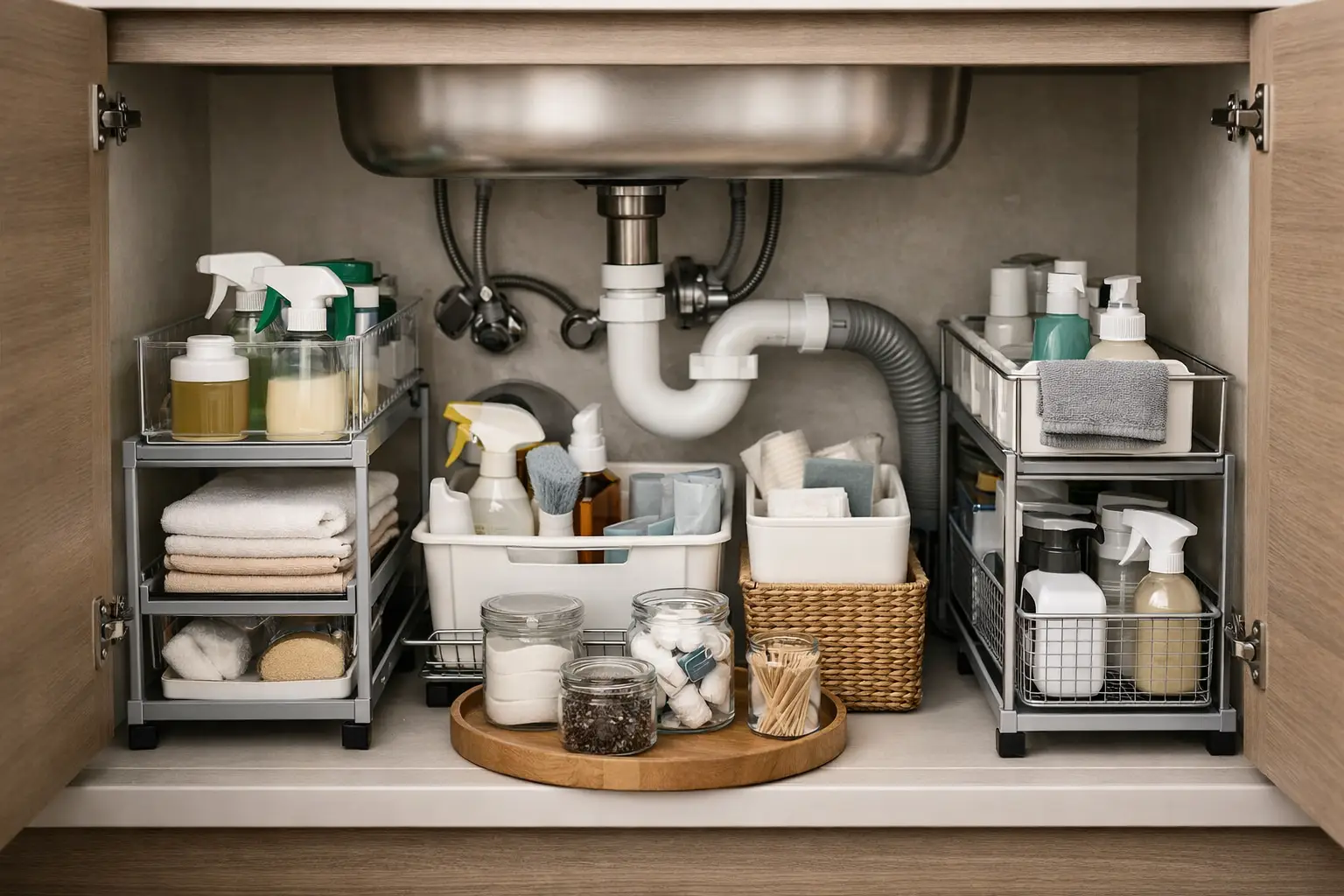
That under-sink cupboard usually starts with good intentions and ends with half-used sprays, spare sponges and a mystery tangle of bottles around the pipework. The good news is that smart under sink storage ideas do not need a full refit or a big budget. A few practical changes can turn that awkward space into one of the hardest-working cupboards in the house.
The trick is not to treat it like a normal cabinet. Under-sink areas are shaped around plumbing, cleaning products and everyday grab-and-go items, so the best setup is usually a mix of stackable, removable and easy-clean storage. If something looks neat but makes it harder to reach the washing-up liquid, it will not stay tidy for long.
Most cupboards elsewhere in the home are simple rectangles. Under the sink is rarely that kind. You have pipework cutting through the middle, limited depth at the back, and products of different heights that do not stack well. Add in damp cloths, leaky bottles and things being shoved in after a busy day, and clutter builds fast.
That is why the best under sink storage ideas focus on access as much as capacity. If you can see what you have, lift it out easily and wipe the area down without a faff, you are much more likely to keep it in order.
Before buying any organisers, empty the cupboard completely. This sounds obvious, but it is the point where most people spot duplicates, dried-out products and things that were never meant to live there in the first place.
In the kitchen, under-sink space usually works best for washing-up liquid, dishwasher tablets, cloths, bin bags and surface sprays. In the bathroom, think spare loo roll, cleaning sprays, hand soap refills and everyday toiletries. Electricals, paper packaging and anything damaged by moisture are better stored elsewhere.
Once you know what needs to go back in, you can match the storage to the items instead of forcing everything into the same basket.
A plain basket can help, but a pull-out drawer is usually better under a sink because it brings the contents to you. That matters when the back of the cupboard is blocked by plumbing or when you are trying to reach one small bottle behind six bigger ones.
Two-tier pull-out organisers work well for bathroom and kitchen cupboards alike, especially if the upper shelf is offset around pipework. Just check measurements carefully. Some units look compact online but lose useful space once the trap and pipes are taken into account.
One of the easiest wins is a simple rod across the top part of the cupboard. Spray bottles can hang by their triggers, which frees up the base for heavier items. It also stops bottles toppling over and leaking into everything else.
This works especially well in kitchen cupboards where you tend to have several trigger sprays in regular use. If your plumbing is in the way, fit the rod slightly forward and use the back section for cloths or backup supplies.
Open bins are ideal for grouping smaller items, but under a sink they need to be easy to lift out. Handles matter more than people think. If you have to crouch down and rummage, things get messy again within a week.
Clear bins are useful if you like to see everything at a glance. Opaque ones can look tidier, but only if you label them. A simple split like cloths, sprays, dishwasher items and bin bags is often enough.
A lot of under-sink cupboards waste height because everything sits on the base. Slim shelf risers or adjustable mini shelves let you use the space above shorter items without blocking access below. This is handy for sponges, soap refills and smaller bathroom bottles.
The trade-off is that shelves can become annoying if they stop you lifting taller products out. Adjustable options are worth it here, because under-sink spaces vary so much from one home to the next.
Kitchen cupboards tend to get the roughest treatment because they are used all the time. Grease, drips and constant grabbing mean your storage needs to be practical first and pretty second.
A good setup often includes one zone for daily washing-up items and one for backup stock. Keep the things you use every day nearest the front, and push spare packs further back or higher up. That way the cupboard stays functional instead of turning into a dumping ground for bulk buys.
If you regularly clean the worktops, hob and sink area, a small carry caddy makes life easier. It keeps your main products together and can be lifted out in one go when needed. Then it goes straight back under the sink without loose bottles rolling around.
This is especially useful in busy family kitchens where several people reach for the same items. It is easier to put one caddy back than five separate products.
The inside of the cupboard door is often ignored, but it is perfect for flat or lightweight items. A door-mounted rack or adhesive holder can keep bin bags, rubber gloves or microfibre cloths neat and close to hand.
Just avoid overloading the door. Heavy bottles can strain hinges and get in the way when the cupboard closes.
Bathroom cupboards have a slightly different problem. They often mix cleaning supplies with personal care, which means the space can feel cluttered even when it is technically organised.
The fix is simple separation. Toiletries, cleaning products and spare stock should each have their own section. That stops everyday routines getting tangled up with deep-cleaning supplies.
A shallow tray under soaps, creams or hair products catches drips and makes cleaning easier. Instead of wiping the whole cupboard, you can lift the tray out and rinse it. In a bathroom where spills happen often, that small change can save a lot of hassle.
Trays also help define who uses what. If two people share the same cupboard, separate trays can stop the usual morning scramble.
Spare toothpaste, soap refills and unopened products can make a cupboard feel fuller than it is. Lidded boxes keep those extras contained and protect them from splashes. They also stop part-used items mixing with new ones.
If you tend to stock up when offers are on, this is one of the most useful under sink storage ideas. It keeps the cupboard from looking overstuffed while still letting you make the most of value packs.
Not every organiser suits every cupboard, and that is where people often waste money. Measure the width, depth and height of the space, then measure around the pipework as well. A product that technically fits the cupboard may still not fit the usable space.
Material matters too. Plastic and coated metal usually cope best with splashes and are easy to wipe clean. Untreated wood can look nice, but it is not always ideal in damp areas. If leaks are a risk, use shelf liners or a simple waterproof mat on the base of the cupboard to protect the surface.
It also helps to avoid overfilling. A bit of empty space is not wasted space if it means you can get to what you need quickly. The most effective storage is the kind that makes daily jobs feel easier, not the kind that squeezes in every last bottle.
Some under-sink cupboards are so small or awkward that a full organiser setup is not worth it. In those cases, one sturdy basket, one tray and a door hook may be all you need. There is no prize for cramming in extra compartments if they just make the space fiddly.
For renters, removable options are often the safest bet. Freestanding drawers, tension rods and lift-out bins can improve storage without drilling holes or leaving marks. If you are in a forever home, fitted pull-outs may be worth the extra spend because they make better use of the space long term.
At EasyPeasyMate.Shop, the best home organisation fixes tend to be the ones that solve a daily annoyance without turning into a project. Under the sink is a perfect example. A few well-chosen storage pieces can make cleaning, tidying and finding what you need feel far less like a chore.
If your under-sink cupboard has become the place where good intentions go to hide, start small. Clear it out, group what you really use, and choose storage that works with the shape of the space rather than against it.
