Address
86 Amesbury Road
Manchester M9 6JF United Kingdom
Choose a universal axe for garden jobs, kindling and campsite tasks. Learn which head, handle and safety features suit your home and outdoor work needs.
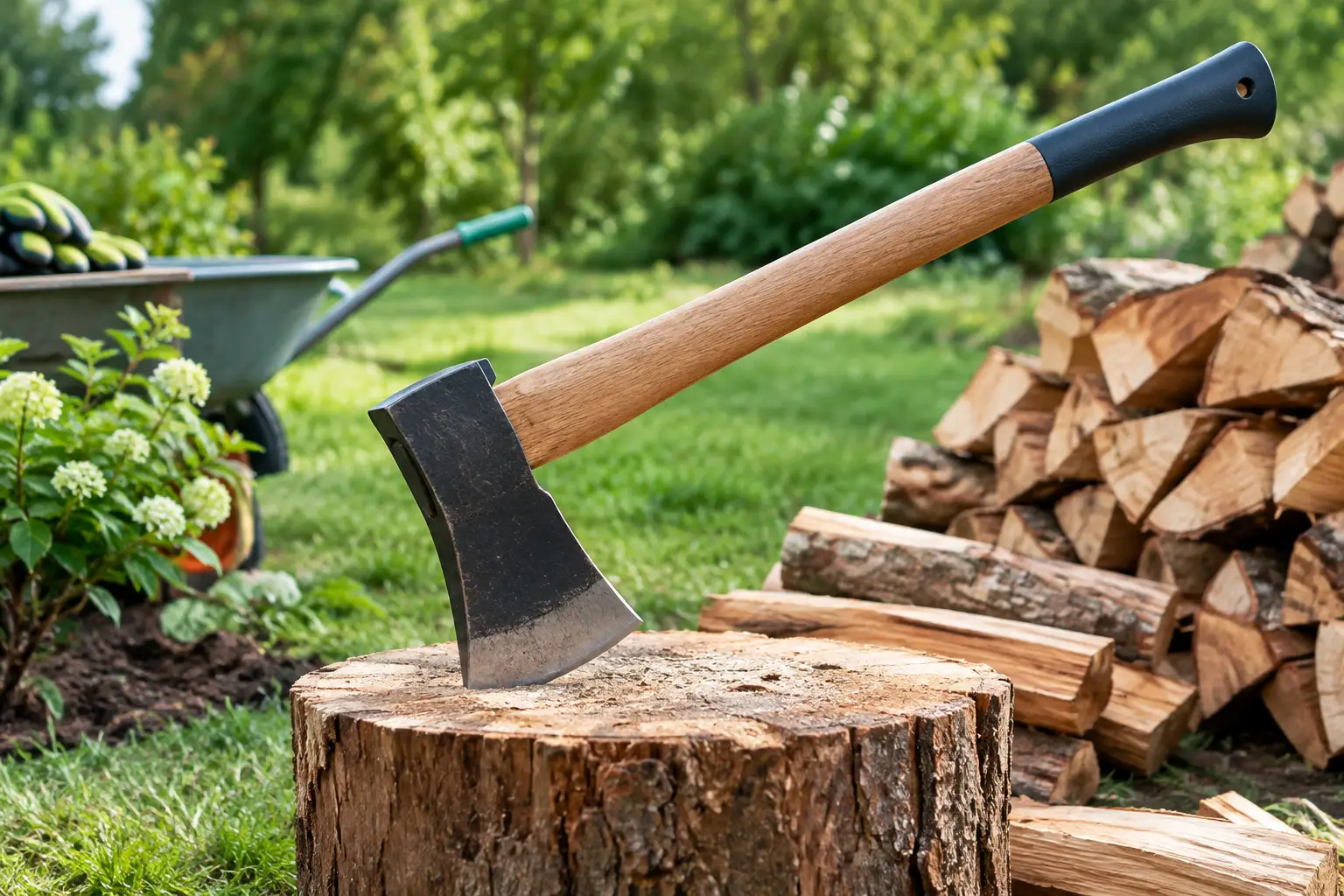
A pile of fallen branches, a stack of logs that need splitting for the stove, or a stubborn root in the way of a new flower bed – these are the jobs where a universal axe earns its place in the shed. It is designed to sit between a small hatchet and a heavy splitting maul, giving you one dependable tool for the outdoor tasks that crop up through the year.
For many homes, that flexibility matters more than owning a different axe for every job. The right model can trim, chop and split smaller pieces of wood without taking up much room in the garage, caravan locker or garden store. The key is choosing a size and shape that suits what you will actually be doing.
A universal axe is a general-purpose chopping tool with a medium-weight head and a handle long enough to provide useful swing and control. It is made for everyday woodwork rather than specialist forestry or large-scale log splitting. Think pruning thicker branches, breaking down kindling, cutting small logs and handling occasional campsite tasks.
The name can vary between manufacturers, so do not rely on the label alone. Check the head weight, handle length and the profile of the blade. A universal axe should feel capable but manageable, not so heavy that it becomes tiring after ten minutes and not so light that every cut needs several attempts.
It is a sensible choice for householders who want practical kit ready for seasonal garden clear-ups, fire pit evenings and preparing fuel for a wood burner. If you regularly split large, knotty rounds, however, a dedicated splitting axe or maul will make far better progress.
The best use for a universal axe is varied, moderate work. It can make short work of dry branches after hedge cutting, reduce offcuts to a useful size for kindling and deal with small logs that are too awkward for a handsaw alone. It is also handy when clearing a garden area, shaping wooden stakes or preparing wood for a camping stove where permitted.
It is not the right tool for every task. Felling mature trees calls for experience, suitable equipment and careful planning. Nor should a general-purpose axe be forced through very large logs, frozen timber or timber full of hidden nails and screws. That risks damaging the edge, the handle or, more importantly, the person using it.
For green wood, a sharp axe will cut effectively, but the wood may be stringier and less predictable than seasoned logs. For dry, straight-grained wood, the blade usually bites and releases more cleanly. A chopping block makes a noticeable difference in both cases, giving you a stable working height and protecting the axe from striking soil or paving.
A medium head weight is usually the sweet spot for a universal axe. Around 0.7 to 1.25 kg is often manageable for general garden and firewood jobs, although the right feel depends on your strength, experience and the wood you plan to cut. A heavier head delivers more force, but it also asks more of your shoulders, wrists and grip.
Hold the axe before committing if you can. The head should feel secure and the balance should encourage a controlled swing rather than pulling your hands forward. A well-balanced axe is easier to use accurately, which is more useful than raw weight for occasional household work.
The blade shape matters too. A thinner cutting edge is useful for chopping and cutting across wood fibres. A wider, wedge-shaped profile is better at pushing wood apart when splitting. Most universal axes sit between these two designs, which is why they are versatile but not a replacement for a specialist tool.
Handle length affects both power and precision. A shorter handle is easier to pack away and gives close control for kindling and branches. A longer handle adds leverage for small logs, but needs more clear space around you. For many household jobs, a medium-length handle is the sensible middle ground.
Wooden handles have a traditional feel and can be replaced on some axe designs. They need to be kept dry and checked for splits or looseness. Fibreglass or composite handles are often more weather-resistant and require little upkeep, making them a straightforward option for a busy shed. Neither choice is automatically best – comfort, grip and build quality matter most.
Look for a shaped or non-slip grip, especially if you may use the axe in damp autumn weather. Gloves can improve comfort, but they should still allow you to feel the handle properly. Bulky gloves that reduce your grip can make controlled work harder.
A blade cover may seem like a small extra, but it is genuinely useful. It protects the cutting edge from knocks in storage and reduces the chance of catching a hand when reaching into a crowded shed. Keep the sheath on whenever the axe is not in use, including when transporting it in a car or caravan.
An axe is simple equipment, but simple does not mean casual. Most accidents happen when users are rushed, tired, working on unstable ground or trying to hold the wood with one hand while swinging with the other. Take a minute to set up the job properly.
Before you start, make these basic checks:
Keep both hands on the handle while swinging. Let the weight of the head do the work instead of trying to force each strike. If a piece of wood will not split after a few controlled cuts, stop and reassess. It may be too large, heavily knotted or better suited to a splitting axe.
Never chop directly onto concrete, stone or bare ground. One missed swing can blunt or chip the blade, and it creates an unpredictable rebound. It is also worth avoiding wet, icy or poorly lit conditions. A quick job can wait until you have safe footing and a clear view.
A dull axe is frustrating and less safe because it encourages harder, less controlled swings. After use, brush off dirt and resin, then dry the head before storing it. A light coat of suitable protective oil on a steel head can help guard against rust, especially through a damp British winter.
Sharpen the edge little and often rather than waiting until it is badly damaged. Use an appropriate axe sharpener or file, following the existing bevel of the blade. Remove only a small amount of metal at a time. If the edge has a deep chip, the head is loose or the handle is cracked, do not carry on as normal – repair or replace the damaged part before the next job.
Store the axe high up or in a locked cupboard where children cannot reach it. A dry, sheltered spot is ideal. Leaving it in long grass, beside the compost bin or on a damp patio shortens the life of both the head and handle.
The most common mistake is buying the heaviest axe on the shelf and assuming it will handle everything. For occasional use, a tool that you can swing comfortably and accurately is usually the better buy. Another is choosing a tiny hatchet for jobs that really need more reach and force, then finding each log takes far too long.
It also pays to think about storage before you buy. A compact universal axe is much easier to keep safely in a small shed or caravan than a full-length splitting tool. If your main job is kindling and light garden pruning, smaller may be exactly right. If you heat your home with logs through winter, a universal axe can support the job, but a proper splitting axe is worth adding to the kit.
A good axe should make practical outdoor work feel more manageable, not turn a Saturday morning into a battle with the woodpile. Choose one that fits your hands, your storage space and your real list of jobs, then keep it sharp, dry and ready for the next bit of garden work.
