Address
86 Amesbury Road
Manchester M9 6JF United Kingdom
Our tyre inflator review explains what to look for, from pressure accuracy and power to portability, so you can choose a pump that suits your car well.
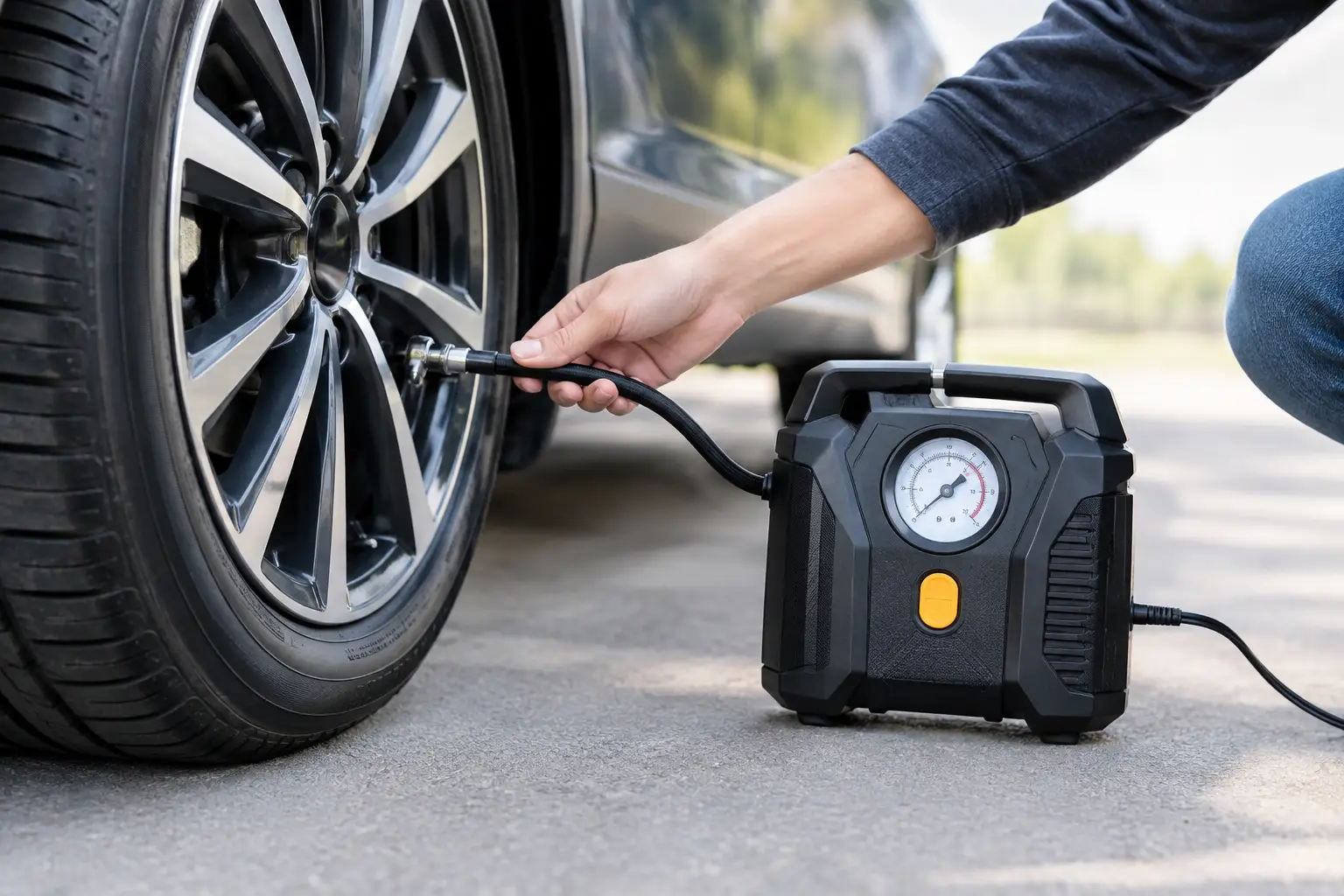
A tyre that looks only slightly low can affect the way your car feels on the road, add to fuel use and wear unevenly over time. That is why a tyre inflator review should look beyond a big pressure number on the box. The useful one is the inflator that is easy to grab, simple to read and dependable when you are running late, heading off on holiday or preparing the caravan for a weekend away.
For most UK drivers, a compact digital inflator is one of those small car essentials that earns its space in the boot. It will not replace proper tyre checks or repair a puncture, but it can save a detour to a garage forecourt and help you keep pressures where they should be.
At its core, an inflator needs to add air accurately and without making a straightforward job feel fiddly. It should connect securely to the tyre valve, show a clear reading, reach the required pressure in a sensible time and stop before you overinflate. The best choice depends on the vehicle and how you plan to use it.
A small hatchback used for school runs has different needs from a loaded estate car, SUV or caravan. If you only want reassurance between regular checks, a lightweight 12V unit may be ideal. If you regularly top up several tyres, inflate bikes and footballs, or manage a caravan, a faster model with a longer hose and higher-duty motor will make more sense.
Look for a gauge that is easy to read in daylight and at night. Digital screens are usually clearer than small analogue dials, especially when the weather is wet or you are crouched beside the car. Being able to switch between PSI, bar and kPa is handy, although UK vehicle stickers commonly show PSI and bar.
Accuracy matters more than an impressively high maximum figure. Check your vehicle handbook or the label inside the driver’s door frame, then set the target before starting. A quality inflator with auto-stop turns off when it reaches that setting. This is a genuinely helpful feature, as it lets you focus on the connection rather than trying to catch the exact number at the right moment.
No portable gauge should be treated as the final word forever. If readings seem inconsistent, compare them with a trusted tyre gauge or have them checked at a garage. Also take readings when tyres are cold, ideally before a journey or after the car has been parked for a few hours. Driving warms the air inside the tyre and can give a higher reading.
Most portable car tyre inflators use one of three power options: a 12V socket, a rechargeable battery, or mains power. A 12V model plugs into the car’s accessory socket and is often the sensible value choice for roadside use. There is no battery to remember to charge, but the engine may need to be running to avoid draining the vehicle battery. Always follow the unit and vehicle instructions.
Rechargeable inflators are wonderfully convenient for quick jobs around the house. They can be used on bicycles, prams, wheelbarrows and sports equipment without trailing a cable to the car. The compromise is battery capacity. A compact cordless model may handle a top-up very well but take longer, or need recharging, when faced with four noticeably soft car tyres.
Mains-powered compressors are better suited to garages, workshops and heavier use. They are less handy for an unexpected low tyre away from home. Some people get the best of both worlds with a 12V car inflator in the boot and a larger compressor for home jobs.
Product specifications can make every inflator sound much the same. In everyday use, a few details make the difference between a tool you rely on and one that stays at the back of a cupboard.
Start with the valve connection. A screw-on connector tends to feel secure and can reduce air loss while fitting, although it takes a little longer. A lever-lock connector is quicker, which is welcome in poor weather, but needs to fit properly to avoid hissing air. A hose with enough length to reach each wheel without stretching is also more useful than it sounds, particularly on larger vehicles.
Built-in lighting is worth having if your journeys often start early or end late. It will not light an entire roadside, but it can help you find the valve and read the controls. A bright, backlit display is equally practical.
Pay attention to the lead length on 12V models and the charge cable supplied with cordless versions. A neat-looking inflator is not much help if it cannot comfortably reach the rear tyre. Storage matters too. A compact case or a dedicated space for the hose and adaptors stops loose parts disappearing around the boot.
Useful adaptors broaden the value of the purchase. A ball needle and a tapered nozzle cover many household jobs, while a Presta adaptor is useful for some bike tyres. Keep expectations realistic, though. An inflator designed for car tyres is a handy all-rounder, not a substitute for a high-volume pump for large inflatable paddleboards or air beds.
Portable inflators are not silent. The smaller and more affordable models can be especially noisy, so it is wise not to use one late at night outside a neighbour’s window unless you have to. Noise is usually a short-lived annoyance, not a reason to rule out an otherwise suitable unit.
Inflation speed is more meaningful. Manufacturers may quote litres per minute or a maximum pressure, but these figures do not always tell you how quickly the unit will top up your actual tyres. Consider whether you need to add a few PSI occasionally or inflate from very low pressure. For routine checks, almost any decent portable inflator can do the job. For bigger tyres or frequent use, choose a model designed for longer running periods.
Motors can get hot. Most units have a recommended maximum run time followed by a cooling break. Respect it. Trying to rush through repeated inflation can shorten the life of the pump and may trigger thermal protection. If a tyre is completely flat, inspect it first rather than simply pumping it up and driving away. A puncture, damaged valve or split sidewall needs attention.
The simple routine is to check the recommended cold pressure, remove the valve cap, attach the connector firmly and read the current pressure. Set the target if your inflator has auto-stop, then start the pump. Once it stops, remove the connector promptly, refit the valve cap and repeat around the car.
Check all four tyres, not just the one that looks low. Tyres lose pressure gradually, often with no obvious change in appearance. Do not forget the spare if your vehicle has one. For cars with different front and rear pressures, follow the specific figures on the vehicle label. If you are carrying several passengers, heavy luggage or towing, there may be a separate recommended setting.
A sudden drop in pressure is different from a routine top-up. If one tyre needs air much more often than the others, book a puncture inspection. And never rely on an inflator to make it safe to drive on a tyre with visible damage, a bulge or very low tread.
Choose a compact 12V digital inflator if you want a sensible boot essential for occasional checks and travelling. It is a straightforward option for drivers who value reliability without extra charging. Choose cordless if you want maximum flexibility for car, bike and garden jobs and are happy to keep a battery topped up.
For a family car, caravan or household with several vehicles, prioritise a clear display, auto-stop, a decent hose and a model built for longer use. Paying slightly more for those everyday conveniences can be worthwhile. The goal is not the flashiest gadget. It is a tool that makes a basic safety check easy enough to do regularly.
Keeping tyres at the right pressure takes only a few minutes, yet it can make driving feel more predictable and help tyres last as they should. Store an inflator where you can reach it, check it works before a long trip, and it will be ready to make one small part of car care easy peasy.
